Guangwu Mountain Tourist Area is located in the north of Nanjiang County, Bazhong City, Sichuan Province, at the border of Sichuan and Shaanxi. It is a national 5A-level tourist attraction and a UNESCO Global Geopark. The scenic area covers an area of 830 square kilometers, with the core scenic area covering 410 square kilometers. The scenic area is characterized by its unique ridge and peak cluster landforms, pristine ecological vegetation, charming waterfalls and pools, and beautiful canyon scenery. It is known as a "biological gene bank and natural oxygen bar." The forest coverage rate here is 97%, the excellent air quality rate is above 90%, and the average negative oxygen ion content in the air exceeds 30,000 per cubic centimeter.
Historical Culture
As early as about 2 billion years ago in the Proterozoic Era, the area where Guangwu Mountain is located was an ancient marine environment, and a large amount of carbonate rocks (such as dolomite and limestone) were deposited to form the basement rock layers. By the Sinian Period (about 680 million to 541 million years ago), the Dengying Formation dolomite here gradually took shape, laying the foundation for the subsequent development of karst landforms — today's Taiji Tiankeng (an "S-shaped" river channel formed by groundwater dissolution and fluvial downcutting), cave groups, and other landscapes in the scenic area all originate from the rock layers formed during this period.
In the late Xia and early Shang Dynasties, the Ba people in the Guangwu Mountain area trampled grass into paths, creating the Micang Ancient Road, one of the three great ancient Shu Roads, and opening the process of civilization in the Guangwu Mountain area. The Ba people left unique cultural imprints here. Their way of life, customs, and habits were integrated into the local historical river and became an important source of Guangwu Mountain culture.
The Micang Ancient Road is named because it crosses Micang Mountain. Together with the Jinniu Road and the Lizhi Road, it is known as one of the "Three Great Ancient Shu Roads of China." It was an extremely important military passage and a major transportation route for grain and materials in Chinese history. It passed north through Guanzhong to the Central Plains and south through Bashu to the southwest, connecting ancient and modern times. Historical stories such as Xiao He Chasing Han Xin Under the Moon and Zhuge Liang Feeding Horses at Mouyang City all took place on this ancient road, making it a "living fossil" carrying rich historical stories and cultural connotations.
The folk culture of the Guangwu Mountain area is rich and colorful. Among them, the Bashan Bei'er Song has been sung for thousands of years and has been listed as a national intangible cultural heritage. In addition, there are intangible cultural resources such as Cuan Tan Opera and the Ba people's papermaking technique.
Main Attractions
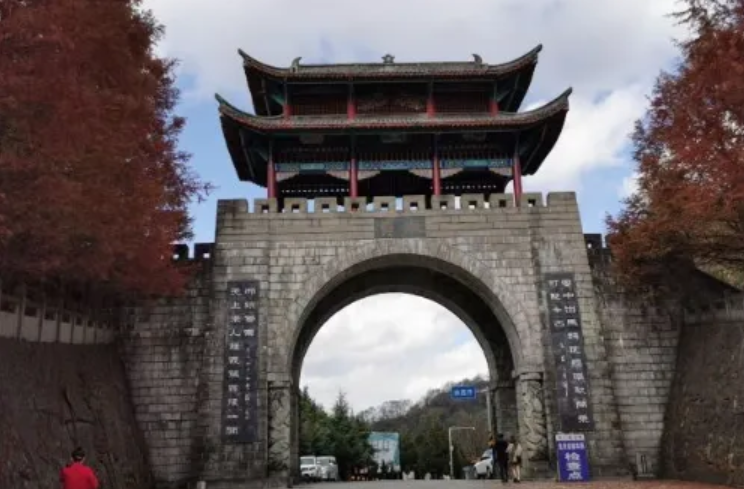
Shudao Qin Pass
It is the north gate of the Guangwu Mountain Scenic Area and the boundary line between Sichuan and Shaanxi Provinces. Since the Qin and Han Dynasties, it has been an important pass for entering and leaving Sichuan and Shaanxi. There was once a wall platform built here, formerly known as "Tianshang," and after reconstruction it was renamed "Shudao Qin Pass."
Micang Ancient Road
It is named because it crosses Micang Mountain. Together with the Jinniu Road and the Lizhi Road, it is known as one of China's three great ancient Shu Roads and is praised as a "living fossil in the history of transportation in China and even the world." It was an extremely important military passage and a major route for grain and material transportation in Chinese history.
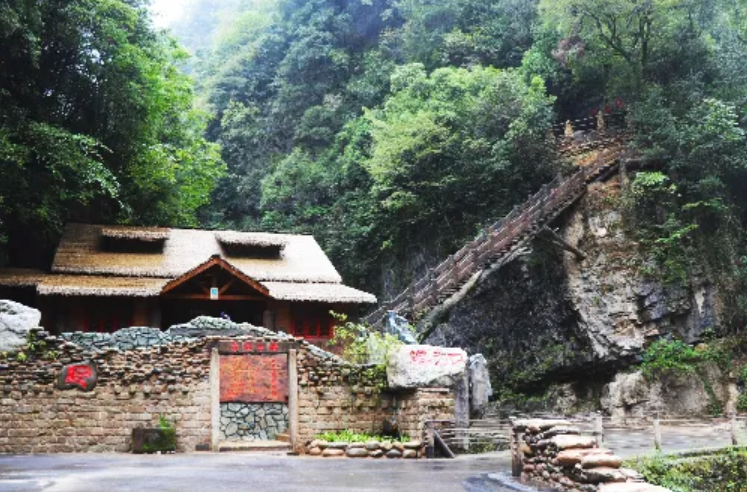
Feiyun Plank Road
Located on the cliff of Taiji Tiankeng, it is magical, precipitous, and offers a broad field of vision. Because it is a circular sightseeing route, you can choose to go up the mountain from Taiji Tiankeng and then go down from Ganling Temple.
Yanyan Stone Forest (Yanzi Ridge)
There is a Swallow Cave under the precipice on the north side of Yanyan Peak. Every spring, tens of thousands of swallows come here to inhabit, and Yanzi Ridge gets its name from this. Standing on the viewing platform, stone forests arrayed all around, ancient pines and vines, lush and green, canyons and precipices, chopped as if by axes, present a myriad of strange sights.
Seven Maidens Peak
Located near Yanzi Ridge, the seven peaks are like fairies, gracefully standing, with extraordinary charm. The inscription "Guangwu Mountain, a fairyland on earth" by Fei Xiaotong, former Vice Chairman of the Standing Committee of the National People's Congress, originated here.
Ten Thousand Tablets Paying Homage
Located 500 meters east of Yanzi Ridge, a tall stone peak nearby is like a huge human figure sitting upright on the cliff. Below in the Huoshitang area, stone forest peak clusters are scattered in an orderly manner, just like "ten thousand tablets paying homage."
Dragon Carriage in Mist and Clouds
Dragon Carriage Mountain rises abruptly from the banks of Jiaojia River, lying horizontally between the green water and blue sky. It is often wrapped in clouds and mist, appearing and disappearing intermittently. The mountain shape is like a giant dragon's skeleton and is divided into upper, middle, and lower layers.
Taiji Tiankeng
It is not a tiankeng in the geological sense. It is an arc-shaped curved river channel formed by the combined action of groundwater dissolution and surface water downcutting. The Jiaojia River cuts the karst mountains into an S shape, resembling a Taiji pattern, so it is called "Taiji Tiankeng."
Tour Routes:
The following are some common tour routes:
Route 1: Nanjiang (or Hanzhong) — Guangwu Mountain Town — Dragon Carriage in Mist and Clouds — Pengjiaba — Sandaoguan — South Heavenly Gate — Seven Maidens Peak — Yanzi Ridge — Ten Thousand Tablets Paying Homage — Yanyan Stone Forest — Cherry Canyon — Jiexian Post — Hanxi River — Lianghekou — Taiji Tiankeng — Ganling Temple — return to Nanjiang (or Hanzhong).
Route 2: Nanjiang (or Hanzhong) — Guangwu Mountain Town — Dragon Carriage in Mist and Clouds — Pengjiaba — Lianghekou — Taiji Tiankeng — Feiyun Plank Road — Ganling Temple (suitable for tourists bringing elderly people and children).
Route 3: Guangwu Mountain Scenic Area — Nuoshui River Geopark Museum — Bashan Guerrilla Memorial Hall tour route (choose one combination from Guangwu Mountain and Micang Mountain) "Dream of Guangwu Mountain."
Tour Suggestions:
Pay attention to the weather forecast in advance and prepare clothing and equipment according to weather conditions.
The routes within the scenic area are relatively long. It is recommended to wear comfortable hiking shoes or mountaineering shoes.
Bring sun protection items such as sunscreen, sun hats, and sunglasses.
Choose a suitable tour route according to personal physical strength and time to avoid an overly tight schedule.
If you want to watch the sunrise and sea of clouds, you need to reserve the early cable car in advance and learn the relevant precautions in advance.
Precautions:
Guangwu Mountain has a relatively high altitude, and the temperature difference between morning and evening is large, so warm clothing should be brought.
Mountain weather is changeable, so it is recommended to bring rain gear.
The ecological environment in the scenic area is fragile. Do not litter and take care of vegetation.
Pay attention to safety underfoot when climbing, follow the scenic area regulations, and do not climb unopened areas at will.
If you encounter wild animals, do not try to touch or feed them.
Respect local cultural traditions and customs.
Transportation:
From Chengdu:
Passenger bus: Chengdu (recommended to take a bus at North Gate Bus Station) — Nanjiang (recommended to take a bus at Guangyun Bus Station) — Guangwu Mountain and Micang Mountain Tourist Areas.
High-speed rail: Chengdu East — Hanzhong (recommended to take a bus at Hanzhong Passenger Transport Hub / Hanzhong Automobile Transport General Company Bus Station) — Guangwu Mountain and Micang Mountain Tourist Areas.
Train: Chengdu East — Bazhong (recommended to take a bus at Bazhong Jiangbei Passenger Transport Center Station) — Guangwu Mountain and Micang Mountain Tourist Areas.
Self-driving tour: Chengdu (Chengba Expressway) — Bazhong (Bashan Expressway) — Qiaoting (exit the expressway) — Guangwu Mountain and Micang Mountain Tourist Areas; or Chengdu (Chengba Expressway) — Bazhong (Bashan Expressway) — Nanjiang North (exit the expressway) — Yangba — Xinmin — Shibayue Tan Scenic Area.
From Chongqing:
Passenger bus: Chongqing (recommended to take a bus at Caiyuanba Bus Station) — Nanjiang (recommended to take a bus at Guangyun Bus Station) — Guangwu Mountain Tourist Area and Micang Mountain Tourist Area.
High-speed rail: Chongqing West/North Station — Hanzhong (recommended to take a bus at Hanzhong Passenger Transport Hub / Hanzhong Automobile Transport General Company Bus Station) — Guangwu Mountain Tourist Area and Micang Mountain Tourist Area.
Train: Chongqing North — Bazhong (recommended to take a bus at Bazhong Jiangbei Passenger Transport Center Station) — Guangwu Mountain and Micang Mountain Tourist Areas.
Self-driving tour: Chongqing (Baguangyu Expressway) — Bazhong (Bashan Expressway) — Qiaoting (exit the expressway) — Guangwu Mountain Tourist Area and Micang Mountain Tourist Area; or Chongqing (Baguangyu Expressway) — Bazhong (Bashan Expressway) — Nanjiang North (exit the expressway) — Yangba — Xinmin — Shibayue Tan Scenic Area.
From Xi'an:
Passenger bus: Xi'an (recommended to take a bus at Xi'an Chengxi/Chengnan Bus Station) — Hanzhong (recommended to take a bus at Hanzhong Passenger Transport Hub / Hanzhong Automobile Transport General Company Bus Station) — Guangwu Mountain and Micang Mountain Tourist Areas.
High-speed rail: Xi'an North Station — Hanzhong (recommended to take a bus at Hanzhong Passenger Transport Hub / Hanzhong Automobile Transport General Company Bus Station) — Guangwu Mountain and Micang Mountain Tourist Areas.
Self-driving tour: Xi'an (Xihan Expressway) — Hanzhong (Bashan Expressway) — Xishenba (exit the expressway) — Guangwu Mountain and Micang Mountain Tourist Areas; or Xi'an (Xihan Expressway) — Hanzhong (Bashan Expressway) — Nanjiang North (exit the expressway) — Yangba — Xinmin — Shibayue Tan Scenic Area.
Opening Hours:
The usual opening hours are 8:00-22:00. Subject to the actual opening hours of the scenic area.
Tickets:
Ticket sightseeing bus: 115 yuan/person.