Daocheng Yading Scenic Area is located in Shangri-La Town, Daocheng County, Garze Tibetan Autonomous Prefecture, Sichuan Province. It is a national nature reserve and a national 5A-level tourist attraction. The scenic area ranges from 2,900 meters above sea level (Gongga River mouth) to 6,032 meters (Mount Xiannairi), and is situated in the middle section of the Hengduan Mountains on the Qinghai-Tibet Plateau. The scenic area preserves a complete pristine appearance, with landscapes such as snow mountains, canyons, lakes, meadows, and ancient glacial remains. It is known as "the last Shangri-La" and "the last pure land on the blue planet." The scenic area covers 1,072.3 square kilometers, and its core area is relatively large, encompassing numerous natural landscapes and ecological regions. The buildings within the scenic area are mostly in Tibetan style, such as temples including Chonggu Temple, and possess a strong religious and cultural character.
History and Culture
Daocheng is an area where the entire population follows a religion, and Tibetan Buddhism has a long history and deep influence in the region. Tibetan Buddhism has had a history of more than a thousand years in Daocheng. The clothing, food, housing, transportation, birth, old age, illness, death, marriage, and funeral customs of farmers and herders are all closely related to religion. Daocheng has a complete range of Tibetan Buddhist sects, including the Kagyu school (White Sect), Gelug school (Yellow Sect), Sakya school (Flower Sect), Nyingma school (Red Sect), and Bon, five major sects.
In 1928, American explorer and botanist Joseph Rock came to Daocheng Yading twice, collected animal and plant specimens, drew maps, and wrote "The Gongga Range Shambhala, a Paradise on Earth," which was published in National Geographic magazine in the United States. As a result, Daocheng Yading caused a great sensation in the West and earned the reputation of "the last Shangri-La." In 1933, inspired by Rock's Yunnan-Tibet expedition stories, British writer James Hilton wrote the book Lost Horizon. From then on, Shangri-La became a symbol of an earthly paradise.
Main Attractions
Xiannairi
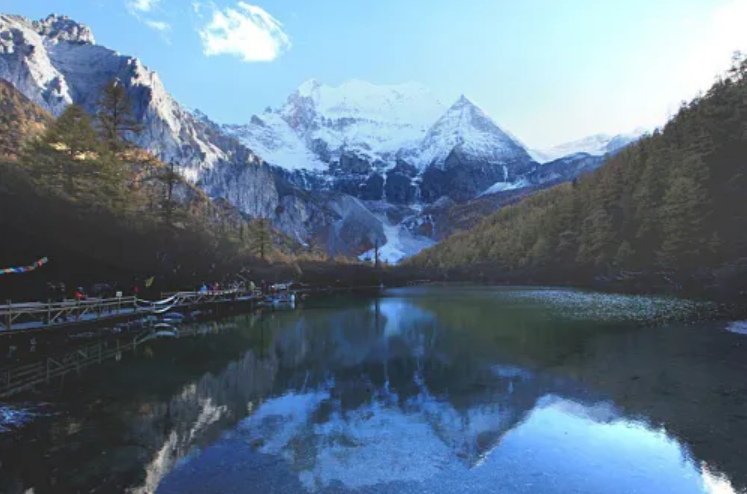
Xiannairi is the first of the three major peaks in the Yading scenic area and is the north peak of the "Three Protector Snow Mountains," with an altitude of 6,032 meters. Around it is an ice-eroded peak forest landscape. High mountains, lakes, glaciers, and forests combine to form extremely beautiful scenery, making it a paradise for photography enthusiasts.
Yangmaiyong
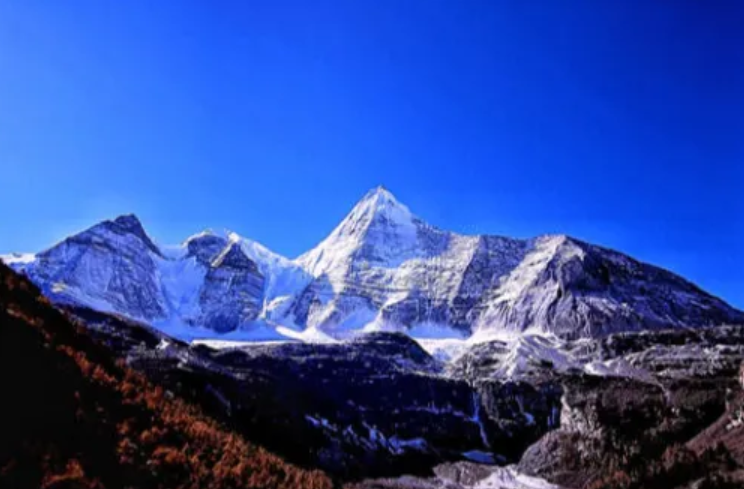
Yangmaiyong means Manjushri Bodhisattva in Tibetan. It is the south peak of the three protector snow mountains in Yading, with an altitude of 5,958 meters, ranking first among the three protectors. The peak is like a quiet, dignified, pure and noble maiden, white and towering, sacred and solemn. The surrounding natural landscape is truly like an earthly paradise.
Xianuoduoji
Xianuoduoji, with an altitude of 5,958 meters, means "Vajrapani Bodhisattva," a deity in Buddhism who eliminates violence and brings peace to the good. Its snow mountain is full of vitality and leaves a deep impression. Luorong Pasture at the foot of the snow mountain is where Mr. Joseph Rock once stayed.
Chonggu Temple
Chonggu Temple is located at the foot of the Xiannairi sacred mountain, at an altitude of 3,880 meters. The original temple was severely damaged, and the date of its construction is no longer verifiable. The current temple has a two-story building. The first floor contains guest rooms and rooms for lamas, and the second floor is the scripture hall, enshrining a statue of Sakyamuni Buddha.
Chonggu Meadow
Chonggu Meadow is a natural bonsai composed of grassland, forest, streams, and mani piles, at an altitude of 3,900 meters. Standing here, one can take in the view of Xiannairi and Xianuoduoji. This is a large glacial U-shaped valley (U-shaped valley mouth), one of the filming locations of the movie I Belonged to You, and also a necessary route to Chonggu Temple, the foot of Xiannairi, Sacred Water Gate, and Luorong Pasture.
Luorong Pasture
Luorong Pasture, at an altitude of 4,150 meters, is a pasture where nearby Tibetans graze livestock. It is backed by three sacred mountains. The Gongga River passes through the pasture, streams flow among the woods, and birds gather in flocks. Together with the pasture's wooden houses, it forms a beautiful scene and is the best place to view the three main snow mountains.
Milk Sea
Milk Sea, also called Luorong Tso, is located in a mountain hollow at the foot of the Yangmaiyong sacred mountain, at an altitude of 4,500 meters. It is one of the sacred lakes in the Yading area. It is a small ancient glacial lake shaped like a water droplet. The lake water is clear and blue-green, surrounded by snow mountains, and there is a ring of milky white around the lakeside, hence the name.
Five-Color Sea
Five-Color Sea, called Mudi Tso in Tibetan, is located above Milk Sea, between Xiannairi and Yangmaiyong, at an altitude of 4,600 meters. It is named because it produces five different colors under sunlight. The lake surface is circular, and the water is clear. It is a sacred lake in the hearts of local people and is said to be able to "reflect history and predict the future."
Pearl Sea
Pearl Sea, called "Drolma Latso" in Tibetan, is a lake formed by the melting snow of Xiannairi, at an altitude of about 4,100 meters, with an area of about 0.1 square kilometers. In the dense forest, Pearl Sea is like an emerald set in a lotus throne, with very beautiful scenery.
Tour Routes:
Short route: Chonggu Temple - Chonggu Meadow - Pearl Sea. This route is relatively easy and suitable for tourists with average physical strength. It allows visitors to enjoy the scenery of Xiannairi Snow Mountain and Pearl Sea.
Long route: Luorong Pasture - Milk Sea - Five-Color Sea. This route is more physically demanding, but visitors can see Yangmaiyong Snow Mountain, Xianuoduoji Snow Mountain, and beautiful alpine lakes, with extremely beautiful scenery. Tourists can choose to hike or rent horses at Luorong Pasture.
Travel Suggestions:
Take altitude sickness prevention measures in advance and prepare relevant medicines and oxygen.
The temperature difference between day and night in the scenic area is large. Even in summer, warm clothing such as down jackets and outdoor jackets should be brought.
Choose suitable shoes. Because long-distance hiking is required, waterproof and anti-slip hiking shoes are recommended.
When doing the long route, you can choose to rent a horse according to your own condition, but the number of horses is limited and advance booking is required.
Respect local religious and customary practices and do not casually violate taboos.
Precautions:
Smoking and littering are strictly prohibited in the scenic area. Protect the scenic environment.
Do not enter undeveloped areas at will to avoid danger.
In high-altitude areas, avoid strenuous exercise. If severe symptoms of altitude sickness appear, seek medical attention or descend the mountain in time.
The weather in the scenic area is changeable. Carry rain gear with you and also take sun protection measures, as ultraviolet radiation is strong in plateau areas.
If you want to photograph local Tibetans, you must first obtain their consent and respect their portrait rights.
Transportation:
Airplane: You can first arrive at Daocheng Yading Airport, then take an airport shuttle bus or chartered car to the scenic area.
Bus: There are long-distance buses from cities such as Chengdu to Daocheng. You can also choose to charter a car or share a car, enjoying the scenery along the Sichuan-Tibet route.
Self-driving: Driving to Daocheng Yading allows you to arrange your itinerary freely, but you should pay attention to road conditions and weather, especially when driving in plateau areas, and drive cautiously.
Opening Hours:
The opening hours of Daocheng Yading Scenic Area are usually from 8:00 a.m. to 6:00 p.m. The specific opening hours may be adjusted according to seasons and weather conditions. Tourists are advised to check the official website or consult scenic area staff before traveling.
Tickets:
Ticket sightseeing bus: 266 yuan/person.