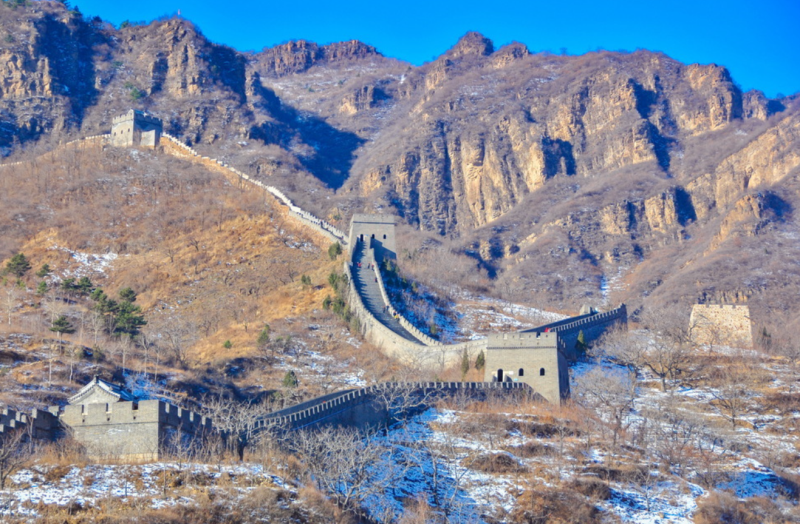
The Huangyaguan Great Wall Scenic Area is located in the northern part of Jizhou District, Tianjin. It is a national 4A-level tourist attraction and an important pass of the Ming Dynasty Great Wall. The name "Huangyaguan" comes from the fact that the cliffs take on a yellowish-brown color under the glow of the setting sun. The scenic area is known for its steepness, uniqueness, and beauty. It has a complete military defense system, integrating various forms of Great Wall architecture such as the pass city, water pass, walls, enemy towers, and beacon towers, making it a rather unique section of the Great Wall. The Huangyaguan Great Wall is 42 kilometers long in total, with 21 kilometers of existing walls, including 1 pass city, 1 water pass, 52 enemy towers, and 14 beacon towers. The scenic area covers a total area of about 30 square kilometers and is a famous Great Wall tourist destination in the Beijing-Tianjin-Hebei region.
History and Culture
The Huangyaguan Great Wall was first built during the Tianbao period of the Northern Qi Dynasty (AD 556). When Qi Jiguang, a famous general of the Ming Dynasty, served as the chief military commander of Jizhou Town, he presided over its reconstruction. After that, it became an important barrier guarding the capital region. Historically, because of its strategic location, it was a place contested by military strategists and witnessed many military conflicts and ethnic interactions.
As a typical representative of the military defense system of the Ming Dynasty Great Wall, the architectural layout of the Huangyaguan Great Wall fully reflects ancient military wisdom. The design of the pass city was built according to the terrain, with high and low sections staggered and combining offense and defense. It not only had solid walls to resist foreign enemies, but also a water pass to control the river channel, forming a defensive pattern of "one man guarding the pass, ten thousand men unable to force it open." In addition, the inscriptions and writings left along the Great Wall also provide important physical materials for the study of Ming Dynasty military and culture.
Main Attractions
Pass City
The pass city is the core area of the Huangyaguan Great Wall and was first built in the Ming Dynasty. It has a circumference of about 1 kilometer and covers an area of about 80,000 square meters. The layout of the pass city is ingenious, divided into an inner city and an outer city, with three gates in the east, west, and south. Among them, the east gate is the main gate, and a plaque inscribed with "Huangyaguan" is embedded above it. Some remains of Ming Dynasty government offices and residential houses are preserved in the city, showing the military life scene of that time. Standing on the pass city, visitors can overlook the direction of the surrounding Great Wall and the magnificent scenery.
Water Pass
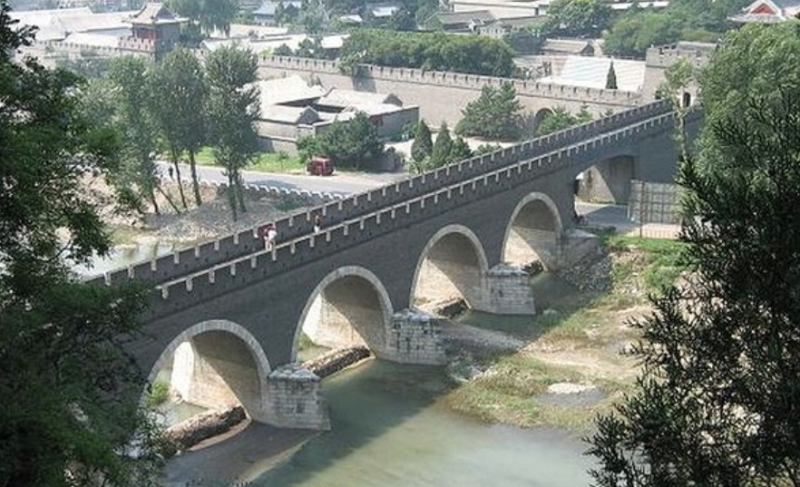
The water pass is located on the east side of the pass city and is an important part of the Huangyaguan Great Wall. It is named because it spans the Ju River. The water pass is 75.5 meters long, 20.1 meters wide, and 12.15 meters high. It consists of a five-hole bridge and city walls on both banks. It not only plays a defensive role but also regulates water flow, making it a rare "Great Wall on water." The architectural design of the water pass takes into account both military defense and water conservancy functions, reflecting the wisdom of ancient craftsmen.
Hollow Enemy Towers
There are 52 enemy towers distributed along the Huangyaguan Great Wall, most of which are hollow enemy towers. This was an innovative design during the reconstruction led by Qi Jiguang. The interior of a hollow enemy tower could station soldiers and store grain and supplies, while the exterior had defensive facilities such as arrow windows and lookout openings, greatly improving the defensive capability of the Great Wall. One enemy tower named "Widow Tower" is the most famous. According to legend, it was funded and built by the widows of 12 soldiers. It is 13 meters high, 10 meters wide, and 9 meters deep, and has important historical significance.
Bagua City
Bagua City is located on the north side of the pass city. It is a city built according to the layout of the Bagua diagram, with a circumference of about 2.5 kilometers and an area of about 160,000 square meters. The streets in the city are crisscrossed like a maze, with 8 main streets and 32 alleys. It is easy to defend and difficult to attack. The design of Bagua City not only has a powerful defensive function but also reflects the ancient Chinese Bagua culture, making it a major feature of the Huangyaguan Great Wall.
Beacon Towers
There are 14 beacon towers along the Huangyaguan Great Wall. They were important facilities used in ancient times to transmit military information. Beacon towers were generally built on mountain tops or high ground, about 5-8 meters high, and constructed of brick and stone. Once an enemy situation was discovered, soldiers would light smoke and fire on the beacon towers and transmit military information through different smoke and fire signals, so that distant troops could learn about the battle situation in time.
Taiping Fort
Taiping Fort is located in Xiaoping'an Village, 1 kilometer southeast of Huangyaguan. Its altitude is 400-500 meters. It is 873 meters long in total. Taiping Fort controlled the mountain valley on the east side of Huangyaguan Pass City. On the east side of Taiping Fort Great Wall, a new gate-shaped access passage to the wall has been built, with a stone plaque inscribed with "Taiping Fort" embedded above the gate.
Food
Jizhou Sesame Slices
Jizhou sesame slices are a traditional local specialty snack with a long history. They are made from high-quality sesame, white sugar, and flour through multiple processes. They are as thin as cicada wings, crisp in texture, and sweet and delicious. The production technique of Jizhou sesame slices is exquisite. The ingredients need to be mixed, rolled into thin sheets, and then fried and coated with sugar. The finished product is golden in color and rich in flavor, making it a good choice for tourists to taste local flavors.
Tiebingzi
Tiebingzi is a traditional staple food in northern China and is commonly seen in farmhouse restaurants around the Huangyaguan Great Wall. It uses corn flour as the main raw material, adds an appropriate amount of water and salt, and after kneading into dough, sticks it to the side of the pot and steams it through the heat at the bottom of the pot. The bottom of Tiebingzi is golden and crisp, while the upper part is soft and sweet. Eaten with local stewed dishes, it tastes very authentic.
Braised Free-Range Chicken with Mushrooms
Braised free-range chicken with mushrooms is a specialty farmhouse dish around the Huangyaguan Great Wall. It uses locally free-range chickens and wild mushrooms as raw materials and is stewed with seasonings such as ginger slices and scallion sections. The free-range chicken is tender, the mushrooms are delicious, and the soup is rich and mellow with rich nutrition. This dish fully reflects the local farmhouse flavor and is a favorite food of many tourists.
Roast Whole Lamb
In some restaurants near the Huangyaguan Great Wall, roast whole lamb is a popular dish. It uses local goats and is made through processes such as marinating and roasting. After roasting, the outer skin of the whole lamb is golden and crisp, and the meat is tender and juicy. After sprinkling seasonings such as cumin and chili powder, the flavor becomes even richer. Roast whole lamb is usually suitable for sharing among multiple people and is a good choice for gatherings of friends and family meals.
Tickets:
Tickets are 70 yuan per person.
You can search for the official public account "Huangyaguan Scenic Area" on WeChat to get the latest updates. As of July 20, 2025, the official WeChat public account does not provide an online ticket purchasing function.
Opening Hours:
Opening hours are adjusted according to the season. From April 1 to October 31 each year, the opening hours are 8:00-18:00; from November 1 to March 31 of the following year, the opening hours are 8:30-17:00. The scenic area stops selling tickets 1 hour before closing. Please arrange your visiting time reasonably.
Tour Route:
Visitors can enter the scenic area from the main gate of the pass city. First, visit the pass city to learn about its history and architectural layout, then go to the water pass to enjoy the unique landscape of the "Great Wall on water." Next, move north along the Great Wall wall, passing multiple hollow enemy towers, among which the "Widow Tower" is one of the must-see attractions. After arriving at Bagua City, you can stroll in the city and experience the wonder of the Bagua layout. Finally, climb the beacon tower and overlook the magnificent scenery of the entire scenic area. This route is about 5 kilometers long, and the tour time is about 4-5 hours, allowing you to fully appreciate the characteristics of the Huangyaguan Great Wall.
Transportation:
Self-driving: Starting from downtown Tianjin, drive along the Jinji Expressway to the Jizhou exit, then drive north along Jinwei North Second Line for about 30 kilometers to reach the Huangyaguan Great Wall Scenic Area. The whole journey is about 120 kilometers and takes about 2 hours by car.
Bus: At the Jizhou District Passenger Transport Station, take the special bus to the Huangyaguan Great Wall. There are multiple departures every day. The journey takes about 1 hour, and the fare is about 10 yuan per person.
Tourist line: There are tourist lines from downtown Tianjin to the Huangyaguan Great Wall Scenic Area. They generally operate on holidays and during peak tourist seasons. Tourists can board at designated locations. Specific schedules and fares can be obtained from the local tourism department.
Must-Visit Attractions:
Pass City: It is the core of the Huangyaguan Great Wall, with a circumference of about 1 kilometer. It allows tourists to deeply understand the military defense system of the Great Wall and feel its historical heritage.
Water Pass: It is 75.5 meters long and is a rare "Great Wall on water." It has both defensive and water conservancy functions, and its architectural design is unique.
Widow Tower: It is 13 meters high, 10 meters wide, and 9 meters deep. It has a moving historical legend and is one of the landmark enemy towers of the Huangyaguan Great Wall.
Bagua City: It has a circumference of about 2.5 kilometers and is laid out according to the Bagua diagram. Its streets are like a maze, reflecting Bagua culture and defensive wisdom.
Travel Suggestions:
The Huangyaguan Great Wall is located at a relatively high altitude. It is recommended to wear comfortable sports shoes to better visit the Great Wall walls and various attractions.
The scenic area is large and the tour time is long. It is recommended to carry an appropriate amount of water and snacks to replenish energy.
When visiting in summer, take sun protection measures such as applying sunscreen and wearing a hat; in winter, the weather is cold, so pay attention to keeping warm.
You may hire a scenic area guide. They can introduce the history and culture of the Huangyaguan Great Wall and the stories of the attractions in detail, making the visit more rewarding. The guide fee is about 50-100 yuan per time.
The best seasons to visit are spring and autumn. At these times, the weather is suitable and the scenery is beautiful. In spring, you can enjoy blooming mountain flowers, and in autumn, you can view red leaves covering the mountains.
Precautions:
When visiting the Great Wall, obey the regulations of the scenic area. Do not climb undeveloped areas at will to avoid danger.
Protect the scenic area environment. Do not litter. Put waste into designated trash bins.
Take good care of personal belongings. In crowded places, increase vigilance to prevent loss of belongings.
Some sections in the scenic area are relatively steep. Pay attention to safety when walking, especially the elderly and children need to be accompanied.
During thunderstorms, stay away from tall buildings and trees and avoid staying in open areas to prevent lightning strikes.