Chengde Mountain Resort and Its Outlying Temples Scenic Area is located in Shuangqiao District, Chengde City, Hebei Province. It is one of the first national 5A-level tourist attractions and was inscribed on the UNESCO World Heritage List in 1994. The Mountain Resort was built in 1703 and completed in 1792. Covering an area of 5.64 million square meters, it is the largest existing classical imperial garden in the world.
The scenic area was sited and designed according to China's geographical features. Its northwest mountainous area, southeast lake area, and northern plain area form a miniature of China's territory. The garden contains more than 120 groups of landscapes, including pavilions, belvederes, studios, waterside pavilions, and temples. It combines the elegance of the south and the grandeur of the north, gathering famous scenic spots from all over the country into one garden. The Eight Outlying Temples, built along the mountain contours around the resort, are resplendent and diverse in style, and are a symbol of the unity and solidarity of a multi-ethnic country.
History and Culture
Chengde Mountain Resort was the summer palace of the Qing Dynasty in China. Construction began in the 42nd year of the reign of Emperor Kangxi (1703) and went through the reigns of Kangxi, Yongzheng, and Qianlong. It took 89 years to be basically completed. In the 50th year of Kangxi (1711), Emperor Kangxi named it "Mountain Resort" and wrote the plaque.
In the early Qing Dynasty, many important state affairs—political, military, ethnic, and diplomatic—were handled here. The Mountain Resort became a second political center outside Beijing. It was also a place for receiving political and religious leaders of frontier ethnic minorities, handling ethnic relations, and receiving foreign envoys. It played an important role in pacifying and uniting ethnic minorities in China's border areas and consolidating national unity.
During the Second Opium War in 1860, Emperor Xianfeng took refuge at the Mountain Resort. By the reign of Emperor Daoguang, as the country's fortunes declined, the "autumn hunting ceremony" was abolished. After that, the Mountain Resort remained locked and unused for nearly 40 years, and many buildings collapsed or were damaged. During the Republic of China period, due to inadequate protection, the remaining buildings in the resort were severely damaged. After 1949, the government of the People's Republic of China repaired and protected the Mountain Resort. On March 4, 1961, the Mountain Resort and some of its surrounding temples were respectively listed in the first batch of Major Historical and Cultural Sites Protected at the National Level.
Major Attractions
Palace Area
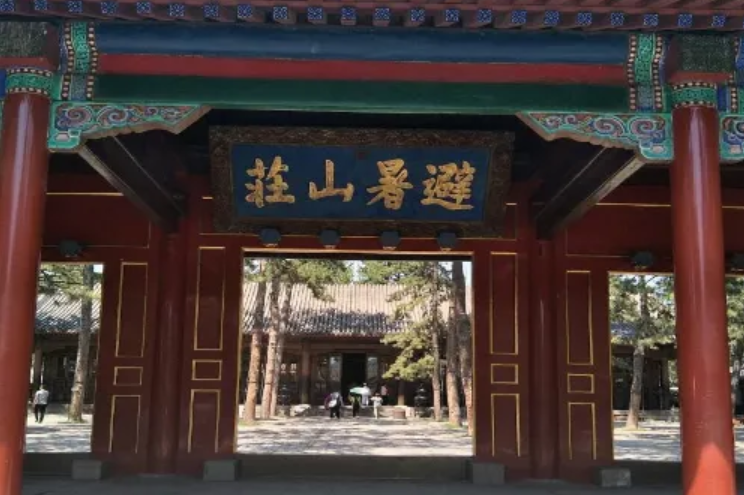
This is the core area of the Mountain Resort and the first place to visit after entering through Lizheng Gate. Here visitors can see the plaque "Mountain Resort" in Emperor Kangxi's handwriting. Although the palaces are not as magnificent as the Forbidden City, they are full of freshness and elegance, reflecting the Qing royal architectural style. Visitors can feel the broad and far-reaching mind of the emperors and appreciate the grandeur of the Kangxi-Qianlong prosperous age.
Lake Area
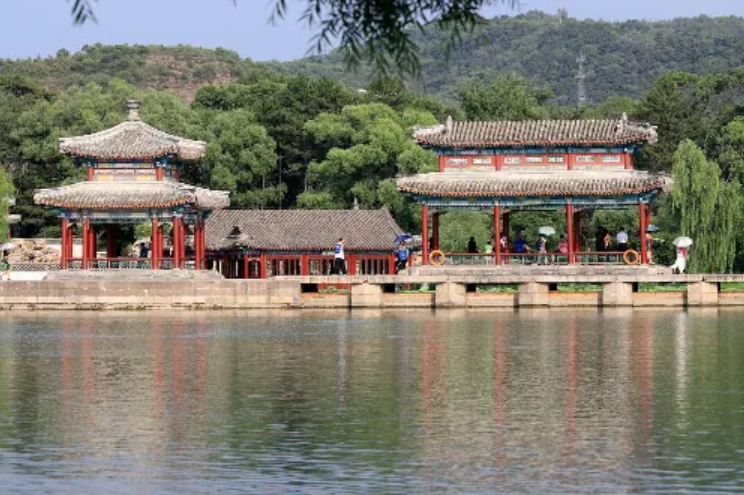
After leaving through Xiuyun Gate and crossing Wanhe Songfeng Bridge, visitors reach the Lake Area. Here there is the Zhijing Yun Causeway, modeled after the Su Causeway of West Lake, and Ruyi Island, the resort's earliest "palace area." On the island is Yanyu Tower (Misty Rain Tower), said to be the prototype of "Shufangzhai," the residence of Little Swallow in the TV series My Fair Princess. Across the lake, it faces Jinshan Island, built in imitation of Jinshan Temple in Zhenjiang, fully displaying the beauty of Jiangnan scenery.
Plain Area
Entering from Ruyi Island Bridge, visitors arrive at the Plain Area. This was where emperors rode horses in the past. Starting from Shuiliu Yunzai Pavilion, visitors can enjoy the scenery on the north bank of Cheng Lake and see the Rehe River, the shortest river in the world. Continuing north, attractions such as Mongolian yurts, Chunhao Studio, and Yongyou Temple allow visitors to experience the boldness of the Mongolian grasslands.
Puning Temple
This is a temple with strong Tibetan Buddhist characteristics and was a holy site where Qing emperors prayed and offered sacrifices. Its most famous feature is the 26-meter-tall Thousand-Hand Guanyin statue, one of the largest Guanyin statues in China, which gives a powerful visual impact.
Putuo Zongcheng Temple
Also known as the Little Potala Palace, it is named for its architectural style similar to that of Tibet. Its unique architectural style is a historical testimony to the integration of Manchu, Han, Tibetan, and Mongolian cultures, and it has extremely high historical and artistic value.
Suggested Tour Routes:
Daytime Route
Enter through Lizheng Gate and first visit the Palace Area to experience the splendor of royal architecture. Then leave through Xiuyun Gate and tour the Lake Area to enjoy scenery like a Jiangnan water town. Next, exit through Ruyi Island Bridge and go to the Plain Area to experience grassland scenery. Finally, leave through Wanshuyuan Gate and take a bus to the outlying temples area to continue visiting the Potala Palace and Temporary Palace Scenic Area and the Qingchui Peak Scenic Area. You can also visit Chengde Museum free of charge (advance reservation required).
Night Tour Route
Enter through Dehui Gate, pass Chengguan Gate, Qingbi Pavilion, Xigoukou, Fangyuan Residence, Zhiyu Ji, Shuiliu Yunzai, the north bank of Cheng Lake, the front of Putian Congyue, Wanshuyuan Light Area, Rehe River, Chunhao Studio, and the Mongolian Yurt Cultural and Creative Shop. After viewing Yongyou Temple's Liuhe Pagoda from a distance, turn back to Jinshan Back Road, Jinshan, Huashen Temple Main Road, Yuese Jiangsheng, Shuixin Xie, and Juan'e Shengjing, and finally exit through Chengguan Gate.
Travel Tips:
Plan your time reasonably: The scenic area is large. It is recommended to allow at least half a day. If you want a detailed tour and to visit the surrounding temples, arrange one day or more.
Wear comfortable clothing: There is a lot of walking in the scenic area. Comfortable shoes and clothing are recommended.
Learn about the cultural background in advance: You can consult relevant materials in advance or use the scenic area's guide service to understand the historical and cultural background of the attractions and enhance your experience.
Pay attention to weather changes: Summers in Chengde are relatively cool, but the temperature difference between morning and evening is large, and weather in mountainous areas is changeable. It is recommended to carry a jacket and rain gear.
Precautions:
Follow scenic area regulations: Smoking and littering are prohibited. Please protect cultural relics and the environment and observe public order.
Pay attention to safety: Some mountain paths are complex. Watch your step while touring, especially on rainy days or when roads are slippery, to avoid falling.
Keep your belongings safe: There are many visitors in the scenic area. Take care of your personal belongings, especially in crowded places and on public transport, to prevent loss.
Buy tickets and make reservations in advance: During peak season, tickets may be in short supply. It is recommended to purchase tickets in advance through official channels and enter according to the reservation time to avoid delaying your trip.
Transportation:
Bus: Take buses 6, 10, 15, 28, etc., and get off at Mountain Resort Station to reach Lizheng Gate of the scenic area.
Taxi: Taking a taxi within Chengde city is convenient. The starting fare is generally about 7 yuan, and the fare varies depending on the distance.
Self-driving: The scenic area has parking lots. Self-driving visitors can follow navigation. Parking fees are generally about 5 yuan per hour for small cars, subject to on-site rates.
Opening Hours:
The opening hours for the Mountain Resort Scenic Area and the Potala Palace and Temporary Palace Scenic Area are 7:00–18:00; ticket sales stop at 17:00 and entry stops at 17:10. In the Qingchui Peak Scenic Area, Qingchui Peak National Forest Park is open 7:30–18:00; ticket sales stop at 17:00 (the ticket office at the foot of Qingchui Peak stops at 16:30), and entry stops at 17:10. Pule Temple and Anyuan Temple are open 7:00–18:00; ticket sales stop at 17:00 and entry stops at 17:10. The Mountain Resort night tour is open 19:00–22:00; entry begins at 19:00, lights turn on at 20:00, entry stops at 21:30, and the park closes at 22:00. For citizens holding annual passes and those eligible for free admission, entry closes at 19:00.
Tickets:
Tickets are sold separately for each scenic area, with different prices.
Tickets start at 10 yuan.