The Yin Xu Scenic Area is located in Xiaotun Village, Yindu District, Anyang City, Henan Province, spanning both the north and south banks of the Huan River. It is the site of the late Shang Dynasty capital in China, one of China's first batch of Major Historical and Cultural Sites Protected at the National Level, a National 5A Tourist Attraction, and a World Cultural Heritage Site. The scenic area covers about 24 square kilometers and consists of the Yin Xu Royal Tombs Site, the Yin Xu Palace and Ancestral Temple Site, the Huanbei Shang City Site, and other parts. It features rich cultural remains such as oracle bone inscriptions, bronze ware, and capital city ruins, comprehensively showcasing the splendid civilization of the Yin-Shang period and serving as an important base for the study of ancient Chinese civilization.
Historical Culture
Yin Xu is the first capital city site in Chinese history that is documented in written records and confirmed by both archaeology and oracle bone inscriptions. Around 1300 BC, King Pan Geng of the Shang Dynasty moved the capital to Yin (present-day Anyang). After that, the Shang Dynasty passed through 8 generations and 12 kings here over 255 years, making it the political, economic, and cultural center of China at that time.
Since the discovery of oracle bone inscriptions in the late Qing Dynasty, about 150,000 pieces of inscribed oracle bones have been unearthed at Yin Xu. The recorded content involves many aspects such as politics, economy, military affairs, culture, astronomy, and calendrical systems, making them precious materials for studying Shang Dynasty society. In addition, a large number of exquisite bronze vessels have been unearthed at Yin Xu, such as the world-famous Simuwu Ding (now called the "Houmuwu Ding"), weighing 832.84 kilograms, which is the largest and heaviest bronze ritual vessel ever unearthed in the world.
After the founding of New China, archaeological excavation and protection work at Yin Xu continued to advance. In 1961, Yin Xu was listed among the first batch of Major Historical and Cultural Sites Protected at the National Level; in July 2006, Yin Xu was inscribed on the UNESCO World Heritage List, becoming a cultural treasure shared by all humanity.
Main Attractions
Yin Xu Palace and Ancestral Temple Site
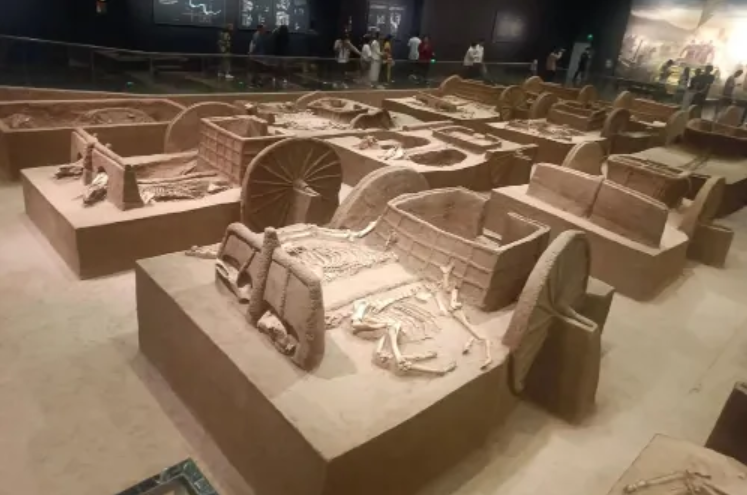
Located on the south bank of the Huan River, this was the place where Shang kings handled government affairs and resided, and it is also the core area of Yin Xu, covering about 71.5 hectares. More than 80 building foundations of palaces and ancestral temples have been found in the site, which can be divided by function into palaces, ancestral temples, and other types. Among them, the Group B foundations are grand in scale and may have been the palace area of the Shang kings. In addition, the Yin Xu Museum is located here, with a collection of more than 4,000 cultural relics, systematically displaying Yin-Shang culture.
Yin Xu Royal Tombs Site
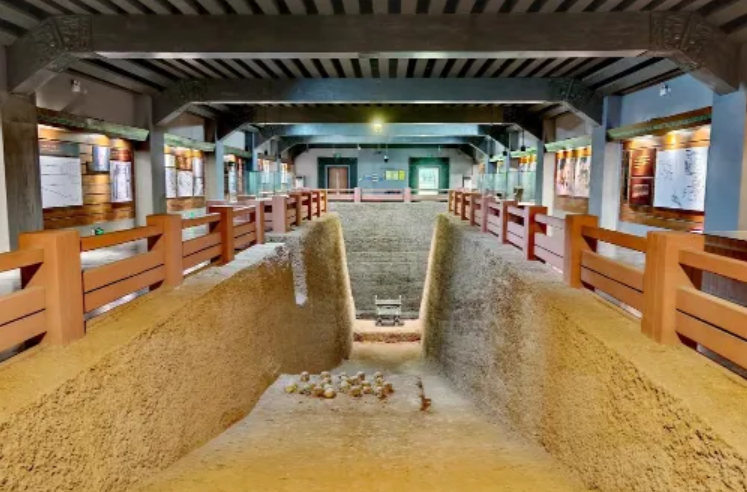
Located north of Wuguan Village on the north bank of the Huan River, facing the Palace and Ancestral Temple Site across the river, with a total area of about 11.3 hectares. A total of 13 large tombs and more than 2,500 sacrificial pits have been found here, making it the earliest and most complete known royal tomb complex in China. Among them, the "Houmuwu Ding" unearthed from the Wuguan Village large tomb is an outstanding representative of Shang Dynasty bronze ware, demonstrating the superb bronze casting technology of that time.
Oracle Bone Inscription Stele Forest
Located within the Yin Xu Palace and Ancestral Temple Site, it displays nearly 40 steles inscribed with representative characters selected from oracle bone inscriptions. These steles showcase the evolution and characteristics of oracle bone inscriptions in the form of calligraphic art and are an important window for visitors to understand oracle bone inscription culture.
Fu Hao Tomb
Located in the southwestern part of the Palace and Ancestral Temple Site, it is currently the only completely preserved tomb of a member of the Shang royal family at the Yin Xu site. The tomb owner, Fu Hao, was the consort of King Wu Ding of Shang and the first female military commander in Chinese history with verifiable records. A total of 1,928 burial objects were unearthed from this tomb, including 468 bronze objects and 755 jade objects. The large number and exquisite craftsmanship of the cultural relics are rare in the history of Yin Xu excavations.
Suggested Tour Route:
Recommended one-day tour route: After arriving at the scenic area in the morning, first visit the Yin Xu Palace and Ancestral Temple Site and tour the Yin Xu Museum to understand the overall context of Yin-Shang culture, about 1.5 hours; then go to Fu Hao Tomb to appreciate the exquisite unearthed cultural relics, about 1 hour; after resting and dining within the site, go in the afternoon to the Oracle Bone Inscription Stele Forest to experience the unique charm of oracle bone inscriptions, about 1 hour; finally take a vehicle to the Yin Xu Royal Tombs Site on the north bank of the Huan River to visit the large tombs and sacrificial pits and learn about Shang royal tomb culture, about 2 hours.
Tour Suggestions:
It is recommended to book tickets in advance through the scenic area's official WeChat public account or website to avoid queuing.
The scenic area is rich in historical and cultural content. You may rent an electronic guide device (rental about 20 yuan) or hire a guide (fee about 100-150 yuan per time) to gain a deeper understanding of Yin-Shang culture.
In summer, pay attention to sun protection; in winter, keep warm. The site is large, so it is recommended to wear comfortable sports shoes.
If you are interested in oracle bone inscriptions, you may learn some basic knowledge in advance or bring related books for reference.
Notes:
Some sites and cultural relics in the scenic area are relatively fragile. Please do not touch, climb, or carve on them, and consciously observe visiting order.
The Yin Xu Royal Tombs Site and the Palace and Ancestral Temple Site are on opposite banks of the Huan River. If you need to travel between them, you may take the scenic area shuttle bus (additional fee required) or drive yourself.
Please do not smoke or litter in the scenic area, and jointly maintain the site environment.
Follow the guidance of staff when visiting, and contact scenic area service personnel promptly in case of emergencies.
Transportation:
Bus: Within Anyang City, take buses such as Route 1, Route 18, Route 39, and Route Y1, get off at the "Yin Xu Museum" stop, and walk to the scenic area.
Self-driving: From Anyang Railway Station, drive along Wenming Avenue and Zhongzhou Road, about 7 kilometers in total, about 20 minutes by car; from Anyang East Station, via Guangming Road, Wenfeng Avenue, and other roads, about 15 kilometers in total, about 30 minutes by car. The scenic area has a parking lot, and the parking fee for small vehicles is about 5-10 yuan per day.
Opening Hours:
The scenic area is open all year round. Opening hours are 8:00-18:00 (April 1-October 31); 8:00-17:30 (November 1-next March 31). Ticket sales and entry stop 1 hour before closing.
Tickets:
Tickets are 70 yuan per person.