The Zhoucun Ancient Commercial Town Scenic Area is located in Zhoucun District, Zibo City, Shandong Province. It is a national 5A-level tourist attraction with a total area of about 60.5 hectares and a core protection area of 19.7 hectares. With "Ming and Qing ancient streets and commercial port culture" as its core features, it is known as the "Dry Dock" and the "living museum complex of ancient commercial streets." About 50,000 square meters of Ming and Qing ancient buildings remain, including more than 10 ancient streets such as Main Street, Silk Market Street, and Silver Market Street, and more than 30 historical buildings such as the Thousand Buddha Pavilion, Kuixing Pavilion, and Dadetong Draft Bank. As an important commercial town in northern China from the Ming and Qing dynasties to the Republic of China period, Zhoucun was once known together with Foshan, Jingdezhen, and Zhuxian Town as one of "China's Four Great Dry Docks." Its commercial prosperity, described as "bringing in gold daily," was recorded in history. Today, it still preserves typical northern commercial port architectural layouts such as "shop in front, residence behind" and "four waters returning to the hall."
Historical Culture
Zhoucun's commercial history can be traced back to the Warring States period. By the Han Dynasty, a village had already formed. During the Ming and Qing dynasties, because it was located at an important transportation route in central Shandong, it became an important birthplace of Lu merchant culture. During the Yongle period of the Ming Dynasty, Zhoucun rose due to the silk trade. The scene of "mulberry trees filling the fields, every household raising silkworms, the sound of looms at every step, every family weaving silk and satin" lasted for hundreds of years, and Silk Market Street got its name from this.
In the mid-Qing Dynasty, Zhoucun's commerce reached its peak, with hundreds of firms and workshops covering more than 20 industries such as silk, tea, money houses, and pawnshops. Among them, Silver Market Street gathered 108 draft banks and money houses, becoming an important financial center in the north. During the Qianlong period, Zhoucun was bestowed the plaque "Number One Village Under Heaven" by the emperor, and its commercial influence radiated to the Beijing-Tianjin-Hebei region as well as the Northeast and Northwest.
In modern times, as an important commercial port along the Jiaoji Railway, Zhoucun saw the blending of Chinese and Western cultures. Existing buildings such as the former site of the British American Tobacco Company and shops in Republican style witnessed the process of modern commercial transformation. Zhoucun's merchant guild culture and silk craftsmanship (such as the production technique of "Zhoucun Shaobing") have been listed as intangible cultural heritage, continuing the Lu merchant spirit of "honest operation and collective development."
Main Attractions
Main Street
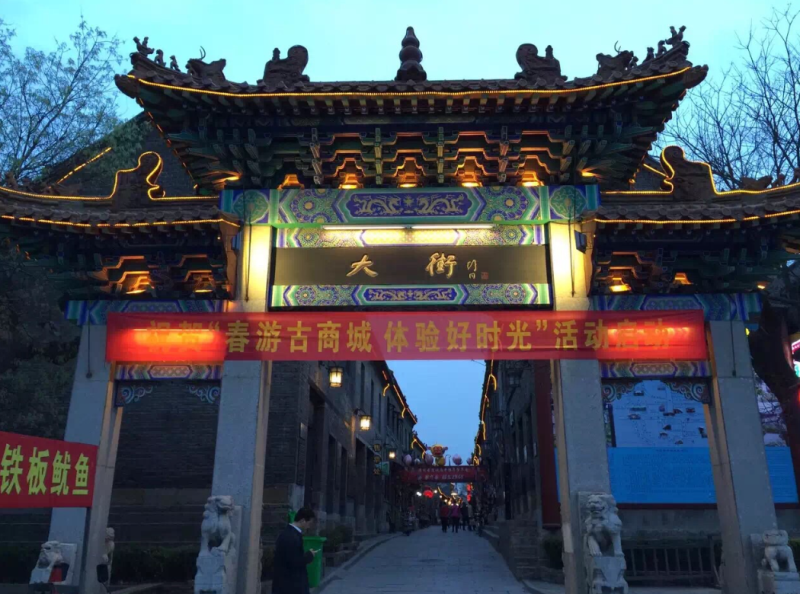
Main Street is the core street of Zhoucun Ancient Commercial Town, with a total length of 400 meters and a width of 8 meters. Its bluestone pavement has been polished smooth as a mirror over hundreds of years. On both sides of the street are more than 200 shops in Ming and Qing style, mostly two-story brick-and-wood structures with gray bricks and tiles and upturned eaves, preserving architectural decorations such as "five ridges and six beasts" and "zouma boards." Among them, the "Zhoucun Shaobing Museum" displays the century-old shaobing-making technique, and the former site of the "Great Dyehouse" restores the dyeing scenes from the TV series "The Great Dyehouse." Visitors can experience traditional cloth-dyeing craftsmanship (experience price 30 yuan/person).
Silver Market Street
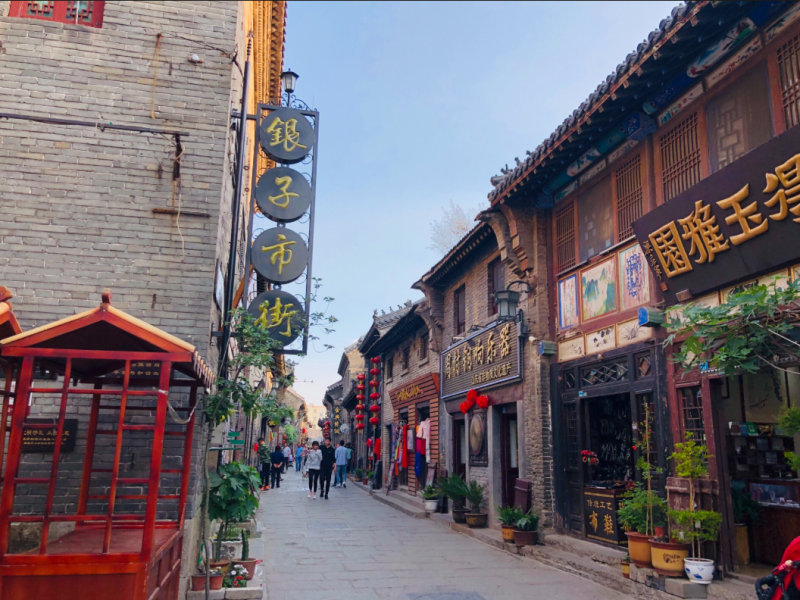
Silver Market Street was the "financial street" of northern China in the Qing Dynasty. It is 130 meters long and got its name because it gathered a large number of draft banks and money houses. The Dadetong Draft Bank in the street (originally established by the Qiao family of Shanxi) has a building area of about 600 square meters. Its interior facilities such as the "counter," "accounting room," and "vault" are well preserved, showing the financial operation model of the late Qing Dynasty and early Republic of China. Next to it, the former site of the "Fushunhao" Money House has a currency exhibition displaying more than 200 coins from the Qin Banliang to Republican paper money, intuitively presenting Zhoucun's commercial and financial history.
Thousand Buddha Pavilion
The Thousand Buddha Pavilion is located in the northern part of the ancient commercial town. It was first built in the Tang Dynasty and rebuilt during the Wanli period of the Ming Dynasty. It is one of the oldest surviving buildings in Zhoucun. The pavilion faces south, is 20 meters high, and is a three-story brick-and-wood structure. The ground floor is an arched passage (passable), and the second and third floors enshrine more than a thousand glazed Buddha statues (more than 300 remain). Among them, the Ming Dynasty "Medicine Buddha" glazed statue is 1.5 meters high and exquisitely crafted. The top of the pavilion is covered with green glazed tiles, and the ridges are decorated with auspicious beasts such as dragons, phoenixes, and lions, reflecting the architectural feature of Buddhist-Taoist integration. From the pavilion, visitors can overlook the entire ancient commercial town.
Kuixing Pavilion
Kuixing Pavilion stands at the eastern end of Silk Market Street. It was first built during the Daoguang period of the Qing Dynasty. It is 15 meters high and is a hexagonal pavilion-style building. The ground floor has an archway, and the upper floor enshrines the statue of Kuixing (holding a vermilion brush, symbolizing literary fortune). The wall of the pavilion is inlaid with the stone plaque "Wen Guang She Dou," and the surrounding area is carved with patterns of "qin, chess, calligraphy, and painting," reflecting the tradition that Zhoucun merchants "valued both commerce and culture." Historically, Zhoucun merchants often worshipped here, praying for their children to succeed in the imperial examinations. Today, it has become one of the iconic landscapes of the ancient commercial town.
Zhoucun Shaobing Museum
The Zhoucun Shaobing Museum is located in the middle section of Main Street, with a building area of about 800 square meters. It is divided into three exhibition areas: "Historical Origins," "Production Workshop," and "Folk Customs Display." Through old photos and physical tools (such as a century-old griddle), the museum tells the history of Zhoucun shaobing evolving from Han Dynasty "hubing." In the "transparent workshop," visitors can watch the whole process of master craftsmen making shaobing known for being "thin as cicada wings, fragrant and crisp" (about 200 pieces per hour). Visitors can also personally participate in making them (experience price 20 yuan/portion, including 5 shaobing).
Food
Zhoucun Shaobing
Zhoucun Shaobing is a national geographical indication product. It began in the Han Dynasty and flourished in the Ming and Qing dynasties. It is known for being "thin, fragrant, crisp, and crunchy." The traditional method uses millet flour and sesame as raw materials and undergoes three processes: "rolling, dipping, and baking" (the griddle temperature must be controlled at about 200°C). It is made into round cakes about 16 cm in diameter and less than 1 mm thick, evenly covered with sesame seeds, and crumbles upon entering the mouth. At the "Zhoucun Shaobing Old Shop" in the scenic area (Main Street No. 1), visitors can taste freshly baked shaobing. The original flavor costs 10 yuan/bag (200 grams), and there are also sweet and salty varieties, suitable as souvenirs.
Zhoucun Hot Pot
Zhoucun Hot Pot is a northern specialty snack originating from the "apprentice meals" of Zhoucun commercial firms in the Qing Dynasty. It is named because it is cooked in a large pot. Traditional hot pot uses beef broth as the soup base and adds ingredients such as meatballs, tofu, fried meat, and vermicelli, seasoned with sesame paste and chive flowers. It is served in special small pots (about 15 cm in diameter), reflecting the market food wisdom of "one pot cooking a hundred flavors." The "Old Zhoucun Hot Pot" restaurant in the ancient commercial town (Silver Market Street No. 8) offers single servings of hot pot (35 yuan/portion), which tastes even better with shaobing.
Silkworm Chrysalis Dish
Silkworm chrysalis dish is a specialty food derived from Zhoucun's silk culture. It uses fresh tussah silkworm chrysalises and is made by deep-frying, stir-frying, or braising. It is rich in protein. Traditional methods include "dry-fried silkworm chrysalises" and "five-spice silkworm chrysalises." The taste is crisp and slightly nutty, and it is a "drinking dish" at local banquets. It can be tasted at the "Farmhouse Restaurant" around the scenic area (southern section of Silk Market Street), priced at 25-30 yuan per portion, suitable for tourists trying local specialties.
Millet Pancake
Zhoucun millet pancake uses locally produced millet as raw material. It is made by grinding the millet into paste with a stone mill and spreading it on a griddle. It is thin, soft, and chewy, and can be rolled with scallions and sauced meat. Unlike pancakes in other parts of Shandong, Zhoucun pancakes add sesame and Sichuan pepper leaves for seasoning, giving them a unique aroma. They are sold at street stalls in the ancient commercial town (middle section of Main Street) at 5 yuan/piece, freshly made and eaten on the spot, allowing visitors to experience local market flavor.
Tickets:
Admission is free, but some attractions require separate charges. It is recommended to buy a combo ticket at 50 yuan/person (including the Great Dyehouse, Zhuangyuan Mansion, Folk Customs Exhibition Hall, Draft Bank Exhibition Hall, and Kaka Magic Photo Gallery).
You can search for the official WeChat public account "Zhoucun Ancient Commercial Town" to get the latest updates or buy tickets online.
Opening Hours:
The overall opening hours of the scenic area are 8:30-17:30 (April 1-October 31); from November 1 to March 31 of the following year, the opening hours are 8:30-17:00. Among them, pavilion attractions such as the Thousand Buddha Pavilion and Kuixing Pavilion stop entry at 16:30, and the handmade experience project at the Zhoucun Shaobing Museum starts no later than 16:00.
Suggested Route:
It is recommended to arrange a half-day itinerary: enter from the south gate of the scenic area at 9:00 a.m., first tour Main Street (1 hour), visit the Zhoucun Shaobing Museum and experience making shaobing; at 10:30 go to Silver Market Street to visit Dadetong Draft Bank and Fushunhao Money House (1 hour); at 11:30 dine at Old Zhoucun Hot Pot; at 13:00 visit the Thousand Buddha Pavilion (30 minutes) and climb up to overlook the panorama; at 13:30 go to Silk Market Street to visit Kuixing Pavilion and the former site of the Great Dyehouse (1 hour); at 14:30 buy specialties such as silkworm chrysalis dish and shaobing on Silk Market Street; at 15:00 leave from the east gate and end the itinerary. The total walking distance is about 2 kilometers. Within the ancient streets, visitors can take a human-powered rickshaw (50 yuan/hour, negotiable) instead of walking.
Transportation:
Bus: In Zibo city, take buses No. 34, 42, or 96 directly to "Zhoucun Ancient Commercial Town Station." The journey takes about 30 minutes (from Zibo Station), and the fare is 2 yuan/person. Within Zhoucun District, take No. 1 or No. 238 to "Main Street Station," then walk 5 minutes to arrive.
Self-driving: From downtown Zibo, get off the expressway at Zhoucun Interchange, drive east along Xinjian West Road for 2 kilometers to reach the scenic area parking lot. Parking fee is 5 yuan/hour. In peak seasons (May Day, National Day), it is recommended to arrive before 9:00.
High-speed rail bus: From Zibo North Station (high-speed rail station), take bus No. 160 to Zhoucun Bus Station, then transfer to No. 238 to "Main Street Station." The whole journey takes about 1 hour, and the total fare is 5 yuan/person; or take a taxi to the scenic area, costing about 30 yuan and taking 25 minutes.
Must-Visit Attractions:
Main Street: Stroll along the 400-meter ancient street to see Ming and Qing shops, experience cloth-dyeing craftsmanship at the Great Dyehouse, and feel the commercial atmosphere of the "Dry Dock."
Silver Market Street: Visit Dadetong Draft Bank, learn about Qing Dynasty financial operations, and see the "vault" facilities of a century-old money house.
Thousand Buddha Pavilion: Climb the Tang Dynasty pavilion to see glazed Buddha statues, overlook the ancient commercial town, and experience the architectural art of Buddhist-Taoist integration.
Zhoucun Shaobing Museum: Watch the shaobing-making technique, personally participate in baking, and taste freshly baked crispy shaobing.
Travel Tips:
The best seasons to visit are April-May (bright spring weather, suitable for photos) and September-October (cool climate, can be combined with a Zibo barbecue food trip). Avoid heavy summer rain and severe winter cold.
Shops such as "Zhoucun Shaobing" and "Great Dyehouse" in the ancient streets offer hanfu rental (50 yuan/hour). Wearing hanfu for photos creates a stronger atmosphere, and Kuixing Pavilion and Thousand Buddha Pavilion are recommended for photo spots.
For an in-depth experience, it is recommended to join the scenic area's "Lu Merchant Culture Study Tour" (120 yuan/person), including professional guide commentary, draft bank bookkeeping experience, shaobing making, and other projects, suitable for families and culture enthusiasts.
For dining, it is recommended to choose time-honored restaurants in the scenic area, such as "Old Zhoucun Hot Pot" and "Shaobing Family." The average consumption is about 50 yuan, and visitors can taste all local specialties.
For shopping, focus on Zhoucun shaobing (recommended to buy freshly baked ones, shelf life 15 days) and silk scarves (average price 80-200 yuan in Silk Market Street shops). Compare prices and avoid buying high-priced souvenirs.
Notes:
The bluestone roads in the ancient streets are slippery on rainy days, so it is recommended to wear non-slip shoes; in summer, the sun is strong, so hats and drinking water are advisable.
Smoking, touching Buddha statues, and touching cultural relics are prohibited in ancient buildings such as the Thousand Buddha Pavilion and Kuixing Pavilion. Follow "No Photography" signs.
When experiencing projects such as cloth dyeing at the Great Dyehouse and shaobing making, follow staff instructions and avoid touching high-temperature tools (such as griddles and dye vats).
During holidays (especially Spring Festival and National Day), the ancient streets are crowded. Take care of the elderly and children, keep personal belongings safe, and prevent crowding and stampedes.
There are multiple parking lots around the scenic area. Parking spaces are tight in peak seasons, so green travel is recommended; motor vehicles are prohibited in the ancient streets, and only rickshaws and bicycles are allowed.