The Huzhu Tu Ethnic Homeland Park Scenic Area is located in Weiyuan Town, Huzhu Tu Autonomous County, Haidong City, Qinghai Province, 31 kilometers from Xining, the capital of Qinghai Province. The scenic area covers a total area of 6.81 square kilometers, with a core tourist area of 3.25 square kilometers. It is a national 5A-level tourist attraction. The scenic area includes five core attractions: Tianyoude China Highland Barley Wine Origin, Rainbow Tribe Tu Ethnic Park, Nadun Manor, Western Tu Ethnic Folk Culture Village, and Xiaozhuang Tu Ethnic Folk Culture Village. They respectively showcase the colorful folk culture of the Tu ethnic group, the long-standing highland barley wine culture, the mellow and time-honored mingliu liquor culture, the ancient and pure architectural culture, the distinctive residential culture, and the simple and mysterious religious culture. It is the most comprehensive, most authentic, and most genuine tourist attraction in the world themed on "Tu ethnic culture," integrating sightseeing, leisure vacation, folk experience, and religious pilgrimage.
Historical Culture
The Tu ethnic group is one of the ancient ethnic groups that have lived in Qinghai for generations. Due to its unique cultural and natural conditions, it has formed a distinctive Qinghai Tu ethnic culture and art. The Tu people originally believed in polytheism, and some also believed in Taoism. After the Yuan and Ming dynasties, they generally believed in Lamaism, but folk beliefs still existed. There are more than 40 Lamaist monasteries in Tu areas, and the famous ones include Youning Temple, Quezang Temple, and Guanghui Temple. Among them, Youning Temple is known as the "Mother of All Temples North of the Huangshui River" and produced many famous monks, such as Changkya, Tukwan, and Sumpa Living Buddles, who had considerable influence throughout Tibetan and Mongolian areas. The ancestors of the Tu people, the Tuyuhun, believed in Shamanism when they were in Liaodong. To this day, remnants of Shamanism can still be seen in the lives of the Tu people, such as offering sacrifices to oboos, the White Tiger Sacrifice, and selecting sacred sheep. In addition, the Tu people also have rich traditional festivals, such as the Youning Temple Scripture Recitation Meeting on the 14th day of the first lunar month, the Weiyuan Town Arena Meeting on the 2nd day of the second lunar month, temple fairs on the 3rd day of the third lunar month and the 8th day of the fourth lunar month, the Danma Opera Meeting on the 11th day of the sixth lunar month, the "Youth" Meetings on the 13th and 29th days of the sixth lunar month, and the "Nadun" (harvest celebration) in the Sanchuan area of Minhe from the 23rd day of the seventh lunar month to the ninth lunar month. Among them, the Arena Meeting, Danma Opera Meeting, and "Nadun Festival" are the most distinctive ethnic features.
Main Attractions
Rainbow Tribe Tu Ethnic Park
Rainbow Tribe Tu Ethnic Park is a large-scale Tu ethnic folk culture theme park, located in the southwest of Weiyuan Town, Huzhu Tu Autonomous County, Qinghai Province, 30 kilometers from the provincial capital Xining. It covers an area of 120,000 square meters, with a building area of 13,000 square meters. It is a large ancient architectural complex of Tu ethnic folk culture built entirely in the forms of blue bricks and tiles, rammed earth adobe, brick carving, and wood carving. The main tourist projects include the Century-Old Oil Mill, Shiyide Distillery, Equestrian Club, Archery Range, Living Buddha Hall, Anzhao Square, Tusi Mansion, Zhuangkuo Courtyard, Production and Living Exhibition Hall, Tu Ethnic Costume Exhibition Hall, Tu Ethnic Altar, Religious Exhibition Hall, Intangible Cultural Heritage Inheritance and Protection Center, Tu Ethnic Grand Archway, Rainbow Gate, Eighteen Workshops Commercial Street, and Tuyuhun Military Camp.
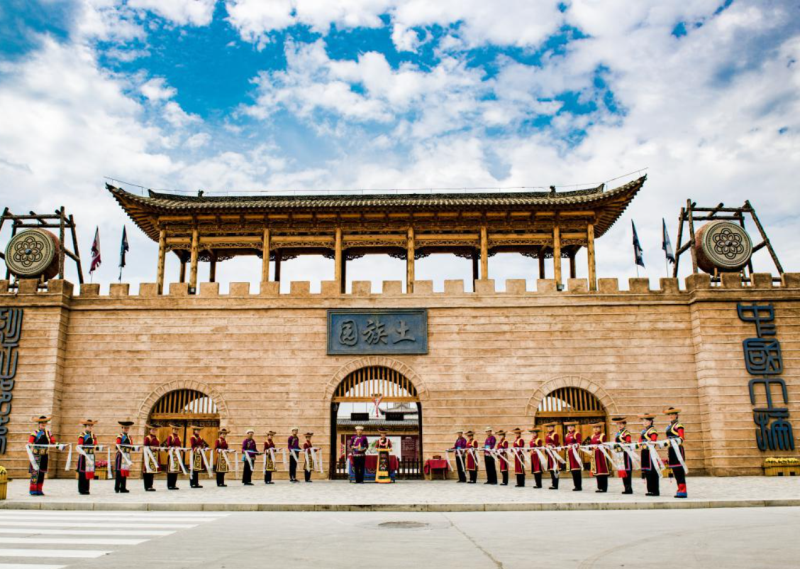
Nadun Manor
Nadun Manor is located at the core of Huzhu Tu Ethnic Homeland Park, covering an area of nearly 50 mu. It was first built in August 2005. It contains the Highland Barley Mingliu Liquor Culture Museum, which mainly showcases the thousand-year-old ancient wine culture of the Qinghai-Tibet Plateau and reproduces the more than 1,300-year history of brewing and inheritance of highland barley wine; an underground buried wine cellar that showcases the century-old burial history of Weiyuan highland barley mingliu liquor; and the Jinhua Performing Arts Center, which mainly displays Tu ethnic national-level intangible cultural heritage such as Hua'er, costumes, Tu weddings, and pan embroidery.
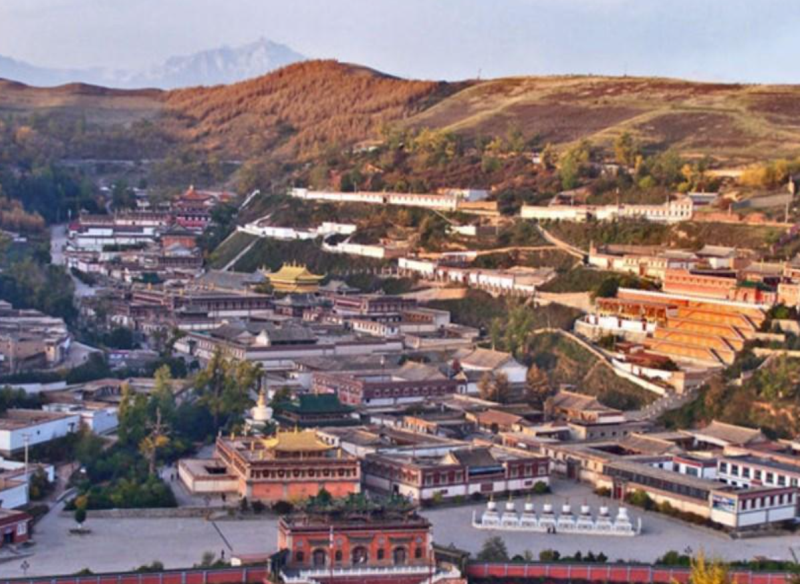
Western Tu Ethnic Folk Culture Village
The Western Tu Ethnic Folk Culture Village covers an area of 20,000 square meters. It is a large-scale folk tourism attraction integrating Tu architectural culture, costume culture, culinary culture, folk culture, and highland barley wine culture, and is known as "China's No. 1 Tu Ethnic Village." The attraction includes the "World's No. 1 Mani Stone," a three-courtyard imitation Ming Dynasty Tusi mansion inn, an ancient original water mill and century-old oil mill, a Tu ethnic residence from the Daoguang period of the Qing Dynasty, the famous Weiyuan Distillery in the Huangshui-Hehuang region, a Wheel Swing performing arts square showcasing Tu song and dance, a Tibetan Buddhist building "Bengkang," a "Quanquan Banquet" reflecting the oldest traditional banquet culture of the Tu ethnic group, and a Tu ethnic folk exhibition hall.
Tianyoude China Highland Barley Wine Origin
Tianyoude China Highland Barley Wine Origin is the country's largest highland barley wine production base and highland barley wine place-of-origin protection base. Huzhu highland barley wine originated in the Yuan Dynasty, flourished in the Ming and Qing dynasties, developed in modern times, and is brilliant today. At present, the company has registered capital of 450 million yuan, total assets of 1.8 billion yuan, covers an area of 300,000 square meters, has more than 1,800 employees, and has an annual highland barley raw liquor production capacity of 15,000 tons. The company produces four major series of highland barley wine products under the brands "Huzhu," "Tianyoude," "Badafangzuo," and "Yongqinghe," with more than 100 varieties in total.
Xiaozhuang Tu Ethnic Folk Culture Village
Xiaozhuang Tu Ethnic Folk Culture Village in Weiyuan Town is one of the "Top Ten Traditional Villages" in Huzhu County. The Tu ethnic population accounts for 98.3% of the total population of the village, and it has 90 rural tourism reception households. It has been rated by national and provincial, municipal departments as a national rural tourism demonstration site, one of the most beautiful villages in Qinghai Province, and one of the first batch of China rural tourism maker demonstration bases.
Food
Bianshi
Bianshi uses "Hailiu" (fried flour) as filling, and the sealed edges are pinched together on both sides to form a fish shape. On the evening of the first day of the tenth lunar month, it is first offered to ancestors, and then the whole family enjoys it together.
Ximairi
In the Tu language, it refers to a ceremonial offering made by filling a painted round fried flour box with fried flour, decorating it with butter flowers on top, and shaping the sun and moon at the very top. It implies sharing the glory of the sun and moon and auspicious completeness. When entertaining guests and welcoming honored visitors, Tu people in the Huzhu area set up a table at the gate with a date box and "Ximairi"; at family banquets, "Ximairi" is offered on the table, and at red and white events, a large "Quanquan Banquet" must also offer "Ximairi." It is a distinguished ceremonial offering.
Halihai
In the Tu language, it means nettle. It is a food made from nettles in Datong, Huzhu, and other places.
Hailiu
In the Tu language, it means fried flour. Add Sichuan pepper powder, salt, and other seasonings to an appropriate amount of water, pour in qing oil, and then evenly sprinkle highland barley flour or wheat flour on top, so that the ratio of water, oil, and flour is 2:1:4. Then poke a few holes with chopsticks, bring to a boil over low heat, and slowly steam until cooked. When eating, add chopped green onion, spices, and other ingredients, and stir and mix well. If pea flour paste is added, it is fragrant and delicious, oily but not greasy.
Mahafangzi
In the Tu language, "Maha" means meat, meaning meat squares or meat chunks. During the New Year, festivals, or other grand and auspicious occasions, the Tu people entertain guests with large pieces of pork. According to the size of the wooden tray, a whole piece of pork is cut, generally about 2-5 kilograms, without any seasoning, with a five-inch knife inserted on top, allowing guests to cut and eat it themselves. It is also called hand-grabbed large meat. At weddings, the groom's family must respectfully present "Mahafangzi" to the elders of the bride's family and the joyful guests, to express that the two families have perfectly become flesh-and-blood relatives.
Highland Barley Wine
The Tu people often treat guests with wine and take delight in making guests dead drunk. The highland barley wine here uses Walan highland barley, an ancient crop unique to the Qinghai-Tibet Plateau, as raw material and is brewed using traditional methods. It has a mellow aroma, is refreshing and sweet, and is pleasant and comforting to drink.
Tickets:
Rainbow Tribe Tu Ethnic Park ticket: 120 yuan/person.
You can search for the official public account "Huzhu Tu Ethnic Homeland Park" on WeChat to get the latest updates. As of July 17, 2025, the official WeChat public account does not provide an online ticket purchasing function.
Opening Hours:
Open all year from 08:30 to 18:00.
Opening hours may be adjusted according to seasonal changes and tourist numbers, subject to scenic area announcements.
Tour Route:
Visitors can first go to Rainbow Tribe Tu Ethnic Park to experience Tu folk culture; then go to Nadun Manor to learn about highland barley wine culture and Tu intangible cultural heritage; then go to the Western Tu Ethnic Folk Culture Village to experience Tu architecture, costumes, cuisine, and other cultures; then visit Tianyoude China Highland Barley Wine Origin to explore the brewing history of highland barley wine; and finally go to Xiaozhuang Tu Ethnic Folk Culture Village to experience Tu rural life. Of course, visitors can also adjust the order of visit according to their own interests and time.
Transportation:
Departing from Xining, you can take a bus to Huzhu County at the Xining Long-Distance Bus Station. After arriving in Huzhu County, transfer to a local bus or taxi to the scenic area.
If choosing to drive by car, you can reach the scenic area via the Lanxi Expressway, Pingda Highway, Weibei Highway, Ninghu Highway, and others. The scenic area has a parking lot, making parking convenient.
Must-Visit Attractions:
Rainbow Tribe Tu Ethnic Park: A large-scale Tu ethnic folk culture theme park that concentrates on displaying Tu history and folk culture, with many tourism projects and strong ornamental, entertainment, and participatory value.
Nadun Manor: Showcases Tu folk customs and highland barley wine culture, with the Highland Barley Mingliu Liquor Culture Museum, underground buried wine cellar, Jinhua Performing Arts Center, and others.
Western Tu Ethnic Folk Culture Village: Integrates multiple Tu cultures, with distinctive attractions such as the "World's No. 1 Mani Stone" and an imitation Ming Dynasty Tusi mansion inn.
Travel Suggestions:
It is recommended to arrange one day to visit in order to fully experience the various attractions and cultural activities in the scenic area.
You can participate in some folk experience activities in the scenic area, such as Tu wedding experiences and highland barley wine brewing experiences, to gain a deeper understanding of Tu culture.
When tasting local food, you may choose appropriately according to personal taste to avoid waste.
Notes:
Avoid eating the meat of round-hoofed livestock (horses, mules, donkeys).
Do not urinate or defecate in livestock pens.
It is taboo to pour tea for guests using cracked bowls.
Do not ask guests questions such as "Have you eaten?" or "Will you eat?"
Quarreling or hitting children in front of guests is the greatest breach of etiquette.
When entering a Tu family home, you must first greet them outside the courtyard. Only after someone responds may you enter the courtyard.
Young women's bedrooms may not be entered casually, and do not joke with unmarried girls.
Do not count their sheep as a guest.
In Buddhist halls and main halls, smoking, spitting, rummaging, touching randomly, and loud noise are taboo.
Do not step over monks' kneeling cushions and other items.
Do not sneeze or cough toward butter lamps.
When turning prayer wheels in Buddhist halls, you must turn from left to right and must not reverse.
Hunting and defecating or urinating at random are prohibited near monasteries.