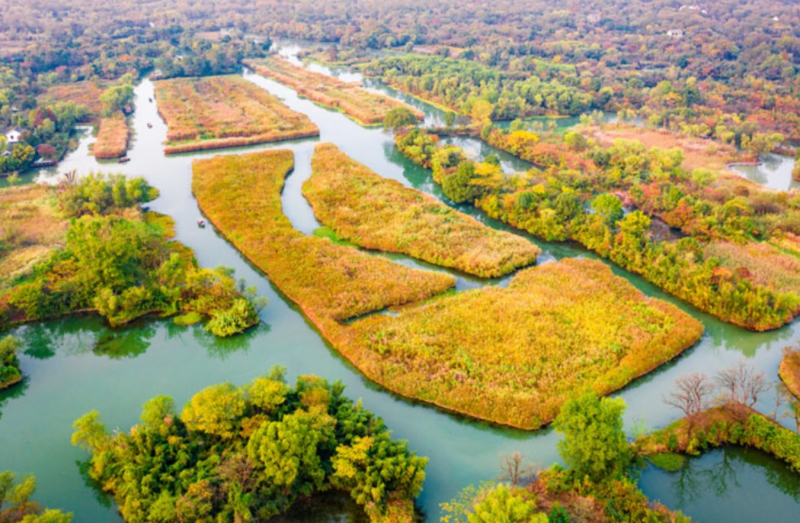
Xixi National Wetland Park is located at the junction of Xihu District and Yuhang District in Hangzhou City, Zhejiang Province. It is China's first national wetland park integrating urban wetlands, farming wetlands, and cultural wetlands, and is also a national 5A-level tourist attraction. The scenic area covers a total area of about 11.5 square kilometers, of which wetlands account for more than 70%. It contains rivers, lakes, marshes, mudflats, and other types of wetlands, with abundant ecological resources, including more than 700 species of vascular plants and more than 150 species of birds, forming a unique wetland ecosystem.
Xixi Wetland is characterized by the natural landscape of "a winding stream, a wisp of mist," and preserves a large number of traditional water town buildings and folk cultural relics, such as ancient bridges, ancient dwellings, and nunneries, with a total building area of about 30,000 square meters. As a filming location for films and television works such as If You Are the One, Xixi Wetland combines natural rustic charm with cultural heritage. It is a model for demonstrating the protection and utilization of wetland ecology, receiving more than 3 million tourists annually.
Historical Culture
The history of Xixi Wetland can be traced back to the Neolithic Age, and human activity took place here as early as four to five thousand years ago. During the Tang and Song dynasties, Xixi became a place where literati and scholars lived in seclusion and composed poetry. Bai Juyi, Su Shi, Tang Bohu, and others all left related poems. During the Ming and Qing dynasties, Xixi's farming culture and folk culture gradually flourished, forming traditional festival activities such as the "Dragon Boat Race" and the "Persimmon Festival."
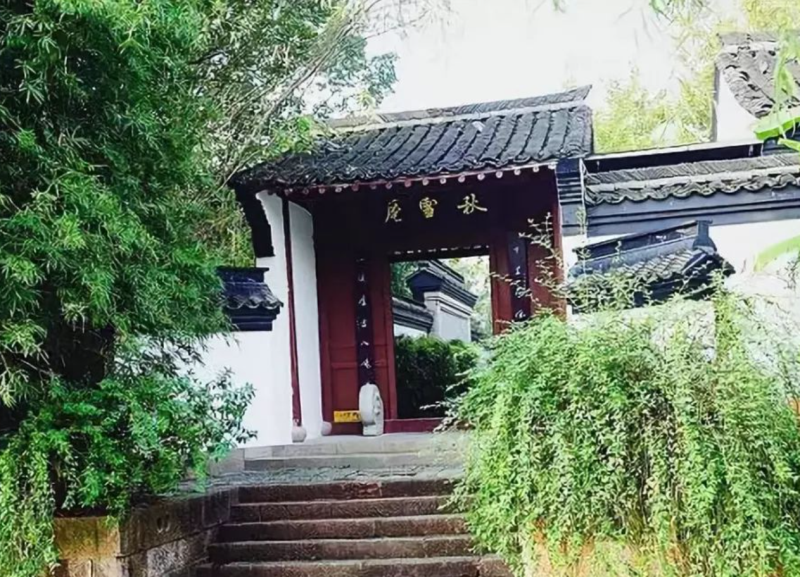
Xixi Wetland's religious culture is also quite distinctive. Historically, there were many nunneries and temples, among which Qiuxue Nunnery was the most famous. Qiuxue Nunnery was first built in the early Chunxi period of the Song Dynasty. It was named after the Ming Dynasty painter and calligrapher Chen Jiru inscribed the plaque "Qiuxue Nunnery." It was an important place for literati gatherings. The existing buildings were reconstructed in 2005 and retain the traditional Jiangnan Zen temple style.
In addition, Xixi Wetland also preserves a unique "mulberry-dike fish-pond" ecological agricultural model. This farming method, which began in the Spring and Autumn and Warring States periods, reflects the wisdom of ancient working people through a circulation system of "planting mulberries on pond dikes, feeding silkworms with mulberry leaves, feeding fish with silkworm excrement, and fertilizing ponds with fish feces." It has been listed by the Food and Agriculture Organization of the United Nations as a Globally Important Agricultural Heritage System.
Main Attractions
Yanshui Fishing Village
Yanshui Fishing Village is located in the southeast part of Xixi Wetland and is the core area showing Xixi's fisherman life, covering an area of about 5,000 square meters. The scenic area has exhibition halls such as the Mulberry and Silk Museum and the Xixi Marriage Custom Museum, displaying the traditional lifestyle and folk culture of Xixi fishermen. Visitors can experience fishing, weaving fishing nets, and other fisherman activities here, and can also taste specialty aquatic products such as Xixi mixed fish and shrimp paste. The village is surrounded by crisscrossing waterways and reeds. In the evening, cooking smoke curls upward, fully presenting the artistic conception of "Yanshui Fishing Village."
Qiuxue Nunnery
Qiuxue Nunnery is located in the reed marshes northwest of Shentankou in Xixi Wetland and is a landmark cultural attraction of Xixi Wetland. The existing buildings cover an area of about 800 square meters and consist of the main hall, meditation hall, abbot's room, and others. They are surrounded by thousands of mu of reeds. In autumn, reed flowers bloom like snow cover, hence the name "Qiuxue Nunnery." The nunnery preserves inscriptions and poems by literati of past dynasties, among which the calligraphy inscription by Dong Qichang of the Ming Dynasty is the most precious. Qiuxue Nunnery is the best place to view Xixi's reed flowers and is also an important place to experience Xixi's Zen culture.
Shentankou
Shentankou is located in the central part of Xixi Wetland and is the water transportation hub of Xixi Wetland. It is named for its wide water surface and deep water, with a water area of about 3,000 square meters. This is the venue for Xixi's "Dragon Boat Race." Every year during the Dragon Boat Festival, dragon boats from surrounding villages race here in a grand scene with a history of more than 800 years. Both banks of Shentankou are shaded by green trees, with ancient bridges spanning the water. Among them, "Jianjia Bridge" is the most famous and is an excellent location for photographing Xixi's water scenery.
Hezhu Street
Hezhu Street is the folk culture commercial street of Xixi Wetland, with a total length of about 500 meters and a width of 4-6 meters. More than 30 ancient buildings from the Ming and Qing dynasties to the Republic of China period are preserved on both sides of the street, with a building area of about 2,000 square meters. The street gathers Xixi specialty shops, traditional handicraft workshops, specialty restaurants, and others, such as the Ding Sheng cake at "Xixi Cake and Rice Ball Shop" and traditional pastries at "Jiang Xianggong Temple." In addition, the Hezhu Pagoda beside the street is about 20 meters high and has 5 floors. Climbing the pagoda offers a panoramic view of Hezhu Street and the scenery of Xixi Wetland.
Green Dike
Green Dike is an east-west ecological corridor in Xixi Wetland, with a total length of 1,600 meters and a width of 7 meters, connecting the eastern and western areas of Xixi Wetland. A large number of flowers and plants are planted on both sides of Green Dike, forming a "four-season flower sea" landscape. In spring, there is a tulip exhibition; in summer, a lotus exhibition; in autumn, a chrysanthemum exhibition; and in winter, a wintersweet exhibition. It is the ecological landscape calling card of Xixi Wetland. Green Dike has multiple viewing platforms and rest pavilions, where visitors can stroll and enjoy flowers and feel the natural beauty of the wetland.
Fu Dike
Fu Dike is the north-south main axis of Xixi Wetland, with a total length of 2,300 meters and a width of 7 meters. It is named because it connects multiple scenic spots in Xixi Wetland and implies "blessing the people." A large number of sweetgum trees and camphor trees are planted on both sides of Fu Dike, forming a green corridor. Along the way, there are leisure areas such as Jiangcun Slow Life Block and Xixi Paradise. Visitors can ride bicycles or walk on Fu Dike, enjoy the wetland scenery on both banks, and also rest in cafes and teahouses along the way to experience Xixi's slow life.
Food
Xixi Mixed Fish Casserole
Xixi Mixed Fish Casserole is a specialty dish of Xixi Wetland. It uses various freshwater fish produced in Xixi waters, such as crucian carp, snakehead, and yellow catfish, paired with tofu, bamboo shoots, and other ingredients, and is slowly stewed in a clay pot. The dish has a milky white soup, tender meat, and a rich taste, fully reflecting the freshness of Xixi lake seafood. It can be tasted in restaurants at attractions such as Yanshui Fishing Village and Shentankou. One serving of mixed fish casserole costs about 60-80 yuan and is suitable for 2-3 people to share.
Ding Sheng Cake
Ding Sheng Cake is a traditional pastry in the Xixi area. It is named for implying "certain victory" and is often used on festivals or happy occasions. Ding Sheng Cake is made from glutinous rice flour and japonica rice flour, with red bean paste or white sugar as filling, and is steamed. It is pink in color, diamond-shaped, and printed with the characters "Ding Sheng." The Ding Sheng Cake made by "Xixi Cake and Rice Ball Shop" on Hezhu Street is the most famous. Each costs about 3 yuan. It has a soft, glutinous, sweet taste and is a specialty snack loved by tourists.
Xixi Persimmon
Xixi Persimmon is a specialty fruit of Xixi Wetland. It has a cultivation history of more than a thousand years, and the "fire persimmon" variety is the most famous. Fire persimmon fruit is orange-red, with delicate flesh and high sweetness, and ripens from September to October each year. Visitors can pick persimmons in the persimmon groves of Xixi Wetland (in designated areas and for a fee, about 20 yuan per person), and can also buy processed products such as dried persimmons and persimmon jam, priced at about 15-25 yuan per jin. Every October, Xixi Wetland also holds the "Fire Persimmon Festival," launching activities such as persimmon banquets and persimmon DIY.
Surrounding Food
The Jiangcun Slow Life Block around Xixi Wetland gathers many specialty restaurants, such as the tea-scented chicken at "Grandma's House," made by stewing local free-range chicken with Longjing tea, rich in aroma, priced at about 58 yuan per serving; and the earthen stove braised pork at "Zaofeng Nianjian," cooked with a traditional earthen stove, with tender meat that is fatty but not greasy, priced at about 48 yuan per serving. In addition, "Xixi Beer Workshop" in the block offers homemade beer and German-style snacks, suitable for gatherings with friends.
Tickets:
Tickets are 80 yuan per person.
You can search for the official public account "Xixi Wetland" on WeChat to get the latest updates or buy tickets online.
Opening Hours:
Opening hours are 8:30-17:30 (April 1-October 31), and 8:30-17:00 (November 1-March 31 of the following year).
The operating hours of battery boats are consistent with the scenic area's opening hours. The last boat departs one hour before closing; the operating hours of rowing boats are 8:30-16:30, and reservations are required 30 minutes in advance.
The business hours of shops in areas such as Hezhu Street and Fu Dike are generally 9:00-18:00, extended to 20:00 in summer (July-August).
Tour Route:
Recommended one-day tour route: Enter the scenic area from Zhoujiacun Main Entrance at 9:00 a.m., take a battery boat to Yanshui Fishing Village (about 20 minutes by boat), visit the Mulberry and Silk Museum, and experience fisherman activities (1.5 hours); at 10:50 take a boat to Qiuxue Nunnery (about 15 minutes by boat), tour Qiuxue Nunnery and view the reed marshes (1 hour); at 12:00 take a boat to Shentankou (about 10 minutes by boat), dine at a restaurant in Shentankou and taste Xixi Mixed Fish Casserole (1 hour); at 13:30 walk to Hezhu Street, visit various exhibition halls, and buy specialties such as Ding Sheng Cake (1.5 hours); at 15:00 walk along Fu Dike to Green Dike (about 30 minutes), enjoy the four-season flower sea (1 hour); at 16:30 leave the scenic area from the Green Dike exit, ending the trip. This route covers the natural and cultural landscapes of Xixi Wetland, balancing leisure and experience, and is suitable for one-day tourists.
Transportation:
Bus: Multiple bus routes in Hangzhou can reach Xixi Wetland. Among them, K510, 526, 193, and others directly reach Zhoujiacun Main Entrance, with a fare of 2 yuan; 356, 381, 382, and others can reach Jiangcun Entrance, with a fare of 2 yuan.
Subway: Take Hangzhou Metro Line 3 to "Xixi Wetland South Station" or "Dongyue Station" and walk about 15 minutes to reach the Zhoujiacun Entrance of the scenic area; take Metro Line 19 to "Xixi Wetland Station" and walk about 10 minutes to reach Jiangcun Entrance.
Self-driving: From downtown Hangzhou, drive west along Tianmu Mountain Road for about 10 kilometers to reach Zhoujiacun Entrance of Xixi Wetland, with a drive of about 30 minutes; there are Zhoujiacun Parking Lot, Jiangcun Parking Lot, and others in the scenic area, with about 1,000 parking spaces, and parking fees are 10 yuan per hour.
Taxi: Taking a taxi from West Lake Scenic Area to Zhoujiacun Entrance of Xixi Wetland costs about 30 yuan, with a drive of 20 minutes; taking a taxi from Hangzhou East Railway Station to the scenic area costs about 60 yuan, with a drive of 40 minutes.
Must-Visit Attractions:
Qiuxue Nunnery: Located in the reed marshes, covering an area of 800 square meters, it is the cultural landmark of Xixi Wetland. When reed flowers bloom in autumn, the scenery is extremely beautiful. The nunnery preserves many inscriptions and poems by literati of past dynasties, combining natural and cultural beauty.
Shentankou: The water hub of Xixi Wetland and the best place to watch the "Dragon Boat Race." Surrounding it are many ancient bridges and an open water area. It is the core area for photographing Xixi's water scenery.
Green Dike: A 2,300-meter-long ecological corridor with continuous flowers in all four seasons. The spring tulip exhibition and summer lotus exhibition are especially spectacular. It is a must-visit place to feel the ecological beauty of Xixi Wetland.
Hezhu Street: A 500-meter-long folk culture commercial street that preserves more than 30 Ming and Qing buildings and gathers Xixi specialty foods and handicrafts, allowing visitors to deeply experience Xixi's folk culture.
Tour Suggestions:
It is recommended to visit in spring and autumn. In spring (March-May), tulips bloom on Green Dike; in autumn (September-November), the reed marshes are golden. The scenery is best. In summer, pay attention to heatstroke prevention and carry a sun umbrella and mosquito repellent; in winter, it is colder, so thick coats are recommended.
The scenic area is large, and walking distances are long. It is recommended to buy a battery boat combo ticket (ticket battery boat ticket totaling 140 yuan) to save energy; if you want to experience a leisurely atmosphere, you can rent a rowing boat for 100 yuan per hour, suitable for couples or family outings.
During the "Fire Persimmon Festival" (September-October) and "Dragon Boat Race" (Dragon Boat Festival), you can experience unique folk activities, but you need to buy tickets 1-2 days in advance and avoid peak crowds.
At the "Xixi Cake and Rice Ball Shop" on Hezhu Street, you can watch the process of making Ding Sheng Cake on site and also participate in DIY making. The per capita cost is about 15 yuan, suitable for families with children.
Dining in the scenic area is relatively expensive. You can buy some snacks on Hezhu Street to satisfy hunger, or bring your own drinking water and snacks. The scenic area allows non-glass packaged food.
Precautions:
The wetland's ecological environment is fragile. Picking plants, catching birds, and other wild animals are prohibited. Violators will be fined (50-200 yuan).
When taking battery boats or rowing boats, follow the crew's instructions, do not extend hands or feet outside the boat, and keep personal belongings safe to prevent them from falling into the water.
There are many mosquitoes in the reed marsh area. It is recommended to carry mosquito repellent and wear long-sleeved clothing to avoid mosquito bites.
On rainy days, the roads in the wetland are muddy, and some wooden boardwalks are slippery. It is recommended to wear non-slip sports shoes and pay attention to safety when walking.
The use of drones for aerial photography is prohibited in the scenic area. If shooting is needed, an application must be submitted to the scenic area management office. Unauthorized use will be discouraged.
In autumn, the reed marshes are dry. Bringing open flames into the area is prohibited, and smoking is strictly prohibited. Violators will be handled according to fire protection laws and regulations.