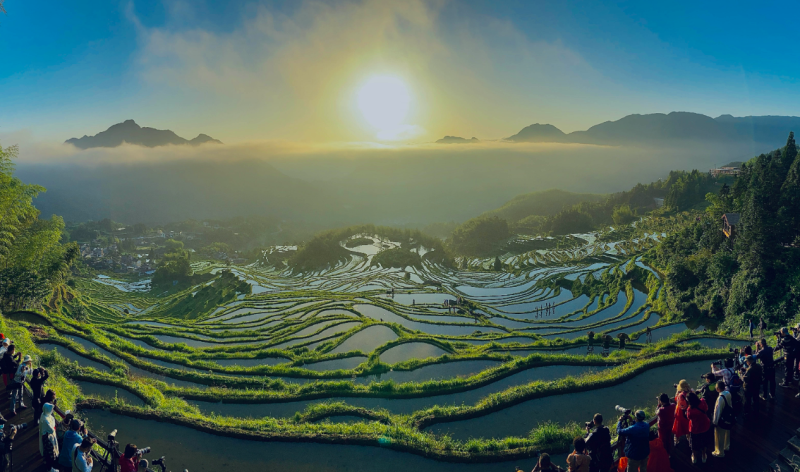
Yunhe Rice Terraces Scenic Area is located in Chongtou Town, Yunhe County, Lishui City, Zhejiang Province. It is a national 5A-level tourist attraction and the largest terraced field cluster in East China, enjoying the reputation of "China's Most Beautiful Rice Terraces." With terraced landscapes as its core, the scenic area integrates elements such as high mountains, streams, and villages, forming a unique pastoral scenery. The terraces were first developed in the early Tang Dynasty and flourished in the Yuan and Ming Dynasties, with a history of more than 1,000 years. The total area is about 51 square kilometers, with an elevation range from 200 meters to more than 1,400 meters, and the maximum number of levels reaches more than 700. Its grand scale and beautiful forms are rare in China. The ecological environment in the scenic area is excellent, with different scenery in each season: shimmering water in spring, lush greenery in summer, rolling rice waves in autumn, and snow-covered landscapes in winter. It is an ideal place for photography enthusiasts and tourists to get close to nature and experience farming culture.
Historical Culture
The history of reclamation in Yunhe Rice Terraces can be traced back to the early Tang Dynasty. In order to survive in the mountainous area, the local ancestors, with diligence and wisdom, reclaimed layer upon layer of terraces according to the mountain terrain. After continuous development through the Yuan and Ming Dynasties, it formed today's scale. In the long course of history, the terraces were not only a carrier of agricultural production, but also gave birth to a unique farming culture, including farming techniques, water conservancy and irrigation systems, and folk customs.
The villages in the scenic area are mostly settlements of the She ethnic group and the Han ethnic group. She culture and Han culture blend with each other, forming a rich folk culture. For example, during the spring plowing and autumn harvest seasons each year, the local area still retains some traditional sacrificial ceremonies and farming activities to pray for favorable weather and a bumper harvest. These historical and cultural elements complement the terraced landscape, giving Yunhe Rice Terraces even more humanistic depth.
Main Attractions
Jiuqu Yunhuan
Jiuqu Yunhuan is one of the core attractions of Yunhe Rice Terraces. It is located in the upper area of the terraces and is named because the terraces wind and twist like silver chains surrounding the mountains. The terraces here are densely layered with beautiful lines, extending from the foot of the mountain all the way to the top. When shrouded in mist and clouds, it looks like a fairyland. A viewing platform is set up at the best observation point, where visitors can overlook the panoramic view of the terraces. Especially at sunrise, when sunlight falls on the terraces, they shimmer beautifully, making it an excellent location for photography.
Baiyin Valley
Baiyin Valley is a canyon that runs through the Yunhe Rice Terraces Scenic Area. Inside the valley, streams murmur, ancient trees reach the sky, and many ancient villages and traditional dwellings are scattered throughout. It not only has beautiful natural scenery but also preserves many ancient farming facilities, such as waterwheels and water-powered trip hammers, demonstrating the wisdom of the ancient terrace irrigation system. Walking along the trails in the canyon, visitors can enjoy the perfect combination of terraced fields and canyon scenery and feel the tranquil pastoral atmosphere.
Qixingdun
Qixingdun is the highest point of Yunhe Rice Terraces, with an elevation of about 1,000 meters. It is named after seven earth mounds shaped like stars. It offers a wide field of vision and a 360-degree view of the terraces and surrounding mountains. It is one of the best places to watch terrace sunsets and seas of clouds. On clear days, visitors can gaze at scenery dozens of kilometers away and take in the layered terraces, a truly spectacular sight.
Kenggen Stone Village
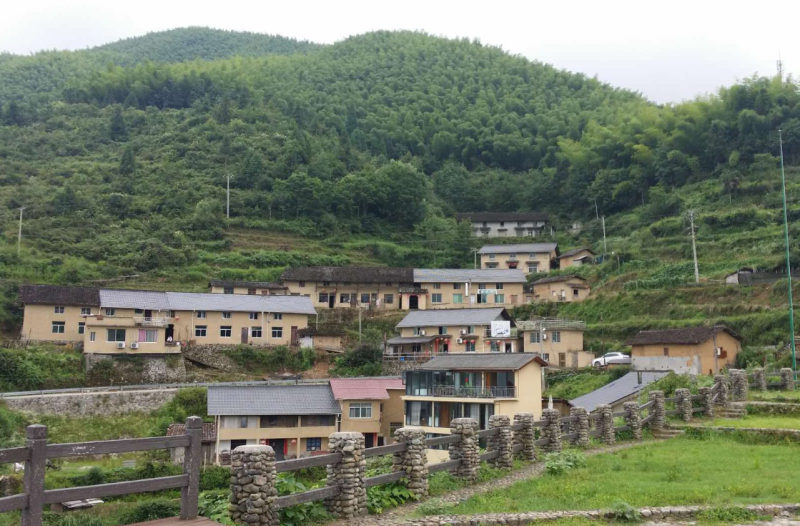
Kenggen Stone Village is an ancient village located in Baiyin Valley, with a history of several hundred years. Most of the buildings in the village are built of stacked stones, making it very distinctive. The stone village preserves many ancient dwellings, ancestral halls, workshops, and more, showing the local traditional architectural style and way of life. Visitors can stroll here and experience the tranquility and simplicity of the ancient village, and can also taste local specialty farm dishes.
Food
Terraced Field Snails
Terraced field snails are a specialty food of Yunhe Rice Terraces. Because they grow in the paddy fields of the terraces, the water quality is pure, and the snail meat is tender and delicious. They are mostly stir-fried with chili, ginger, garlic, and other seasonings, making them spicy and tasty. They are a wonderful dish among local farm dishes. They can be tasted in farm restaurants within the scenic area.
High-Mountain Cloud and Mist Tea
Yunhe is located in a mountainous area with a humid climate and frequent clouds and mist, which is very suitable for tea growth. High-mountain cloud and mist tea is abundantly produced around the scenic area. This tea has tightly rolled leaves and a green color. After brewing, it has a delicate aroma and a mellow, sweet aftertaste. While traveling, visitors can taste fresh tea at local tea farmers' homes and also buy some as gifts for relatives and friends.
She Ethnic Group Black Rice
She ethnic group black rice is a traditional food of the She people and is relatively common in She villages around Yunhe Rice Terraces. It is made by soaking glutinous rice in the juice of the special black rice tree leaves of the She people and then steaming it. The rice is purple-black, fragrant, soft and glutinous, and also has certain nutritional value. On the third day of the third lunar month each year, the She people make black rice to celebrate the festival. Visitors coming at this time can taste this specialty food.
Surrounding Farmhouse Cuisine
Farm restaurants around the scenic area offer a variety of local specialty foods, such as native chicken soup, braised pork with dried bamboo shoots, and steamed stream fish. The native chicken soup uses locally free-range native chickens and is stewed in the traditional way, resulting in fresh and delicious soup. Braised pork with dried bamboo shoots is made by cooking dried bamboo shoots from local mountain areas together with pork; the bamboo shoots are crisp and fragrant, and the pork is full of flavor. Steamed stream fish is taken from the streams in the scenic area, with tender meat and a sweet taste, deeply loved by tourists.
Tickets:
Tickets are 80 yuan per person.
You can search for the official WeChat public account "Yunhe Rice Terraces" to get the latest updates or buy tickets online.
Opening Hours:
Opening hours are 8:00-17:00 every day. However, because sunrise and sunset times vary with the seasons, the scenic area may appropriately adjust opening hours on holidays or during peak tourist seasons to make it convenient for visitors to enjoy landscapes such as sunrise and sunset. Visitors are advised to check and confirm the latest opening hours through the scenic area's official website or telephone before traveling.
Tour Route:
Visitors can enter from the scenic area entrance and first go to Jiuqu Yunhuan to see the core landscape of the terraces, enjoy the sunrise or panoramic terrace views from the viewing platform, and take beautiful photos. After that, follow the trail to Baiyin Valley, stroll through the canyon, enjoy the scenery of streams, ancient trees, and ancient villages, and visit ancient farming facilities. At noon, you can dine at a farm restaurant in Kenggen Stone Village and taste local specialty food. In the afternoon, go to Qixingdun, climb high and look far, and enjoy terrace sunset and sea of clouds scenery if weather conditions permit. The entire tour route is about 10 kilometers in total, with a walking time of about 5-6 hours. Visitors can arrange rest time reasonably according to their physical condition.
Transportation:
Self-driving: Starting from Lishui City, drive along the Changshen Expressway and Lilong Expressway, exit at Yunhe, then drive along Provincial Highway S222 toward Chongtou Town. The total distance is about 50 kilometers, and the drive takes about 1 hour. There is a parking lot in the scenic area, with a charging standard of 10 yuan per day for small vehicles.
Bus: There are shuttle buses from Yunhe County Bus Station to Chongtou Town, with many departures. The ride takes about 30 minutes, and the fare is about 10 yuan. After arriving in Chongtou Town, you can take a local tricycle or taxi to the scenic area entrance, a distance of about 3 kilometers, with a cost of about 10 yuan.
Tourist: The Lishui City Tourist Distribution Center has a tourist shuttle line to Yunhe Rice Terraces Scenic Area. It departs at 8:00 every morning and returns from the scenic area at 16:00. The whole journey takes about 1.5 hours, and the round-trip ticket price is 60 yuan per person. Visitors can book tickets in advance.
Must-Visit Attractions:
Jiuqu Yunhuan: A core attraction with beautiful terrace lines and dense layers. It is the best place to view terrace sunrise and panoramic views. It covers an area of about 5 square kilometers, and the viewing platform is at an altitude of about 800 meters.
Qixingdun: The highest point of the scenic area, at an altitude of about 1,000 meters. It offers a 360-degree view of the terraces and surrounding mountains. It is an excellent place to watch sunsets and seas of clouds, with a broad field of vision and spectacular scenery.
Travel Suggestions:
Best season to visit: Spring from April to May, the terrace water-filling period, and autumn from September to October, the rice maturity season, are the best seasons to visit Yunhe Rice Terraces. At these times, the scenery is most beautiful and suitable for photography and sightseeing.
Accommodation arrangements: It is recommended to stay in farm restaurants or homestays around the scenic area. This allows you to experience local customs and also makes it convenient to get up early the next day to watch the sunrise. Accommodation prices generally range from 200-500 yuan per night.
Items to bring: The scenic area is mostly mountainous roads, so it is recommended to wear comfortable sports shoes. The mountain climate is changeable, so bring rain gear and warm clothing. In addition, you can bring cameras, binoculars, and other equipment to better enjoy and photograph the beautiful scenery.
Time to reserve: It is recommended to spend 1-2 days. On the first day, visit the main attractions. On the second day, you can deeply experience village culture or go again to the best viewing platform to photograph scenery at different times.
Precautions:
The trails in the scenic area are mostly stone steps, and some sections are steep. Be careful when walking, especially on rainy days when the roads are slippery.
Protect the scenic area environment. Do not litter, do not damage vegetation or crops, and comply with the relevant regulations of the scenic area.
Respect local folk culture and living habits. When entering villages, do not disturb the normal lives of villagers.
Mountain signals may be unstable. It is recommended to download offline maps in advance to avoid getting lost. At the same time, travel with companions to ensure safety.
Dining prices in the scenic area are relatively high. Visitors can bring some dry food and drinking water as needed, but must pay attention to maintaining environmental hygiene.
When watching sunrise and sunset, check the times in advance and arrange your itinerary reasonably to avoid missing the best viewing periods. At the same time, keep warm, especially in the early morning and evening when temperatures are lower.