Nanxun Ancient Town is located in Nanxun District, Huzhou City, Zhejiang Province. It is one of the six great ancient towns in Jiangnan, a National 5A Tourist Attraction, a Major Historical and Cultural Site Protected at the National Level, one of China's Top Ten Charming Famous Towns, and a Famous Historical and Cultural Town of China. The scenic area covers a total area of 34.27 square kilometers, of which the ancient town area is about 1.09 square kilometers and the core protection area is 0.88 square kilometers. Nanxun Ancient Town has a unique "Chinese-Western fusion" architectural style, combining the small bridges and flowing water, white walls and black tiles of Jiangnan water towns with many mansion estates that incorporate Western architectural elements. It is known as "the Number One Town in Jiangnan." The ancient town retains a large number of buildings from the Ming and Qing dynasties. Existing historical buildings include Zhang Shiming's Former Residence, Liu's Tihao, and the Jiaye Hall Library. These buildings witnessed the legendary wealth of Nanxun's "Four Elephants, Eight Oxen, and Seventy-Two Golden Dogs," and also make the ancient town an important physical carrier for studying Jiangnan water town culture and modern commercial history.
Historical Culture
The history of Nanxun Ancient Town can be traced back to the Neolithic Age, when ancestors already lived and multiplied here. During the Spring and Autumn and Warring States periods, Nanxun belonged to the State of Wu, later to the State of Yue, and after Qin unification it belonged to Wucheng County. During the Southern Song Dynasty, due to war and population migration southward, Nanxun gradually formed a market and began to show prosperity.
During the Ming and Qing dynasties, relying on convenient waterway transportation and the prosperity of the silk industry, Nanxun became a famous silk town in Jiangnan, and its economy rose rapidly. A group of great merchants and wealthy tycoons emerged, represented by the "Four Elephants" (Liu Yong, Zhang Songxian, Pang Yunzeng, and Gu Fuchang). These wealthy merchants not only achieved great success in business, but also attached importance to culture and education, building many gardens, libraries, and schools. This made Nanxun not only economically prosperous but also culturally flourishing, forming a unique "Confucian merchant culture."
In modern times, Nanxun merchants actively expanded overseas trade and came into contact with Western culture. They built many Chinese-Western fusion buildings in the ancient town, such as Zhang Shiming's Former Residence and Liu's Tihao. These buildings became a distinctive feature that distinguishes Nanxun Ancient Town from other Jiangnan ancient towns. During the War of Resistance Against Japan, Nanxun Ancient Town suffered some damage, but most historical buildings were preserved.
Today, while protecting its historical appearance, Nanxun Ancient Town has developed tourism and become an important window for displaying Jiangnan water town culture and modern commercial civilization. Its profound historical and cultural heritage and unique architectural style attract many tourists to visit.
Main Attractions
Zhang Shiming's Former Residence
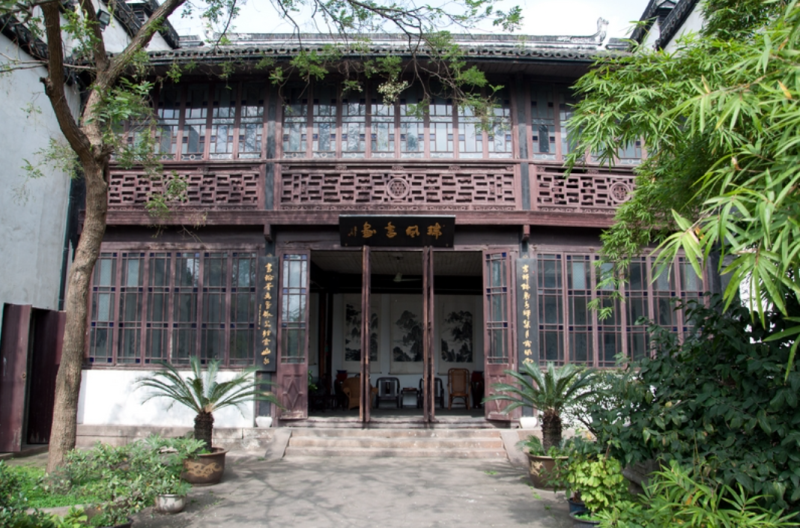
Zhang Shiming's Former Residence is one of the most representative Chinese-Western fusion buildings in Nanxun Ancient Town. It was built between 1899 and 1906, covers an area of 6,500 square meters, and has a building area of 7,000 square meters. It was the former residence of Zhang Shiming, grandson of Zhang Songxian, one of the "Four Elephants" of Nanxun. The residence faces east and is divided into three parts: the Chinese-style residential area, the Western-style building, and the garden. The Chinese-style part has five courtyards and follows the traditional Jiangnan residential layout. Its wood carvings, brick carvings, and stone carvings are exquisite. In particular, the "Hundred Longevity Chart" brick carving in the third main hall is considered outstanding. The Western-style building adopts the architectural style of the French Renaissance and features Western elements such as a ballroom, fireplace, and chandeliers. It was one of the most luxurious residences in Nanxun at the time. The residence also houses a large collection of antiques, calligraphy and paintings, furniture, and porcelain, with extremely high historical and artistic value.
Liu's Tihao
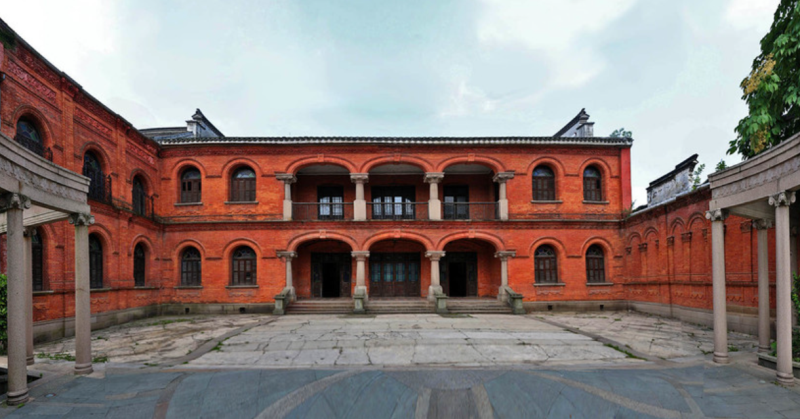
Liu's Tihao, also known as the "Red House," is the former residence of Liu Ansheng, the third son of Liu Yong, the head of the "Four Elephants" of Nanxun. It was built in 1905 and covers an area of about 4,000 square meters. It is named for its Chinese-Western fusion red brick building. The entire building consists of three parts: south, middle, and north. The southern part is a traditional Chinese hall, the middle part is a Western-style building, and the northern part is a garden. The Western-style building uses Roman columns and arches, with red fair-faced brick walls and Baroque-style decorations on top. It is a rare large-scale Western-style building in the Jiangnan region. Many precious flowers and trees are planted in the garden, contrasting beautifully with the architecture and showing the owner's pursuit of blending Chinese and Western cultures.
Jiaye Hall Library
Jiaye Hall Library was built from 1920 to 1924 by Liu Chenggan, grandson of Liu Yong. It covers an area of more than 2,000 square meters and has a building area of 1,900 square meters. It is one of the largest and most richly collected private libraries in modern China. The library faces south, with a "口"-shaped plan, and consists of two courtyards. Its main buildings include Jiaye Hall, Song Si Shi Studio, and Shicui Room. It once housed 600,000 volumes, including many rare Song and Yuan editions, manuscripts, and transcriptions. It was especially rich in local chronicles, with more than 1,200 kinds. The name of the library is related to the "Qin Ruo Jiaye" nine-dragon golden plaque bestowed by Puyi. The building itself combines Jiangnan garden style with traditional academy features. Rockeries, ponds, and flowers and trees adorn the courtyard, creating a quiet environment. It was a place of scholarship admired by literati and scholars. In 1981, Jiaye Hall Library was listed as a Zhejiang Provincial Key Cultural Relic Protection Unit, and in 2001 it became a Major Historical and Cultural Site Protected at the National Level.
Xiaolianzhuang
Xiaolianzhuang is Liu Yong's private garden. It was first built in 1885 and took 40 years to complete. It covers an area of 17,399 square meters and is one of the famous gardens in Jiangnan. With a lotus pond at its center, the garden's buildings are arranged in a well-proportioned manner, including archways, inscriptions, pavilions, and terraces. The "Dongsheng Pavilion" in the garden is a good place to enjoy the moon and the scenery; climbing the pavilion offers a panoramic view of the entire garden. The garden also preserves a large number of inscriptions by famous people, including works by calligraphy masters such as Wang Xizhi, Yan Zhenqing, and Mi Fu, with high calligraphic artistic value. Xiaolianzhuang is adjacent to Jiaye Hall Library. Together they constitute the cultural heritage of Liu Yong's family and reflect the cultural taste of Jiangnan wealthy merchants.
Baijianlou
Baijianlou is located in the East Scenic Area of Nanxun Ancient Town. It was first built during the Wanli period of the Ming Dynasty by Dong Fen, Minister of Rites, as a dowry for his daughter. It was named because 100 buildings were initially built. Most of the existing buildings were built in the Qing Dynasty. They wind along the north bank of Xunxi River for about 400 meters, with a total of 124 buildings. The architectural style of Baijianlou is uniform, all being Jiangnan residences with white walls and black tiles. The buildings are built along the river. Windows and door frames are mostly made of stone. Some buildings have water pavilions and river piers, forming a unique pattern of "dwelling by the river." Residents still live here today, preserving a strong atmosphere of daily life. It is one of the most original ecological areas in Nanxun Ancient Town.
Zhang Jingjiang's Former Residence
Zhang Jingjiang's Former Residence is located on East Street of Nanxun Ancient Town. It is the birthplace of Zhang Jingjiang, a founding member of the Kuomintang. It was built in the Qing Dynasty and covers an area of 1,700 square meters. The former residence is in a typical Jiangnan residential style, facing south, with five courtyards. Its main buildings include the entrance hall, main hall, and hall building. The plaque of the main hall, "Zunde Hall," was inscribed by Sun Yat-sen. The hall displays Zhang Jingjiang's life deeds and related historical photos and artifacts. As a famous modern industrialist and politician, Zhang Jingjiang made important contributions to the Xinhai Revolution. His former residence has also become an important place for studying modern Chinese history.
Food
Shuangjiao Noodles
Shuangjiao Noodles are a specialty noodle dish of Nanxun Ancient Town. "Shuangjiao" refers to two kinds of toppings, usually braised pork and fried fish. The braised pork is made from pork belly. After marinating and frying, the meat is tender and fragrant. The fried fish uses grass carp, sliced and marinated with soy sauce and other seasonings, then fried until golden, crispy outside and tender inside. The noodles are local thin noodles. After cooking, they are paired with the two toppings and then topped with broth. The taste is delicious. It is a traditional breakfast loved by Nanxun people. It can be tasted in many noodle shops in the ancient town, generally priced at 15-25 yuan per bowl.
Xunti
Xunti is a traditional famous dish of Nanxun. It uses local pig front trotters and is made through multiple processes such as blanching, marinating, and stewing. The finished Xunti is bright red in color, with tender meat, fatty but not greasy, and moderately salty and sweet. It is rich in collagen. When making Xunti, soy sauce, rock sugar, star anise, and other seasonings are usually added. The stewing time lasts several hours to fully absorb the flavor. In restaurants in the ancient town, Xunti is a common dish. A portion costs about 30-50 yuan. It can be eaten in the restaurant or vacuum-packed as a specialty to take away.
Juhong Cake
Juhong Cake is a traditional pastry of Nanxun with a long history. It uses glutinous rice flour, white sugar, and orange-red powder as the main ingredients. During production, glutinous rice flour is steamed, then mixed evenly with white sugar and orange-red powder, and cut into small pieces. Juhong Cake is pink in color, soft and glutinous in texture, with a light orange fragrance, sweet but not greasy. It can be bought in pastry shops in the ancient town, generally priced at 10-20 yuan per jin. It is a snack and souvenir deeply loved by tourists.
Dingsheng Cake
Dingsheng Cake is a traditional pastry common in Nanxun and the Jiangnan region. It is named for its auspicious meaning and is often used on festivals or happy occasions. It uses glutinous rice flour, japonica rice flour, and brown sugar as ingredients, with a small amount of red yeast rice powder added to make it red. It is made into lotus-shaped or square cakes with red bean paste filling in the middle. Dingsheng Cake has a soft and fluffy texture and a sweet taste. It is sold in pastry shops in the ancient town at about 2-3 yuan per piece. It is both a delicious snack and a souvenir.
Nanxun Hidden-Heart Fish Balls
Nanxun Hidden-Heart Fish Balls are a local specialty snack. Fresh grass carp is used, deboned, and chopped into fish paste. Seasonings are added and the mixture is stirred until firm, then pork filling is wrapped inside to make fish balls. The production process requires skill. The fish balls should be round and smooth. After cooking, they are fresh and tender with elasticity. The pork filling adds fragrance and creates rich layers. This snack can be tasted in some time-honored restaurants in the ancient town. A portion costs about 25-35 yuan.
Tickets:
Admission is free, but some attractions charge separately. Tickets start at 10 yuan, and combination tickets start at 65 yuan.
You can search for the official public account "Nanxun Ancient Town Scenic Area Official" on WeChat to get the latest updates or buy tickets online.
Opening Hours:
Opening hours are all day, but the paid attractions in the scenic area are open from 8:00-17:30 (April 1-October 31) and 8:00-17:00 (November 1-next year March 31). Tourists are advised to arrange their time reasonably and visit during the opening hours of paid attractions so as not to miss the opportunity. In addition, the night view of the ancient town is also very beautiful. The lights in some areas last until about 22:00. Tourists can stroll around the ancient town in the evening and enjoy the night view.
Tour Route:
A recommended one-day tour route: arrive at Nanxun Ancient Town at 8:30 a.m., enter the scenic area from the South Gate, first visit Xiaolianzhuang to enjoy the beauty of the Jiangnan garden and many inscriptions, about 1 hour; at 9:30 go to the adjacent Jiaye Hall Library to feel the charm of ancient book culture, about 1 hour; at 10:30 go to Zhang Shiming's Former Residence to appreciate the unique style of Chinese-Western fusion architecture, about 1.5 hours; at 12:00 enjoy lunch in a restaurant in the ancient town and taste specialty foods such as Shuangjiao Noodles and Xunti; at 13:30 go to Liu's Tihao to visit the Western-style architecture of the "Red House," about 1 hour; at 14:30 go to Baijianlou and stroll through the ancient streets and alleys to experience the original ecological Jiangnan water town life, about 1.5 hours; at 16:00 visit Zhang Jingjiang's Former Residence to learn about his life deeds, about 40 minutes; at 16:40 move freely in the ancient town and buy specialties such as Juhong Cake; at 18:00 enjoy the night view of the ancient town, then end the day's itinerary. If time is sufficient, you can also arrange two days to slowly experience the leisurely atmosphere of the ancient town.
Transportation:
High-speed rail: Take the high-speed rail to Huzhou Station or Nanxun Station. From Huzhou Station to Nanxun Ancient Town, you can take Bus 101, about 1 hour, fare 6 yuan; Nanxun Station is about 5 kilometers from the ancient town. You can take Bus 167, about 20 minutes, fare 2 yuan, or take a taxi, about 15-20 yuan.
Bus: Huzhou Bus Terminal has direct buses to Nanxun Ancient Town, one every 20 minutes, about 40 minutes, fare 10 yuan; Hangzhou North Bus Station also has buses to Nanxun, about 1.5 hours, fare 35 yuan.
Self-driving: From Shanghai, drive along the Shanghai-Chongqing Expressway, get off at the Nanxun exit, then drive about 5 kilometers to the ancient town, about 2 hours; from Hangzhou, drive along the Changshen Expressway and Lianhang Expressway, get off at the Nanxun exit, about 1.5 hours. There are multiple parking lots around the ancient town, with parking fees of about 10 yuan per day.
City transportation: Motor vehicles are prohibited in the ancient town. Tourists can visit on foot or take sightseeing boats in the scenic area. One-way ticket is 40 yuan/person, round trip 60 yuan/person. The boat route covers the main attractions.
Must-Visit Attractions:
Xiaolianzhuang: A model of Jiangnan gardens, covering 17,399 square meters, centered on a lotus pond, with archways, inscriptions, pavilions, and other landscapes in the garden. It is especially beautiful when lotus flowers bloom in summer and is a good place for photos.
Jiaye Hall Library: The largest private library in modern China, with a building area of 1,900 square meters. It once housed 600,000 volumes. The architecture combines Jiangnan garden and academy styles, with profound cultural heritage.
Zhang Shiming's Former Residence: A representative of Chinese-Western fusion architecture, covering 6,500 square meters. It has both Chinese wood carvings and brick carvings and Western ballrooms and fireplaces, showing the lifestyle of Nanxun wealthy merchants.
Baijianlou: A residential building complex first built in the Ming Dynasty, about 400 meters long. 124 buildings are built along the river, preserving the original ecological atmosphere of water town life. It is suitable for strolling.
Travel Suggestions:
It is recommended to visit Nanxun Ancient Town in spring and autumn. At this time, the climate is pleasant and the temperature is moderate. In spring, flowers bloom in the ancient town; in autumn, the weather is clear and crisp, suitable for outdoor activities. Summer temperatures are relatively high, and winter is relatively cold, which may affect the travel experience.
When touring the ancient town, you can rent a scenic area audio guide (rental 20 yuan/unit, deposit 200 yuan), or hire a tour guide (100 yuan/time), in order to understand the historical background and cultural connotations of each attraction more deeply.
The sightseeing boat in the ancient town is a good way to tour. You can enjoy the scenery of the ancient town from the water. Especially in the evening, when the sun sets and the lights of the buildings on both banks come on, the scenery is very charming. It is recommended to experience a one-way boat ride, about 30 minutes.
If you want to avoid crowds, choose a weekday. There are more tourists on weekends and holidays, and some popular attractions may require queuing. 8:00-10:00 in the morning and 17:00-19:00 in the evening are relatively quiet periods in the ancient town, suitable for photos.
When dining in the ancient town, you can choose restaurants near the river, enjoying food while appreciating the river view. Some restaurants also provide local specialty farm dishes. Prices are moderate, with per capita consumption of about 50-80 yuan.
Notes:
Some buildings in the ancient town are wooden structures. Smoking and open flames are strictly prohibited. Tourists must comply with scenic area regulations and not smoke in no-fire areas to avoid causing fires.
When visiting residential areas such as Baijianlou, respect the lives of local residents, do not make loud noises, and do not arbitrarily photograph residents' private lives. Keep quiet.
When buying specialties, choose regular shops, especially for silk, pastries, and other goods. Check production dates and shelf lives to avoid buying counterfeit or inferior products. You may bargain appropriately, but communicate civilly.
The stone roads in the ancient town are relatively smooth, especially on rainy days, and it is easy to slip. Pay attention to safety underfoot when touring and wear shoes with good anti-slip performance.
Paid attractions in the scenic area require tickets for entry. Keep tickets properly to avoid loss. Combination tickets are valid for 2 days and can be used multiple times within the validity period.
When taking sightseeing boats, comply with boarding regulations, wear life jackets, do not play or roughhouse on the boat, and keep personal belongings safe to prevent them from falling into the water.