The Longhu Mountain Scenic Area is located in the southwestern suburbs of Yingtan City, Jiangxi Province, about 20 kilometers from the city center. It is a World Natural Heritage site, a World Geopark, and a National 5A-level tourist attraction, as well as one of the birthplaces of Chinese Taoism. The scenic area is known for its three major features: Danxia landforms, Taoist culture, and ancient Yue hanging coffins, and is praised as the "Taoist Ancestral Court" and "Danxia Fairyland." The total area of the scenic area is 220 square kilometers, with the core scenic area covering about 100 square kilometers. The highest peak, Tianmen Mountain, is 1,300 meters above sea level. The Danxia landform in the area is typically developed, with red cliffs and peaks, canyons, and gorges everywhere. There are 99 peaks of various sizes, more than 200 cliff tombs, and more than 30 Taoist architectural sites. Biological resources are rich, with more than 1,000 species of higher plants and more than 200 species of wild animals. The Luxi River runs through the scenic area, with a total length of 43 kilometers, connecting many core scenic spots and forming a unique touring experience of "rafting to view Danxia and tracing the stream to explore hanging coffins."
Historical Culture
Longhu Mountain is the ancestral court of the Zhengyi School of Chinese Taoism, and Taoist culture has been passed down for more than 1,900 years. During the Eastern Han Dynasty, Zhang Daoling practiced alchemy and cultivated Taoism here. Legend says that "when the elixir was completed, dragons and tigers appeared," which is how Longhu Mountain got its name. Afterward, Zhang Daoling's descendants served here for generations in charge of Taoism, forming the "Tianshi Mansion of the Han Dynasty," which became an important center for the spread of Chinese Taoism.
The ancient Yue hanging coffin culture in the scenic area also has a long history, dating back more than 2,600 years. On the cliffs on both sides of the Luxi River, more than 200 hanging coffin burials are distributed. The coffins are mostly placed in natural caves 50-300 meters above the water surface. The method of placement remains a mystery to this day and is important physical material for studying the Baiyue people of the pre-Qin period. In addition, the Taoist palaces, inscriptions, and cliff carvings preserved in the scenic area, together with the Danxia landforms and hanging coffins, form a unique landscape of diverse cultural integration.
Main Attractions
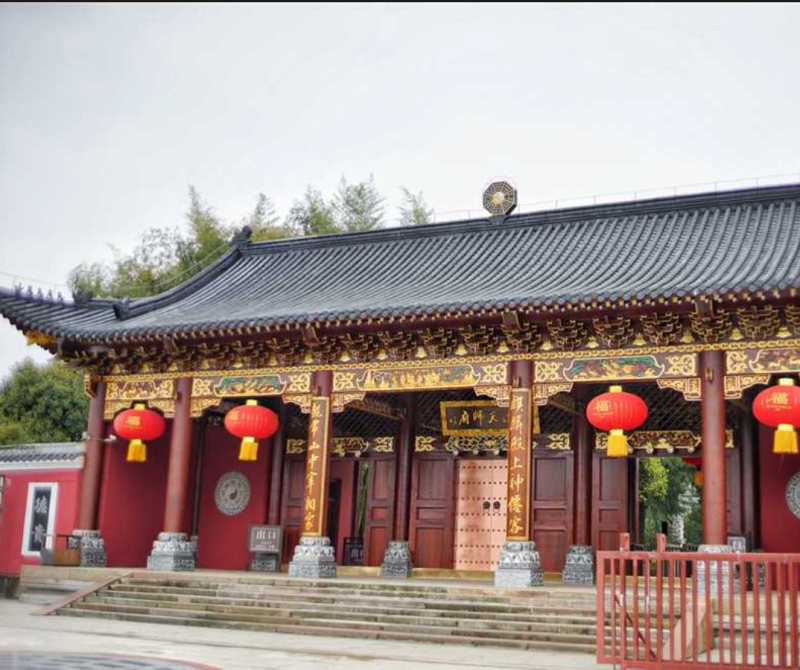
Tianshi Mansion of the Han Dynasty
The Tianshi Mansion of the Han Dynasty is located in Shangqing Town. It was the residence of successive Zhang Tianshi and the place where they managed Taoist affairs. It was first built in the Northern Song Dynasty, and the existing buildings were rebuilt during the Ming and Qing Dynasties. It covers an area of about 43,000 square meters, with a building area of 14,000 square meters. The buildings inside the mansion follow the "Bagua" layout and are divided into the mansion gate, ceremonial gate, second gate, main hall, rear hall, private residence, and other parts. Ancient cypresses tower to the sky, and the carved beams and painted rafters are magnificent. It preserves plaques such as "The Unmatched Land of the South, the First Family of Western Jiangxi" and a large number of Taoist cultural relics. It is the largest and best-preserved Taoist ancestral court architectural complex existing in China.
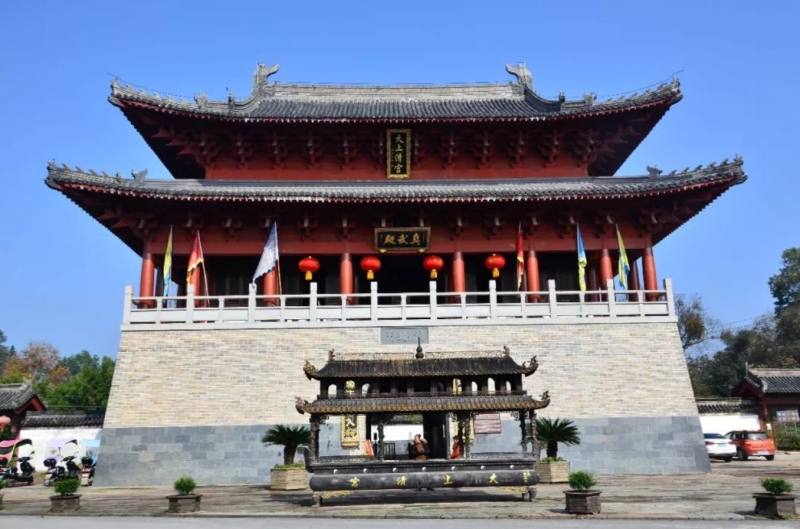
Shangqing Palace
Shangqing Palace is one of the Taoist temples with the longest history in Longhu Mountain. It was first built in the Eastern Han Dynasty. In its heyday, it was known as the "Capital of Immortals" and was called one of China's three great ancestral courts together with Beijing Baiyun Temple and Shanxi Yongle Palace. The existing site covers an area of about 6,000 square meters and retains buildings such as the Fudi Gate, Bell Tower, Yumen Hall, and Dongyin Court. Among them, Dongyin Court was built in the Ming Dynasty, and ancient steles stand in the courtyard, recording the rise and fall of Shangqing Palace. The "Demon-Subduing Well" in the scenic area is famous for the opening story of "Water Margin" and has become a popular check-in spot for tourists.
Luxi River Rafting
The Luxi River is the "Mother River" of Longhu Mountain. The rafting section is about 10 kilometers long, from Gongdian Wharf to Xianshuiyan Wharf, passing through the "Ten Cannot" landscapes along the way, such as "The Fairy Offering Flowers Cannot," "The Mushroom Stone Cannot," and so on. While rafting, visitors can closely admire the red Danxia cliffs and isolated peaks and strange rocks. Among them, "Golden Spear Peak" is about 70 meters high and resembles the male genitalia, while "Fairy Rock" on the opposite bank forms a natural male-female landscape, making it a wonder of Danxia landforms. The whole rafting trip takes about 1.5 hours, and the raftmen's folk tunes echo with the birdsong on both banks.
Xianshuiyan Hanging Coffin Site
Xianshuiyan is the area with the most concentrated hanging coffins in Longhu Mountain. More than 10 hanging coffin caves are distributed on the cliffs on both sides of the Luxi River. The scenic area has set up a hanging coffin hoisting performance at the viewing platform, regularly recreating the possible burial customs of the ancient Yue people: performers hang down from the cliff top with ropes, simulating the process of placing coffins into caves, vividly restoring the mysterious scene from more than 2,000 years ago. Tourists can watch the performance from the viewing platform on the opposite bank and learn about the historical background of hanging coffin culture through explanations.
Tianmen Mountain
Tianmen Mountain is the highest peak in Longhu Mountain, with an altitude of 1,300 meters. It is mainly characterized by primitive forests and waterfalls and is an ecological oxygen bar in the scenic area. The hiking trail is about 5 kilometers long, with landscapes such as Longmen Waterfall, Yixiantian, and Tiannü Sanhua along the way. Among them, Longmen Waterfall has a drop of 100 meters and is especially spectacular in summer when water is abundant. From the summit, visitors can overlook the panoramic view of Longhu Mountain and the overlapping landscape of Danxia landforms and forest vegetation. It is suitable for hiking enthusiasts and lovers of natural landscapes.
Food
Longhu Mountain Specialty Dishes
Shangqing Tofu
Shangqing Tofu is a traditional famous dish in Shangqing Town, Longhu Mountain. It is made from local high-quality soybeans and mountain spring water, with a tender texture and rich bean aroma. Common methods include stewed tofu, spicy tofu, and tofu casserole. Among them, "Bagua Tofu" cuts tofu into the shape of Bagua and stews it with ingredients such as mushrooms and dried bamboo shoots. It not only reflects Taoist culture but is also fresh and delicious. It is a classic dish served by the Tianshi Mansion to entertain guests.
Luxi Fish
Luxi Fish is produced in the clear Luxi River and is famous for its tender meat and delicious taste. Common varieties include stone bass and stick fish. It is mostly steamed or braised. Steamed Luxi Fish uses only ginger shreds and scallion sections for seasoning, preserving the original flavor of the fish to the greatest extent. Braised fish adds local chili peppers and rice wine, making it spicy and flavorful. It is a must-order dish in restaurants in the scenic area.
Surrounding Foods
Yingtan Fried Rice Noodles
Yingtan fried rice noodles are a local specialty snack. They use indica rice noodles and are paired with eggs, green vegetables, shredded beef, and others, then stir-fried over high heat. The rice noodles are chewy and the aroma is inviting. Restaurants around Longhu Mountain often add local chili peppers and fermented black beans, giving it a unique flavor. It is a popular choice for tourists for breakfast or late-night snacks.
Yujiang Eggplant Dry
Eggplant dry from Yujiang District (under Yingtan City) is a traditional Jiangxi pickled vegetable. It is made from eggplant through drying, pickling, and seasoning. It has a chewy texture, is moderately salty and sweet, and has a slight spiciness. It can be eaten directly or served with rice or porridge. It is a local farmhouse dish that goes well with meals and is also a popular souvenir for tourists.
Tickets:
Ticket 135 yuan/person (including sightseeing bus).
You can search for the official public account "Jiangxi Longhu Mountain Scenic Area" on WeChat to get the latest updates or buy tickets online.
Opening Hours:
Open all year round, with daily opening hours adjusted according to the season. In peak season (April-October), opening hours are 7:30-18:00 (last bamboo raft rafting at 15:30); in off-season (November-March of the following year), opening hours are 8:00-17:30 (last bamboo raft rafting at 14:30). The hanging coffin hoisting performance is held twice daily at 10:00 and 15:00 (may be canceled in rain), subject to the scenic area's announcement on the day.
Tour Routes:
Recommended One-Day Tour Route
Arrive at the scenic area visitor center at 8:00 a.m., take the sightseeing bus to Xianshuiyan Scenic Area, and watch the hanging coffin hoisting performance at 9:00; then take a bamboo raft to drift on the Luxi River (about 1.5 hours) and enjoy the Danxia landscapes on both banks; arrive at the wharf at 11:30, visit attractions such as Fairy Rock and Elephant Trunk Hill, and have lunch at a nearby restaurant.
At 13:30 p.m., go to Shangqing Town and visit the Tianshi Mansion of the Han Dynasty (about 1.5 hours) to learn about Taoist culture; then visit the Shangqing Palace site (about 1 hour); at 16:00, take the sightseeing bus to the foot of Tianmen Mountain and hike up to Longmen Waterfall (about 1.5 hours round trip); at 17:30, return to the visitor center and end the trip. This route balances natural landscapes and cultural landscapes and is suitable for tourists with tight schedules.
Transportation:
Public transportation: There are direct tourist shuttle buses to Longhu Mountain Scenic Area from Yingtan Railway Station Square, running every 30 minutes from 7:00 to 18:00 daily. The journey takes about 30 minutes, and the fare is 5 yuan/person; from Yingtan North Station (high-speed railway station), you can take Bus No. 23 to Yingtan Railway Station and transfer to the tourist shuttle bus to go there.
Self-driving: From Nanchang, drive along the Shanghai-Kunming Expressway to Yingtan East Exit, then turn onto Longhu Mountain Avenue. The total distance is about 180 kilometers, taking 2 hours; from Shanghai, drive along the Shanghai-Kunming Expressway to Yingtan Exit. The total distance is about 600 kilometers, taking 6.5 hours. The scenic area parking lot charges 20 yuan/vehicle/day.
Transportation within the scenic area: Sightseeing buses shuttle within the scenic area, covering all major attractions. The full-line pass is 50 yuan/person, and a single ride is 10 yuan/person. Bamboo raft rafting requires a separate ticket, and there are free shuttle buses between the rafting endpoint and some attractions.
Must-Visit Attractions:
Tianshi Mansion of the Han Dynasty: The ancestral court of the Zhengyi School of Chinese Taoism, covering an area of 43,000 square meters, with Ming and Qing architectural styles. It is the core attraction for understanding Taoist culture.
Luxi River Rafting: A 10-kilometer rafting route connecting Danxia wonders. Ride a raft to enjoy the scenery and experience the artistic conception of "the boat travels on green waves, and people travel in a painting."
Xianshuiyan Hanging Coffin Site: The 2,600-year-old hanging coffins of the ancient Yue people, combined with regular hoisting performances, reveal an eternal mystery.
Tianmen Mountain: The highest peak at 1,300 meters, where primitive forests and waterfalls interweave. It is suitable for hiking and sightseeing, and for overlooking the panoramic Danxia view.
Travel Suggestions:
Bamboo raft rafting is the core experience project. It is recommended to check the weather in advance, choose sunny days for travel, pay attention to sun protection in summer, and bring a straw hat and sunscreen.
The scenic area is large and the attractions are scattered. It is recommended to buy a sightseeing bus pass to save travel time and plan the route reasonably to avoid backtracking.
For Taoist cultural attractions (Tianshi Mansion, Shangqing Palace), it is recommended to hire a guide (50 yuan/time) to gain an in-depth understanding of the architectural layout and historical background.
For breakfast, you can try local Shangqing tofu pudding with fried dough sticks to experience authentic flavors; for dinner, Luxi fish banquet is recommended to taste various fish dishes.
If time permits, you can stay in Shangqing Ancient Town around the scenic area, feel the night view of the ancient town, and visit the sparsely populated and quiet Tianshi Mansion the next morning.
Precautions:
When rafting on the bamboo raft, you must wear a life jacket, protect electronic devices such as mobile phones and cameras from water, and avoid standing or shaking the raft.
The hanging coffin hoisting performance area is near the cliff. When watching, stand within the safety guardrail and do not crowd or push.
Some sections of the Tianmen Mountain hiking trail are steep and slippery. It is recommended to wear slip-resistant hiking shoes, proceed cautiously on rainy days, and do not leave the trail without authorization.
Smoking and littering are prohibited in the scenic area. Protect the Danxia landforms and ecological environment. Do not climb red cliffs or pick plants.
Taoist temples require observance of etiquette: do not make noise, do not touch cultural relics, turn off the flash when taking photos, and respect religious customs.