Tongli Ancient Town is located in Wujiang District, Suzhou City, Jiangsu Province. It is a national 5A-level tourist attraction and one of the six famous ancient towns in Jiangnan. The ancient town covers an area of about 133.15 square kilometers, of which the core scenic area is about 33 hectares. It is surrounded by water on all sides, with 15 rivers dividing the ancient town into 7 small islands, connected by 49 ancient bridges, forming the typical Jiangnan water town layout of "every household faces water, every household has access to boats." Its characteristic lies in the large number of well-preserved architectural styles from the Ming and Qing dynasties. There are more than 300 existing Ming and Qing residential buildings and 49 ancient bridges, and it is known as the "Venice of the East." The ancient town is famous for its layout of "small bridges, flowing water, and households" and its profound cultural heritage. It is a famous historical and cultural town integrating sightseeing, leisure vacations, and cultural experiences.
Historical Culture
The history of Tongli Ancient Town can be traced back to the Song Dynasty. It was originally named "Futu" and was later renamed "Tongli" to avoid a naming taboo, meaning "Futu Tongli." Since the Song Dynasty, Tongli relied on convenient water transportation to become an important commercial town, reaching its peak during the Ming and Qing dynasties. Many officials and wealthy merchants emerged, leaving behind a large number of exquisite residences and gardens.
The architectural culture of the ancient town is unique. Most residences are brick-and-wood structures with white walls and black tiles, and carved doors and windows, reflecting the architectural style of the Jiangnan water town. Among them, the Retreat and Reflection Garden is a representative of classical Jiangnan gardens and was inscribed on the World Cultural Heritage List in 2000. Its gardening art of "although made by man, it appears as if created by heaven" is considered superb.
Tongli's folk culture is rich and diverse. For example, the "Carrying the Great General" temple fair on the 28th day of the third lunar month has a history of several hundred years. Villagers pray for favorable weather by carrying statues of deities in procession and performing folk programs. In addition, traditional arts such as Pingtan and Kunqu Opera have been passed down from generation to generation in the ancient town. Classic pieces are often performed on the ancient stage, showing the essence of Jiangnan culture.
Main Attractions
Retreat and Reflection Garden
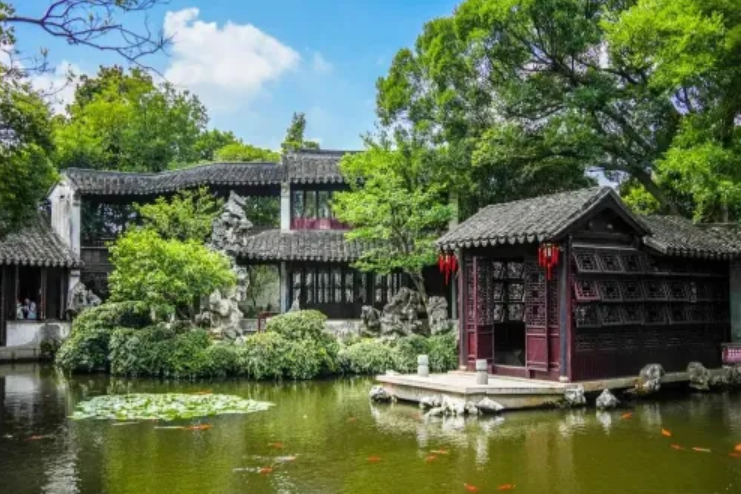
The Retreat and Reflection Garden was first built in the 11th year of the Guangxu reign of the Qing Dynasty (1885). It covers an area of about 9.8 mu and was built by Ren Lansheng, a Qing Dynasty official, after he was dismissed from office and returned home. The name of the garden means "retreat and reflect." Its layout is ingenious, with a pond as the center and buildings constructed along the water, forming the unique style of a "waterside garden." The main buildings in the garden include the Retreat and Reflection Hall, Naohong Yige, and Mianyun Pavilion. Pavilions, terraces, towers, rockeries, and ponds complement one another, reflecting the characteristic of Jiangnan gardens of "changing scenery with every step." The combination of its architecture and water bodies is regarded as a model and is a representative work of small classical gardens in Jiangnan, China. It was inscribed on the World Cultural Heritage List in 2000.
Chongben Hall
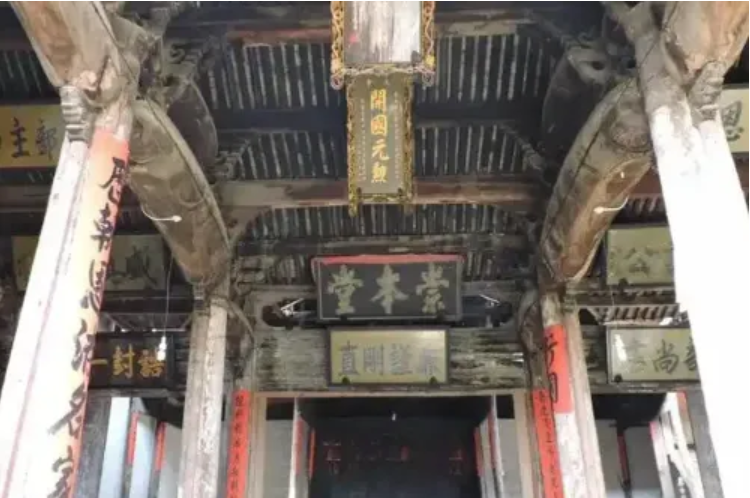
Chongben Hall is located on Fuguan Street and was built in the early years of the Republic of China. It covers an area of about 700 square meters and was the residence of Tongli merchant Qian Youqin. The building faces south and has three courtyards and five bays, with a compact and reasonable overall layout. Its feature lies in the exquisite carvings. Wood carvings and brick carvings are found on door lintels, window lattices, and beams. The themes include figure stories, flowers, birds, fish, and insects. The craftsmanship is exquisite and the meanings are auspicious. It is praised as a "treasure house of Jiangnan wood carving art." The hall also displays furniture and daily necessities from the Ming and Qing dynasties, showing the living scenes of that time.
Jiayin Hall
Jiayin Hall is located on Zhuhang Street and was built in the 13th year of the Republic of China (1924). It covers an area of about 800 square meters and was the former residence of local merchant Liu Bingnan. The architecture combines Chinese and Western styles, with both traditional brick-and-wood structures and Western colored glass and cement components. The "Fortune, Prosperity, and Longevity" three-star brick-carved screen wall in the hall is especially eye-catching, with delicate carving and a strong three-dimensional effect. In addition, the "Shamao Hall" in the courtyard has a unique shape. It is named because its roof resembles the gauze cap of ancient officials and is a rare architectural style in the Jiangnan region.
Three Bridges Scenic Area
The Three Bridges refer to Taiping Bridge, Jili Bridge, and Changqing Bridge. The three stone bridges are distributed in a "pin" shape in the central area of the ancient town, less than 50 meters apart from one another, and are one of the landmark landscapes of Tongli Ancient Town. Taiping Bridge was built during the Wanli reign of the Ming Dynasty and is a single-arch stone bridge with exquisite relief carvings on both sides of the bridge body. Jili Bridge was built during the Qianlong reign of the Qing Dynasty and is also a single-arch stone bridge, with stone lion carvings on the bridge railings. Changqing Bridge was built during the Jiaqing reign of the Qing Dynasty and has a simple and ancient shape. There is a local folk custom of "walking the three bridges." Newlyweds and elderly people celebrating birthdays all walk across the three bridges to pray for peace and good fortune. Tourists can also follow suit and experience this traditional custom.
Gengle Hall
Gengle Hall is located in Xiliuwei. It was first built during the Zhengtong reign of the Ming Dynasty and has been repaired many times since. It covers an area of about 6,000 square meters and is one of the oldest existing residences in Tongli. The name of the hall is taken from the meaning of "farming and reading passed down through generations, happily guarding the countryside." Its layout is divided into two parts: the residence and the garden. In the garden there are ponds, rockeries, pavilions, and other landscapes, and the environment is quiet and elegant. A large number of cultural relics from the Ming and Qing dynasties, such as ancient calligraphy and paintings and porcelain, are preserved in the residence, showing the lifestyle and interests of ancient literati.
Tour Routes:
One-Day Essential Tour
Arrive at Tongli Ancient Town at 8:30 a.m. First visit the Retreat and Reflection Garden to appreciate the exquisite layout of a Jiangnan garden. The visit takes about 1.5 hours. At 10:00, go to Chongben Hall to see the wood carving art. It takes about 40 minutes. At 11:00, go to the Three Bridges Scenic Area, stroll across the three ancient bridges, experience the "walking the three bridges" folk custom, and take photos. It takes about 1 hour. At noon, taste local specialty foods such as Zhuangyuan trotter and Sanbai wontons in the ancient town. In the afternoon at 13:30, visit Jiayin Hall to experience the architectural style combining Chinese and Western elements. It takes about 40 minutes. At 14:30, go to Gengle Hall to learn about the life of ancient literati. It takes about 1 hour. At 15:30, stroll freely in the ancient town and buy special souvenirs. The itinerary ends at 17:00.
Two-Day In-Depth Tour
On the first day, after arriving in the morning, visit the Retreat and Reflection Garden and Chongben Hall, and have lunch in the ancient town. In the afternoon, visit Jiayin Hall and the Three Bridges Scenic Area. In the evening, enjoy the sunset at a riverside restaurant and taste desserts such as gorgon seed soup. At night, stroll through the ancient town and enjoy the night view. Stay overnight in a waterside guesthouse in the ancient town and experience the nightlife of the water town. On the second morning, visit Gengle Hall, then go to Luoxing Isle around the ancient town (requires a boat ride; the ticket is included in the combined ticket) to experience Buddhist culture. It takes about 1.5 hours. At noon, dine at a farmhouse restaurant near Luoxing Isle. In the afternoon, return to the ancient town, freely visit alleys and residences not yet visited, buy local products, and return at around 16:00.
Travel Tips:
Best season to visit:March to May and September to November. The climate is mild at these times. In spring, flowers bloom in the ancient town, and in autumn, the sky is high and the air is crisp, suitable for walking tours. In summer, lotus flowers can be enjoyed. In winter, there are fewer tourists, and the quietness of the ancient town can be experienced.
Accommodation suggestions:Choose a waterside guesthouse in the ancient town, priced at about 200-500 yuan per night. Opening the window reveals the water scenery, and in the early morning you can hear birdsong and the sound of water, making the experience even better.
Transportation suggestions:Motor vehicles are prohibited in the ancient town. You can walk or take a rowing boat. The boat ticket is about 60 yuan per boat (can seat 6 people). The boatman will explain the attractions along the way, offering a different experience.
Photography suggestions:Light is soft in the early morning and evening, suitable for photographing panoramic views of the ancient town and water scenery. The Three Bridges and the pavilions of the Retreat and Reflection Garden are excellent shooting spots where you can capture the charm of the Jiangnan water town.
Shopping suggestions:Local specialties such as gorgon seeds, Zhuangyuan trotter, and Taihu whitebait can be bought as souvenirs. Handicrafts such as wood carvings and Su embroidery have local characteristics and are moderately priced.
Notes:
Ticket keeping:The combined ticket is valid for 2 days. Keep it properly. Tickets must be shown when entering and leaving each attraction.
Boat safety:Wear a life jacket when taking a rowing boat, follow the boatman's instructions, do not play or roughhouse on the boat, and keep personal belongings safe.
Environmental protection:Protect the ancient town's environment, do not litter, do not throw debris into the river, and protect the water town ecology.
Consumption tips:Before shopping or dining in the ancient town, confirm prices in advance to avoid disputes. Some private residences in small alleys are not open to the public. Do not enter without permission.
Cultural respect:When visiting ancient residences and temples, follow relevant regulations, do not touch cultural relics, do not make loud noises, and respect local historical culture and folk customs.
Transportation:
Bus:From Suzhou Railway Station, take Metro Line 4 to Tongli Station, then transfer to Bus 725 to reach the entrance of Tongli Ancient Town Scenic Area directly. The whole journey takes about 1.5 hours. Metro Line 4 operates from 5:40 to 23:10, and Bus 725 operates from 6:30 to 21:00, about one bus every 20 minutes.
Self-driving:From Shanghai, take the Shanghai-Chongqing Expressway (G50), transfer to the Changshu-Taizhou Expressway (G1521), exit at Tongli, then drive along Sutonli Highway to Tongli Ancient Town. The whole journey is about 100 kilometers and takes about 1.5 hours. From Suzhou, drive along Youxin Elevated Road, transfer to Sutonli Highway to Tongli Ancient Town. The whole journey is about 30 kilometers and takes about 40 minutes. There is a parking lot in the scenic area. Parking fees are 10 yuan per day for small vehicles and 20 yuan per day for large vehicles.
High-speed rail/bullet train:Take high-speed rail or bullet train to Suzhou Station, then transfer to Metro Line 4 and Bus 725. The process is the same as the bus route. You can also take it to Suzhou Industrial Park Station, transfer to Express Bus Line 5 and then 725. The whole journey takes about 2 hours.
Tourist special line: During the peak tourist season (March to November), cities such as Shanghai and Suzhou have tourist special lines to Tongli Ancient Town, such as the special line from the Shanghai Tourist Distribution Center, departing at 8:00 every day and returning at 17:00. The round-trip ticket price is about 100 yuan per person and can be reserved in advance.
Opening Hours:
Open all day. The opening hours of internal attractions are 8:00-17:15 (April 1-October 31) and 8:00-16:45 (November 1-March 31 of the following year). Tourists are advised to visit during the opening hours of the attractions so as to fully tour each attraction. The night view of the ancient town is also unique. Some areas have lights on until 22:00. Tourists can stroll through the ancient town in the evening and experience the night scenery of the water town.
Tickets:
Ticket:80 yuan per person.