The Hami Hui Prince's Mansion is located in Huicheng Township, Yizhou District, Hami City, Xinjiang Uygur Autonomous Region, at the northeastern corner of the original Hui City. It was rebuilt on the foundation of the original Mongolian Mansion in the 45th year of the Kangxi reign of the Qing Dynasty (1706). Although the scenic area has not been explicitly assigned an official rating, it holds an important position among historical and cultural tourism attractions in Xinjiang and even across the country. It is a national 4A-level tourist attraction.
The scenic area has distinctive features. It was once the political and cultural center of Hami, with a grand scale and unique style. It integrates the architectural styles of multiple ethnic groups, including Han, Manchu, Mongolian, and Uygur, and was the largest, most magnificent, and most uniquely styled palace complex in Xinjiang at that time. After reconstruction, the mansion features earthen walls and high platforms, glazed tile roofs, upturned eaves and dougong brackets, and interwoven gardens. It reflects both the classical architectural art style of Islam and the characteristics of Han Chinese architecture. The completed Prince's Platform is divided into two parts. On the platform, there are 13 individual antique-style buildings with a building area of 1,400 square meters. Below the platform is a two-story frame structure with a building area of approximately 14,000 square meters. In terms of area data, the first phase of the project (the Prince's Platform) covers 59.68 mu.
Historical Culture
The history of the Hami Hui Prince's Mansion can be traced back to the early Qing Dynasty. In the 35th year of the Kangxi reign (1696), the Uygur leader of Hami, Abdulla, broke away from the Dzungar tribe and submitted to the Qing Dynasty. In the autumn of the 37th year of the Kangxi reign (1698), Abdulla went to Beijing. When he returned the following year, he invited Han Chinese craftsmen from the capital to design and build the mansion and Hui City. It took seven years to complete.
Afterwards, through the repairs, improvements, and expansion by several generations of Hui princes, by the time of the seventh-generation Hui Prince Boxir, it had become a magnificent garden complex with connected residences and gardens. However, in the 5th year of the Tongzhi reign (1864), peasant rebel forces entered the mansion, executed Boxir, and burned down the mansion. Later, Mohemote succeeded to the title under the support of Qing troops. However, in the autumn of the 12th year of the Tongzhi reign, the Shaanxi Hui rebel leader Bai Yanhu attacked Hui City, and the mansion was plundered again.
In the 8th year of the Guangxu reign (1882), after Shamuhusuote inherited the title, he expanded and renovated the mansion. After expansion, the mansion occupied one quarter of Hui City, with more than 800 rooms and nine large and small gate towers. However, in June of the 19th year of the Republic of China (1930), Shamuhusuote died of illness. The following year, a peasant uprising broke out. The provincial army stationed in Hami entered Hui City and, in search of treasure, "burned this 200-year-old Hui Prince's Mansion to the ground and razed it to the ground."
In 2004, the first phase of the reconstruction project at the original site of the Hami Hui Prince's Mansion officially began. Today, it has become a scenic area centered on historical culture, allowing visitors to appreciate its past glory and historical heritage. The Hami Hui princes passed down nine generations over 233 years. They played a positive role in stabilizing Xinjiang, pacifying rebellions, and safeguarding national unity, and also promoted the economic, cultural, and social development of the Hami region.
Main Attractions
Hui Prince Historical and Cultural Exhibition Hall
The hall displays the historical changes, politics, economy, cultural customs, and other aspects of the Hami Hui princes. Through precious cultural relics, pictures, and written introductions, visitors can gain an in-depth understanding of the development history of the Hami Hui princes and their important position in Xinjiang history. It is an important window for learning about the history and culture of the Hami Hui Prince's Mansion.
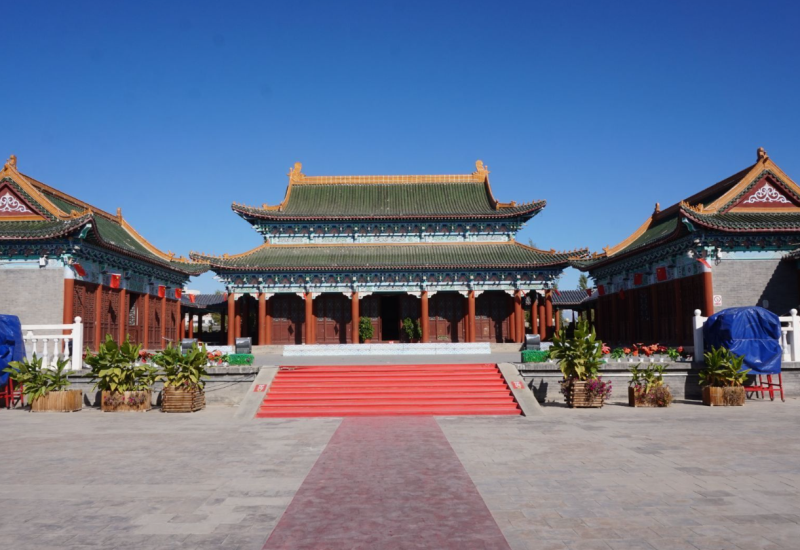
Horse Stables
This restores the place where horses were raised and managed in the mansion in former times. Visitors can see the architectural structure and layout of ancient stables here and experience the living atmosphere and military equipment conditions of the mansion at that time.
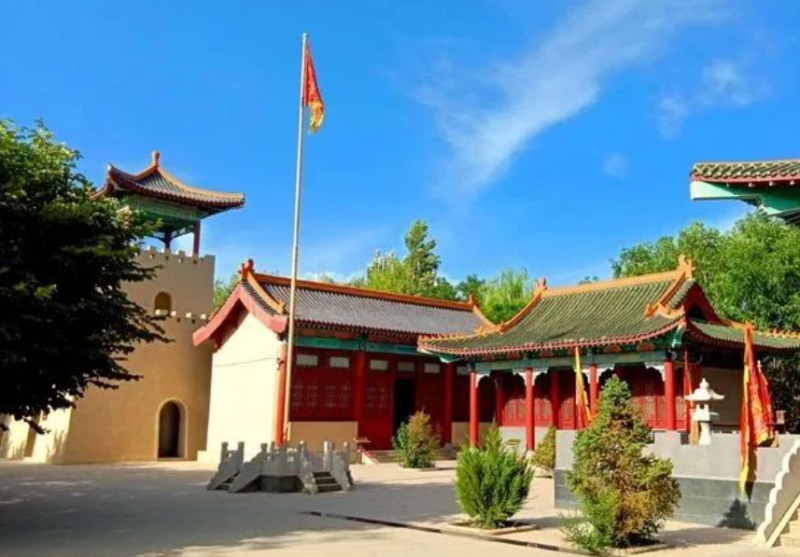
Prison
As the place in the mansion where prisoners were held, its architectural style is relatively solid and concealed. It displays the penal system and prison culture of that time and indirectly reflects the Hami Hui princes' methods of rule and means of maintaining social order.
Fortress
A structure with defensive functions, the location and structural design of the fortress reflect the needs of military defense. It is an important part of the mansion's security guarantee. Visitors can climb the fortress, overlook the surrounding scenery, and imagine the military defense scenes of that time.
Officers' Activity Room
This was a place for officers in the mansion to rest, entertain themselves, and communicate. The indoor arrangement displays the living and working atmosphere of officers at that time and reflects the mansion's military management and command system.
Officers' Council Hall
This was the place where military decisions and important affairs were discussed in the mansion. The architectural style is solemn and dignified, and the interior furnishings reflect the military strategy and management concepts of that time. Visitors can feel the atmosphere of military decision-making here.
Reviewing Stand
This was the place where the Hui prince reviewed troops and assigned generals before expeditions. It has important military symbolic significance. Standing on the reviewing stand, one can almost see the spectacular scene of troops gathering and the Hui prince giving expedition orders.
Officers' Lounge
This provided a space for officers to rest and relax. Its arrangement is relatively comfortable, reflecting concern for officers and also the mansion's military logistics support.
Uninscribed Memorial Archway Pavilion
The uniquely shaped Uninscribed Memorial Archway Pavilion leaves much room for imagination. Although there are no written records, it has witnessed historical changes and is a unique landscape in the mansion architecture.
Food
Huang'axi
This is an ancient method food passed down for 300 years, inherited from the former site of the Hami Hui Prince's Mansion. It is a porridge-like dish with a savory flavor blending dough particles and mutton soup. It can still be tasted in small street shops in Hami today.
Keqie Rice
This is also a food with a long history. It is made with ten kinds of coarse grains and beef bone broth, thick like silk. It was once a ceremonial food for praying for blessings at the Beginning of Spring, full of harvest wishes and ethnic wisdom.
Roast Whole Lamb
One of Hami's specialty foods. The outer skin of the roast whole lamb is crispy and fragrant. When cut with a knife, the aroma instantly fills the air, and the mutton is tender and juicy. It is a main dish when entertaining guests locally.
Spicy and Numbing Chicken
The chicken is tender and springy, spicy and numbing in a satisfying way. Its unique spicy and numbing flavor leaves a lasting impression. It is a very popular appetizer.
Almond Nang
It exudes a rich nutty aroma, perfectly combining the fragrance of almonds with the wheat aroma of nang. It has a crisp texture and is a local specialty staple food. It can be eaten either as a main food or as a snack.
Hami Melon Dessert
A dessert made from locally abundant Hami melons, sweet to just the right degree. The sweetness of the Hami melon combines with the delicate texture of the dessert, bringing a unique taste experience.
Tandoor Buns
Thin wrappers wrap hot meat juice, baked in a tandoor. The bun wrappers carry the unique aroma of the tandoor, and the meat filling is fresh and juicy. Eaten with other foods, it offers a distinctive flavor.
Tickets:
Tickets are 35 yuan per person.
You can search for the official public account "Hui Prince's Mansion Scenic Area" on WeChat to get the latest updates. As of 2025-06-01, the official public account does not provide an online ticket purchasing function.
Opening Hours:
09:30 - 20:00 all year round, subject to the actual opening hours of the scenic area.
Tour Route:
After entering from the scenic area gate, visitors can first visit the Hui Prince Historical and Cultural Exhibition Hall to learn about the historical context and cultural background of the Hami Hui princes; then visit military facility attractions such as the horse stables, prison, and fortress in sequence to experience the mansion's military defense system; then go to the officers' activity room, officers' council hall, reviewing stand, and officers' lounge to learn about the mansion's military management and command system; finally visit distinctive buildings such as the Uninscribed Memorial Archway Pavilion. While appreciating the architectural art, visitors can also feel the vicissitudes of history.
Transportation:
By plane: You can first arrive at Hami Airport, then take a taxi or airport shuttle bus to the scenic area. There are multiple airport shuttle bus routes, and you can choose a suitable route according to your situation to reach a stop relatively close to the scenic area.
By train: Take a train to Hami Station or Hami South Station. After leaving the station, you can choose to take a bus. Multiple bus routes pass near the scenic area, or you can directly take a taxi to the scenic area, with a short travel time.
By car: If you choose to drive, you can travel to Hami City via roads such as the Lianhuo Expressway and follow navigation prompts to reach the scenic area. There is a parking lot in the scenic area, making it convenient for visitors to park.
Must-Visit Attractions:
Hui Prince Historical and Cultural Exhibition Hall: As the core attraction of the scenic area, the rich cultural relics and materials in the hall are key to understanding the history and culture of the Hami Hui princes. It is a must-visit place.
Reviewing Stand: It has important historical symbolic significance. Standing on it allows one to feel the military majesty and historical atmosphere of that time. It is a good place for taking photos.
Officers' Council Hall: Its architectural style and interior furnishings allow visitors to gain an in-depth understanding of the military decision-making process and culture of that time and feel the weight of history.
Tour Suggestions:
Visitors are advised to choose a day with clear weather to visit the scenic area, so they can better appreciate the details of the buildings and the garden landscape.
Wear comfortable shoes, because the scenic area is relatively large and requires walking a long distance. Comfortable shoes can make the visit easier.
You can hire a tour guide in the scenic area or use the scenic area's electronic guide equipment. This will allow you to more deeply understand the historical and cultural connotations of each attraction and improve the visiting experience.
Reserve enough time to tour the scenic area. It is recommended that the visit last no less than 3 hours so that you can fully appreciate the charm of the scenic area.
Precautions:
Obey the rules and regulations of the scenic area. Do not touch cultural relics and exhibits at will, and do not damage the buildings and facilities of the scenic area.
Respect local religious beliefs and customs. Especially when visiting religious places such as mosques, keep quiet and solemn.
When visiting the scenic area in summer, pay attention to sun protection and heatstroke prevention. Carry sunglasses, sunscreen, a sun hat, and other items, and replenish water in time to prevent heatstroke.
Some buildings in the scenic area are relatively old, and the ground and stairs may be slippery. Visitors should pay attention to safety when walking to avoid falling.