The Barkol Ancient City Scenic Area is located in Barkol Town, Barkol Kazakh Autonomous County, Hami City, Xinjiang Uygur Autonomous Region. It covers a total area of 4 square kilometers and is a national 4A-level tourist attraction. The scenic area is rich in cultural relics and natural tourism resources, with uniquely distinctive landscapes. Barkol Ancient City is the largest and best-preserved ancient military city in the Western Regions. It was one of the four major military cities in northern Xinjiang during the Qing Dynasty and one of the four circuits of Xinjiang in the Qing Dynasty. It was also the hub connecting the Central Plains region with the Western Regions throughout successive dynasties, and the first important town on the northern new route of the ancient Silk Road after entering Xinjiang. In addition, it was one of the "three great commercial cities" and "eight great famous cities" in Xinjiang's history, and the city with the best-preserved Han culture in Xinjiang. It played an important role in maintaining stability in Xinjiang and guarding the Western Regions, and was known in ancient times as "Zhenxi Prefecture."
History and Culture
Barkol Ancient City has a long history and was called Pulei in ancient times. As early as the Neolithic Age six or seven thousand years ago, there were already human activities here. It was once a settlement area for ancient peoples such as the Saka, Hujie, Wusun, Xiongnu, Gaoche, Rouran, and Turks, and has long been known as the "Ancient Pastoral Kingdom."
During the Western Han Dynasty, the Pulei Kingdom was one of the states of the Western Regions. The Western Han general Zhao Chongguo once led 80,000 soldiers straight to Pulei to join forces and attack the Xiongnu. In the 14th year of the Zhenguan era of the Tang Dynasty, Jiang Xingben led tens of thousands of troops into Barkol, where they stored grain and fodder, collected warhorses, and manufactured weapons and trebuchets, putting down the rebellion of King Qu Wentai of Gaochang. In the 4th year of the Jinglong era of the Tang Dynasty, Empress Wu Zetian built the Dahe Tang City in Ganlu Plain. This city played an important role in maintaining the smooth flow of the Silk Road.
In the 9th year of the Yongzheng era of the Qing Dynasty, General Yue Zhongqi was ordered to build a Green Standard Army city in Barkol, namely the Han City, to station Green Standard troops. By the 37th year of the Qianlong era, the Qing government built another city east of Barkol, the Man City, and transferred 2,000 Manchu banner soldiers with their families from Gansu and Anxi to station there permanently. After Xinjiang was established as a province, the Manchu banner soldiers in the city moved to Qitai in the 14th year of the Guangxu era.
Main Attractions
Han City
Built in 1731, it is rectangular, 1,553.5 meters long from east to west and 788.7 meters wide from north to south. It was built by ramming earth, with each rammed layer about 11 centimeters thick. The city wall is 6.8 meters high, with parapets on top and battlements. There are corner towers at the four corners of the city wall, four gate towers, four barbican gate towers, 3,600 battlements on the city wall, and 7 artillery platforms. A moat was dug around the city, with 4 drawbridges. In the center of the city stands a drum tower, dividing the city into four main streets. The left and right barracks are on the south street, while the east, west, and north streets are all civilian houses. In the southeast corner there is a military drill ground, and in the northwest corner a gunpowder bureau was built.
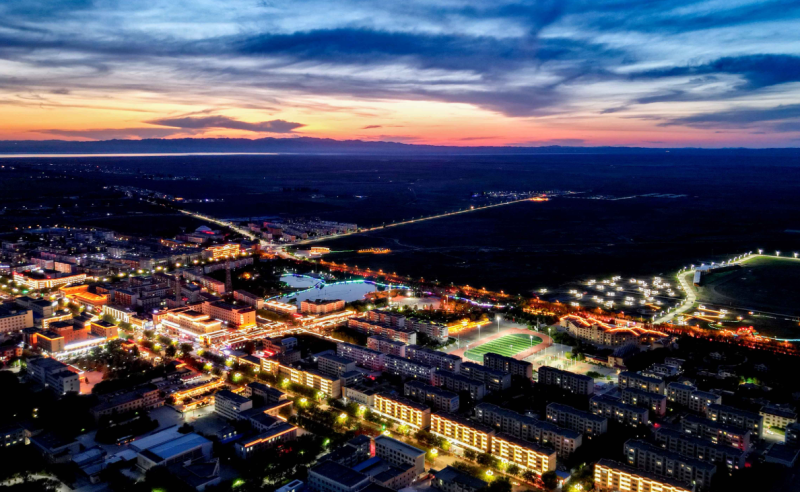
Man City
Built in 1772 specifically for more than 2,000 Manchu soldiers and their families stationed there permanently. It is 1,306 meters long from east to west and 501 meters wide from north to south. It was built by ramming earth, with each rammed layer about 11 centimeters thick. The wall is 7 meters high, about 3.2 meters wide at the top and about 5 meters wide at the bottom. On top is a parapet 1.5 meters high and 0.5 meters wide. There are four corner towers, 116 battlements, 12 artillery platforms, and 4 city gates: the east gate Xuanze, the west gate Daofeng, the south gate Guangbei, and the north gate Weichang. There were 3,792 rooms for troops and residences, and the barbican had a radius of 32 meters.
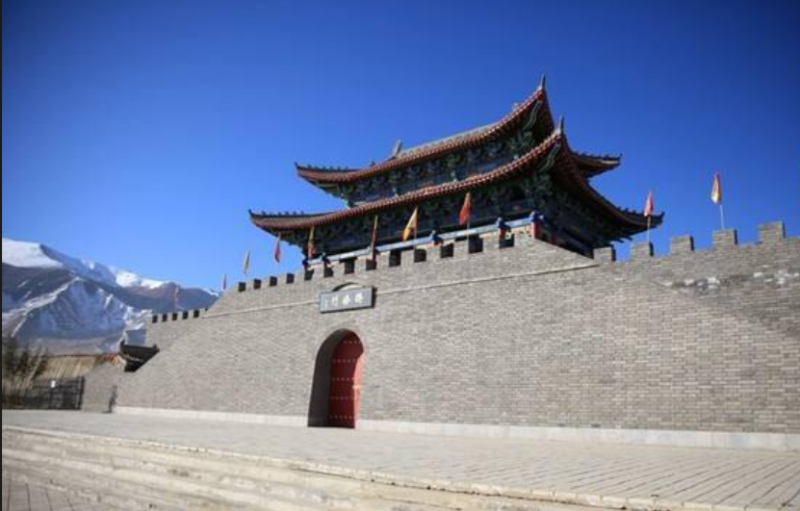
Desheng Gate
It is the west gate of Han City, also called Zuosheng Gate. It was named "Desheng Gate" because the rebellious Junggar tribe suppressed in the Qing Dynasty was to the west of Barkol. Each time the punitive army set out, it left through the west gate, and when the battle ended, it entered through the west gate. At present, it is the best-preserved city gate. The county government restored the Desheng Gate tower in 2003. The gate tower is antique and majestic.
Food
Mutton with Braised Pancakes
One of Barkol's specialty foods. Tender mutton is stewed until soft and thoroughly cooked, then thin pancakes are laid on top of the mutton and simmered until the pancakes are cooked through and full of flavor. The pancakes absorb the mutton broth, making them chewy, while the mutton is fresh and fragrant.
Barkol Steamed Cake
Usually made from flour. After processes such as fermentation, kneading, and shaping, it is placed in a steamer and cooked. The steamed cake is relatively large, soft in texture, and sweet in taste. Some versions also sprinkle fragrant bean powder and other ingredients on the surface to add flavor.
Fen Tang
Made mainly with liangfen, vermicelli, and other ingredients, paired with mutton, vegetables, and more, then simmered with a specially prepared broth. The broth is rich, the liangfen and vermicelli are smooth and tasty, and the mutton is tender. It is a delicious and filling dish.
Tickets:
Free admission.
Opening Hours:
Open all year round, 24 hours a day.
Recommended Tour Route:
Visitors are recommended to first tour Han City to experience the historical charm of the ancient city and appreciate its architectural style; then go to Man City to learn about Manchu culture and history; then go to Desheng Gate and climb the gate tower to overlook the scenery of the ancient city; finally, taste local food in the ancient city and experience the unique charm of Barkol.
Transportation:
External transportation: You can first arrive in Hami City, then take a long-distance bus from Hami City to Barkol Kazakh Autonomous County, and then take a taxi or bus within the county seat to reach the scenic area.
Internal transportation: Within the scenic area, you can tour on foot or take local specialty transportation such as horse carriages.
Must-Visit Attractions:
Han City: The largest and best-preserved ancient military city in the Western Regions, where you can feel the historical heritage of the ancient city.
Desheng Gate: The best-preserved city gate. Climb the gate tower to overlook the scenery of the ancient city.
Travel Tips:
Visitors are advised to wear comfortable shoes to facilitate walking tours in the ancient city.
When visiting in summer, pay attention to sun protection and bring sunglasses, sunscreen, and other items.
When visiting in winter, pay attention to keeping warm and bring enough clothing.
When touring the scenic area, abide by the regulations of the scenic area and protect cultural relics and the environment.
When tasting local food, choose formal restaurants to ensure food safety.
Notes:
Respect local religious beliefs and customs.
Do not touch or damage cultural relics and historical sites at will.
Do not litter in the scenic area and keep the environment clean.
Pay attention to safety, especially when playing at high places such as city walls and gate towers, and be careful.
If you need to take photos, do not use flash, so as not to damage cultural relics.