Dabei Temple is located on Tianwei Road, Hebei District, Tianjin. It is one of the largest and oldest Buddhist temples still existing in Tianjin and is a national 4A-level tourist attraction. The temple is known for its profound Buddhist cultural heritage, simple and solemn architectural style, and reverent religious atmosphere. It is not only an important religious activity site in Tianjin, but also a cultural tourism attraction with considerable influence. The temple covers an area of about 42,000 square meters, with a building area of 16,000 square meters. The layout of the buildings in the temple is rigorous and distributed in an orderly manner according to traditional temple regulations. It is mainly composed of many halls, including the Hall of Heavenly Kings, the Mahavira Hall, the Great Compassion Hall, the Ksitigarbha Hall, and the Memorial Hall of Master Xuanzang. Overall, it presents the architectural characteristics of a typical traditional Chinese temple, with flying eaves, bracket sets, carved beams, and painted rafters, demonstrating a relatively high level of architectural art.
Historical Culture
The history of Dabei Temple can be traced back to the Shunzhi period of the Qing Dynasty. It was originally named "Dabei Yuan" and was founded by the eminent monk Master Shigao. In the eighth year of Kangxi (1669), the temple was expanded, and its scale gradually grew. In the course of history, Dabei Temple underwent multiple repairs and reconstructions, and most of the existing buildings reflect the layout after repairs in the 1980s.
The temple holds an important position in the history of Buddhist development. It is a Chan Buddhist temple of Chinese Buddhism and inherits the Buddhist teachings of the Chan school. Many eminent monks have resided here to spread the Dharma, attracting numerous believers and tourists to visit and pay homage. At the same time, Dabei Temple is also the location of the Tianjin Buddhist Association and plays an important role in promoting the spread of Buddhist culture in Tianjin and carrying out religious exchange activities.
Main Attractions
Hall of Heavenly Kings
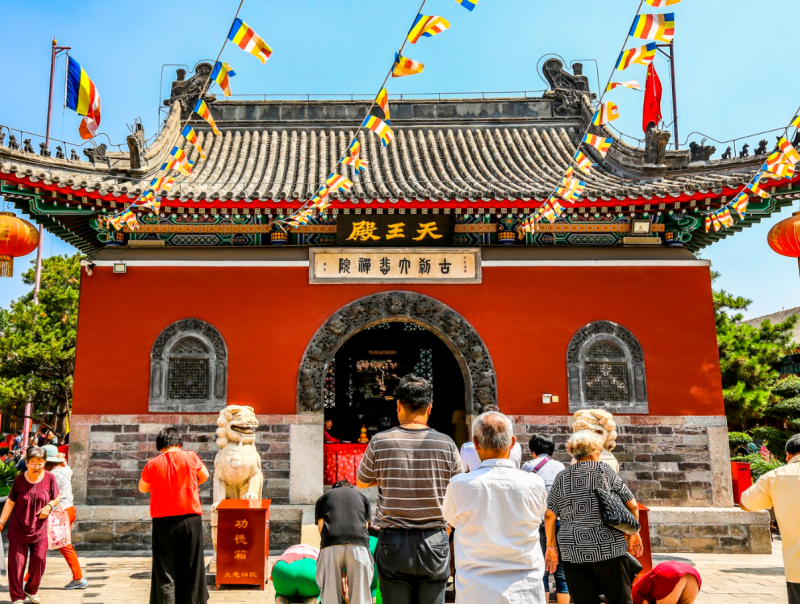
The Hall of Heavenly Kings is the mountain gate hall of Dabei Temple and also the first hall after entering the temple, with a building area of about 200 square meters. In the center of the hall is a seated statue of Maitreya Bodhisattva, with a smiling face, implying "A big belly can tolerate what is hard to tolerate in the world; when the mouth opens, it laughs at the laughable people in the world." On both sides of the Maitreya Bodhisattva statue stand the Four Heavenly Kings: the Southern King of Growth holding a sword, the Eastern King of Holding the Country holding a pipa, the Northern King of Much Hearing holding an umbrella, and the Western King of Broad Eyes holding a snake. They symbolize favorable weather and protection of the Dharma. At the rear of the hall is a statue of Skanda Bodhisattva. Skanda Bodhisattva is a Dharma-protecting deity in Buddhism, holding a vajra club and guarding the peace of the temple.
Mahavira Hall
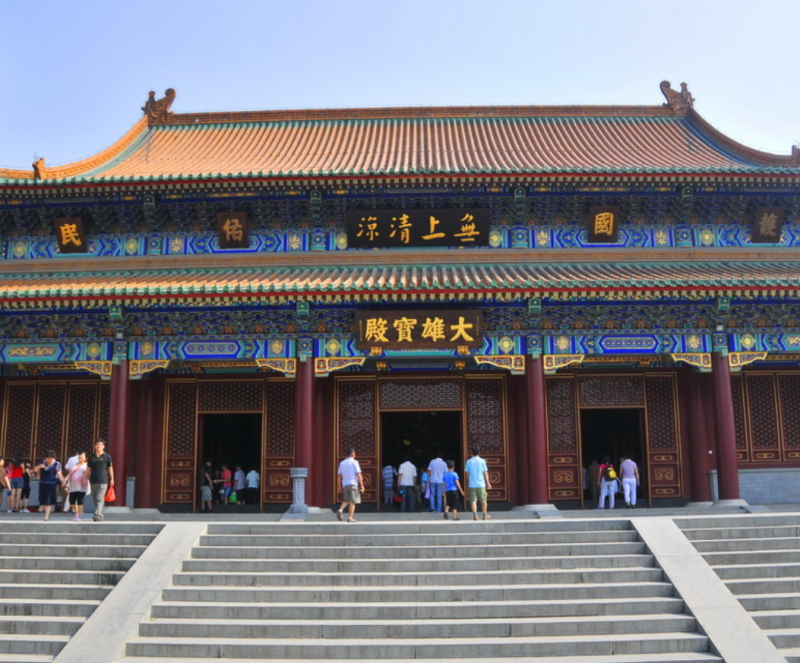
The Mahavira Hall is one of the main buildings of Dabei Temple, with a building area of about 300 square meters. It is the place where the temple holds major Buddhist ceremonies. In the center of the hall is a seated statue of Shakyamuni Buddha, 5.2 meters tall, solemn and majestic. On both sides of Shakyamuni Buddha are Amitabha Buddha and Medicine Buddha. The three are collectively called the "Three Buddhas of the Horizontal Worlds," representing different pure lands in Buddhism. On both sides of the Buddha statues are also statues of the Eighteen Arhats. Their postures vary and their expressions are vivid. Each Arhat statue is about 1.5 meters tall, demonstrating exquisite sculpture art.
Great Compassion Hall
The Great Compassion Hall is one of the core halls of Dabei Temple, with a building area of about 250 square meters. It is named because it enshrines the statue of Great Compassion Guanyin Bodhisattva. The Great Compassion Guanyin Bodhisattva statue in the hall is 6.2 meters tall and is carved from camphor wood. The craftsmanship is exquisite. The Guanyin Bodhisattva statue holds a pure vase and has a compassionate and peaceful expression. The Great Compassion Hall also enshrines other Guanyin statues, showing different manifestations of Guanyin Bodhisattva and embodying the spirit of "great compassion and great mercy, saving the suffering and delivering the distressed."
Ksitigarbha Hall
The Ksitigarbha Hall has a building area of about 180 square meters. It mainly enshrines a statue of Ksitigarbha Bodhisattva. The Ksitigarbha Bodhisattva statue is 3.5 meters tall and has a solemn image. Ksitigarbha Bodhisattva is famous for his great vow: "If hell is not empty, I vow not to attain Buddhahood; only when all sentient beings are saved will I attain bodhi." On both sides of the hall are also statues of the Ten Kings of Hell, showing the Buddhist concept of cause and effect and reincarnation.
Memorial Hall of Master Xuanzang
The Memorial Hall of Master Xuanzang was established to commemorate the Tang Dynasty eminent monk Xuanzang, with a building area of about 150 square meters. The hall enshrines a statue of Master Xuanzang, vividly recreating the resolute image of Master Xuanzang on his journey to the west to obtain scriptures. The memorial hall also displays a map of Master Xuanzang's route to the west, related historical materials, and some Buddhist scriptures, demonstrating Master Xuanzang's outstanding contributions to the spread of Buddhist culture and allowing visitors to have a deeper understanding of this eminent monk's deeds.
Food
Vegetarian Cuisine
The vegetarian cuisine of Dabei Temple is one of its specialty foods, known for being light, healthy, and exquisite. The ingredients for vegetarian cuisine mainly include soy products, vegetables, mushrooms, and so on. Through the careful cooking of the chefs, they become delicious dishes. Among them, vegetarian stir-fried Luohan Zhai is a representative dish. It uses a variety of vegetables and mushrooms, such as shiitake mushrooms, wood ear mushrooms, dried tofu sticks, carrots, and so on, stir-fried with an appropriate amount of seasoning. It has a rich taste and balanced nutrition. In addition, vegetarian steamed buns are also a food deeply loved by tourists. The filling is mostly green vegetables, vermicelli, and so on. They taste delicious and are affordable. They can be tasted in the vegetarian dining hall near the temple.
Nearby Food
Erduoyan Fried Cake
Erduoyan Fried Cake is a famous traditional snack in Tianjin. It can be tasted at the Erduoyan Fried Cake shop not far from Dabei Temple. This kind of fried cake uses glutinous rice flour as the skin, and the filling is mostly red bean paste or hawthorn filling. After frying, the outer skin is crisp, and the inside is soft and glutinous, sweet and delicious. It has a long history, was created during the Guangxu period of the Qing Dynasty, and is one of the "Three Wonders" foods of Tianjin. It is deeply loved by local people and tourists.
Goubuli Baozi
Goubuli Baozi is a signature food of Tianjin, and there are many branches around Dabei Temple. The buns use flour as the skin, and the filling is made from pork, soy sauce, sesame oil, and so on. The workmanship is fine, and each bun has 18 pleats. After steaming, the buns are beautiful in appearance, soft in texture, and delicious in taste. They are one of the must-try foods when visiting Tianjin.
Tickets:
Free admission. You can search for the official public account "Tianjin Dabei Temple" on WeChat to get the latest updates.
Opening Hours:
Opening hours are from 9:00 to 16:30 every day (last entry at 16:00). It should be noted that the temple may adjust its opening hours on some Buddhist festivals or special dates. Visitors are advised to check and confirm through official channels before traveling.
Tour Route:
After entering Dabei Temple, visitors can first begin the visit at the Hall of Heavenly Kings, feel the solemn atmosphere of the mountain gate hall, and learn about the Buddha statues enshrined in the hall and their meanings. After that, go to the Mahavira Hall to visit the main Buddha and the Eighteen Arhat statues in the hall. If there happens to be a Buddhist ceremony, you can also feel the solemnity of the Buddhist ritual. Then go to the Great Compassion Hall to pay homage to the Great Compassion Guanyin Bodhisattva statue and experience its compassionate spirit. Afterward, you can visit the Ksitigarbha Hall to learn about Ksitigarbha Bodhisattva's great vow. Then go to the Memorial Hall of Master Xuanzang to learn about Master Xuanzang's deeds of going west to obtain scriptures. After visiting the main halls, you can stroll in the temple, enjoy the architectural style and garden landscape of the temple, and feel the peaceful atmosphere of the temple. The entire tour process takes about 1.5 to 2 hours.
Transportation:
Subway: You can take Tianjin Metro Line 1 to Northwest Corner Station, exit from Exit A, and walk about 10 minutes to reach Dabei Temple; you can also take Metro Line 3 to Zhongshan Road Station, exit from Exit B, and walk about 15 minutes to arrive.
Bus: Take buses such as No. 1, No. 2, No. 12, No. 18, No. 34, No. 609, No. 610, No. 611, No. 619, No. 632, No. 641, No. 646, No. 659, No. 670, No. 671, No. 818, No. 878, No. 904, No. 906, No. 954, and so on, get off at the "Dabei Temple" station, and walk after getting off.
Self-driving: There are parking lots around the temple. Tourists can drive there by themselves. The parking fee is 5 yuan per hour for small cars.
Must-Visit Attractions:
Mahavira Hall: As the main building of the temple, the "Three Buddhas of the Horizontal Worlds" and the Eighteen Arhat statues enshrined in the hall are highly worth seeing. The building scale is relatively large, and it is the place where major Buddhist ceremonies are held. It is worth a key visit.
Great Compassion Hall: One of the core halls. The 6.2-meter-tall camphor-wood-carved Great Compassion Guanyin Bodhisattva statue has exquisite craftsmanship and embodies profound Buddhist culture. It is a landmark attraction of the temple.
Memorial Hall of Master Xuanzang: It displays the deeds of Master Xuanzang's journey to the west to obtain scriptures and related materials. It has high cultural value and allows tourists to gain an in-depth understanding of Buddhist history.
Tour Suggestions:
It is recommended to arrange the visit time at 1.5 to 2 hours so that there is enough time to visit each hall and feel the atmosphere of the temple.
Because the temple is a religious place, it is recommended to dress appropriately and avoid wearing overly revealing clothing, such as short skirts, shorts, and so on.
It is advisable to choose to go on non-holidays, when there are relatively fewer tourists, so you can better feel the peaceful atmosphere of the temple.
During the visit, you can follow the guide's introduction to learn more about the temple's history, the meanings of the Buddha statues, and so on, and deepen your understanding of the temple.
Precautions:
After entering the temple, please do not make loud noises. Keep quiet and respect religious beliefs and the visiting experience of other tourists.
Photography and video recording are prohibited inside the halls. Please do not touch the Buddha statues or the cultural relics on display in the halls. Take care of the temple's facilities and environment.
Observe the temple's regulations. Do not smoke or litter randomly in the temple. Keep the environment clean.
If you participate in the temple's Buddhist activities, you need to follow the arrangements of the staff, observe the order of the activities, and must not interfere with the normal conduct of the activities.
There is a relatively large flow of people around the temple. Please take good care of your personal belongings to avoid loss.