Qingtianhe Scenic Area is located in Bo'ai County, Jiaozuo City, Henan Province, at the southern foot of the Taihang Mountains and at the border of Shanxi and Henan Provinces. It is a national 5A-level tourist attraction, a Global Geopark, a national key scenic area, and a national water conservancy scenic area. With a total area of 106 square kilometers, it consists of seven major touring areas: the Dam, Daquan Lake, Sangu Spring, Guanyin Gorge, Fo'er Gorge, Jinjia Ridge, and Yueshan Temple. It is known as the "Three Gorges of the North" and "Guilin Landscape." The forest coverage rate in the scenic area is over 95%, and the negative oxygen ion concentration reaches as high as 144,000 per cubic centimeter, making it a natural forest oxygen bar.
Historical Culture
Qingtianhe has a long history and profound cultural heritage. As early as 7,000 years ago, there were traces of human activity here. During the Western Zhou Dynasty, King You of Zhou hunted here, leaving the record that "King You of Zhou hunted at Qingtianhe." During the Northern Wei Dynasty, Buddhism spread to Qingtianhe, and Yueshan Temple began to flourish as a Buddhist holy site. It was once known together with Shaolin Temple and Baima Temple as one of the "Three Great Ancient Temples of the Central Plains."
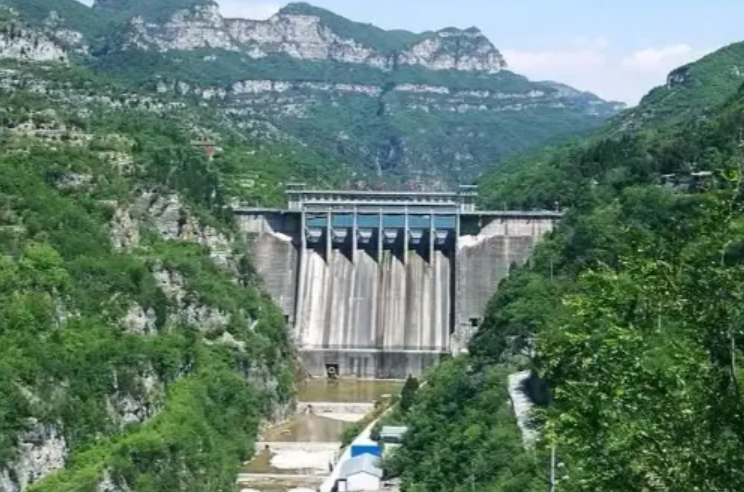
The Qingtianhe water conservancy project is an important part of the scenic area. The dam was built in 1966, is 76 meters high, 159 meters long, and 8 meters wide at the top. It is a comprehensive water conservancy hub integrating flood control, irrigation, power generation, and tourism, and is praised as "a pearl at the foot of the Taihang Mountains." In the 1990s, Qingtianhe began to be developed for tourism and gradually became a famous tourist destination in the Central Plains region.
Main Attractions
Qingtianhe Dam
The dam is 76 meters high, 159 meters long, and 8 meters wide at the top, and is one of the landmark structures of the scenic area. Standing on the top of the dam, visitors can overlook the magnificent scenery of Daquan Lake and experience the wonder of "a calm lake emerging in a high gorge." The dam also has an observation deck, making it an excellent spot for watching sunrise and sunset.
Daquan Lake
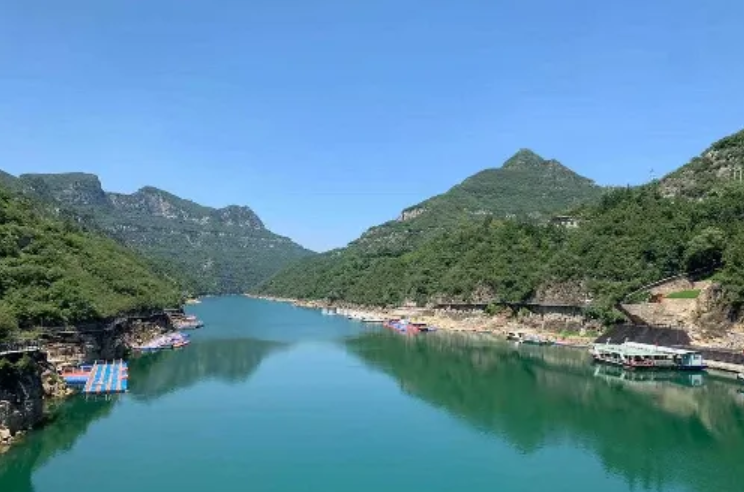
Daquan Lake is the core scenic area of Qingtianhe. The lake surface is 7.5 kilometers long, 80-100 meters wide, and more than 60 meters deep. The water is so clear that the bottom can be seen, and the peaks on both banks are layered and picturesque. In the lake are rare natural landscapes such as the Natural Great Wall, San Niang Jiao Zi, and Tai Bai Zui Jiu. A boat tour feels like being inside a landscape painting.
Guanyin Gorge
Guanyin Gorge is about 3 kilometers long. Inside the gorge, the water flows swiftly and waterfalls cascade down, including attractions such as Guanyin Waterfall and Dripping Guanyin. Among them, Guanyin Waterfall is more than 30 meters high and 5 meters wide. The water pours down from a height like a white silk hanging, magnificent and powerful.
Fo'er Gorge
Fo'er Gorge is about 2.5 kilometers long and is named because the peaks on both sides of the gorge resemble Buddha's ears. The gorge contains attractions such as Fo'er Pool, One-Line Sky, and Strange Stone Beach. The rocks are jagged and oddly shaped, making it a natural geological museum.
Jinjia Ridge
Jinjia Ridge is the red-leaf viewing area of Qingtianhe, covering about 5,000 mu. Every autumn, the mountains are covered with red leaves and the forests are dyed in layers, making it a famous red-leaf viewing destination in the Central Plains region. There are many varieties of red leaves here, including smoke tree, five-pointed maple, and maple species. The best viewing period is from mid-October to early November.
Yueshan Temple
Yueshan Temple was first built in 1158 AD (during the Dading period of the Jin Dynasty) and is one of the Buddhist holy sites in the Central Plains region. The temple contains buildings such as the Hall of Heavenly Kings, the Mahavira Hall, and the Sutra Library. More than 20 ancient buildings and over 40 stone inscriptions remain. Yueshan Temple is also the birthplace of Baji Quan and has a profound cultural heritage.
Suggested Tour Routes:
One-day tour recommendation: Arrive at the scenic area around 8 a.m., take the sightseeing bus to Daquan Lake, and take a boat tour to enjoy the lake and mountain scenery and attractions such as the Natural Great Wall and San Niang Jiao Zi, about 2 hours. Then go to Guanyin Gorge and hike to visit attractions such as Guanyin Waterfall and Dripping Guanyin, about 1.5 hours. Have lunch at a restaurant in the scenic area and taste specialty foods such as Bo'ai braised pork. In the afternoon, go to Fo'er Gorge and visit attractions such as Fo'er Pool and One-Line Sky, about 1.5 hours. Finally, take the sightseeing bus back to the scenic area entrance and end the trip.
Two-day tour recommendation: On the first day, arrive at the scenic area in the morning and visit Daquan Lake and Guanyin Gorge. In the afternoon, go to Jinjia Ridge to view red leaves (in autumn). In the evening, stay at the Qingtianhe Hotel in the scenic area. The hotel is located beside Daquan Lake and has a beautiful environment and complete facilities. On the second morning, visit Yueshan Temple to learn about Buddhist culture and the history of Baji Quan. In the afternoon, go to Fo'er Gorge, and then end the trip.
Travel Tips:
Autumn (October-November) is the best period to view red leaves. It is recommended to check the red-leaf index in advance and arrange the itinerary reasonably.
When taking a boat tour on Daquan Lake, it is recommended to choose the morning, when the light is soft and the photo effect is better. You may bring a camera or mobile phone to capture the beautiful scenery.
The scenic area is mostly mountainous terrain. It is recommended to wear comfortable sports shoes or hiking shoes to facilitate walking tours.
When visiting in summer, pay attention to sun protection and bring sunscreen, a sun hat, and other items. Also prepare drinking water, as prices in the scenic area are relatively high.
If you want a more in-depth visit, you may choose the two-day tour, stay in a hotel within the scenic area, and experience the tranquility of the night and the freshness of the early morning.
Notes:
Open flames are strictly prohibited in the scenic area. Please do not smoke or use open flames in the scenic area to avoid causing forest fires.
When taking a boat tour, you must comply with the safety regulations on board, wear a life jacket, and do not walk around or play on the boat.
When viewing red leaves at Jinjia Ridge, do not enter unopened areas at will to avoid getting lost or accidents.
Respect the religious beliefs and cultural customs of Yueshan Temple. Keep quiet when entering the temple, and do not make loud noises or take photos.
Some sections of the scenic area are relatively steep. Pay attention to safety when touring, especially taking care of the elderly and children.
In severe weather (such as heavy rain or strong wind), some attractions may be closed. It is recommended to check the weather forecast and scenic area announcements before traveling.
Transportation:
Public transportation: In Jiaozuo City, take Bus No. 3 to Bo'ai County, then transfer to the tourist shuttle from Bo'ai County to Qingtianhe Scenic Area. The fare is about 15 yuan, and the ride takes about 40 minutes.
Self-driving: From Jiaozuo urban area, drive north along Yingbin Road, turn onto Xingfu Road in Bo'ai County, then follow Qingtianhe Avenue directly to the scenic area. The total distance is about 35 kilometers, and the drive takes about 50 minutes. From Zhengzhou, take Zheng-Yun Expressway, transfer to Jin-Xin Expressway, exit at Bo'ai, and then head to the scenic area. The total distance is about 120 kilometers, and the drive takes about 1.5 hours. The scenic area parking lot charges 10 yuan per day.
High-speed rail: Take the Zheng-Jiao intercity railway to Jiaozuo Station, then transfer to a bus or taxi to the scenic area.
Opening Hours:
The scenic area is open all year round. Opening hours are 7:30-18:00 (summer) and 8:00-17:30 (winter). Every year from October 1 to November 15, during the Red Leaf Festival, opening hours are extended to 18:30, and the last entry time is 17:30.
Tickets:
Ticket: 70 yuan per person.