The Foshan Xiqiao Mountain Scenic Area is located in the southwest of Nanhai District, Foshan City, Guangdong Province. It is a national 5A-level tourist attraction, a national key scenic spot, and a national forest park. Covering a total area of 14 square kilometers, it features beautiful natural scenery characterized by "quiet elegance, antiquity, and natural simplicity." Xiqiao Mountain is an extinct ancient volcano formed by volcanic ejecta, boasting unique geological landscapes such as volcanic craters and Shiyan Rock. The area is lush with vegetation, has a high forest coverage rate, and offers fresh air, making it a natural oxygen bar. The mountain also hosts numerous ancient buildings, including Baofeng Temple and Baiyun Cave, which have a long history and rich cultural heritage. In addition, the scenic area is equipped with well-developed facilities, including a visitor service center, parking lots, dining, and accommodation, to facilitate visitors' tours.
Historical Culture
Xiqiao Mountain has a long history, with traces of human activity dating back over 6,000 years. During the Qin and Han dynasties, Xiqiao Mountain was already well-known and was referred to as one of the "Two Famous Mountains of Lingnan."
In the Tang and Song dynasties, Xiqiao Mountain gradually became a retreat for scholars, literati, and officials, who came here for seclusion, lectures, and sightseeing, leaving behind many poems, essays, and cultural relics. Scholars such as Zhan Ruoshui and Fang Xianfu once established academies on the mountain to give lectures and spread cultural ideas.
During the Ming and Qing dynasties, the development of Xiqiao Mountain reached its peak, with the construction of numerous temples, Taoist shrines, and garden architecture. It became an important center for the dissemination of Buddhist, Taoist, and other religious cultures. Baofeng Temple, an important structure from this period, enjoyed thriving incense offerings and attracted many devotees and tourists.
In modern times, Xiqiao Mountain has been continuously protected and developed, becoming a renowned tourist attraction. At the same time, it carries a wealth of folk culture, such as the Spring Festival lion dance performances and the Guanyin Treasury-Opening ceremony, which attract large numbers of visitors to experience local traditions.
Major Attractions
Baofeng Temple
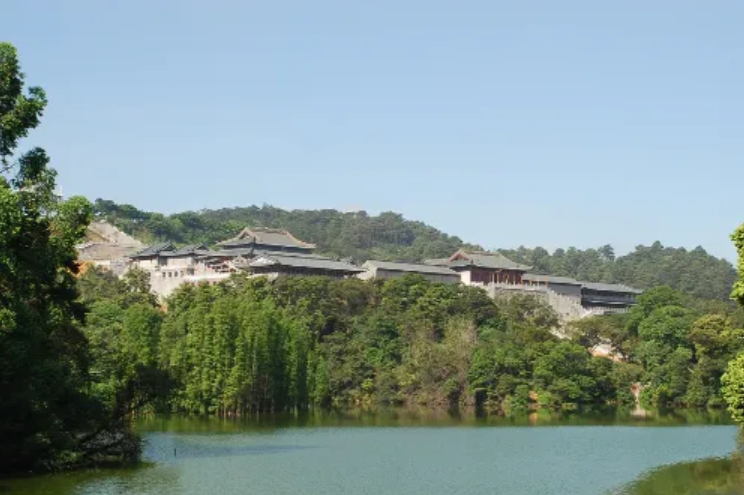
Located in the southeastern part of Xiqiao Mountain, Baofeng Temple was first built in the fourth year of the Tianjian era of the Southern Liang Dynasty (AD 505), with a history of over 1,500 years. The temple has been rebuilt many times over the centuries, and the current Baofeng Temple was reconstructed on its original site. The temple is grand in scale and features an elegant, antique architectural style. Inside, it enshrines numerous Buddhist statues, the most famous being the world's largest seated white jade Guanyin statue. Surrounded by lush greenery, the temple offers a tranquil environment where visitors can immerse themselves in a strong Buddhist cultural atmosphere and admire exquisite architectural and sculptural art.
Baiyun Cave
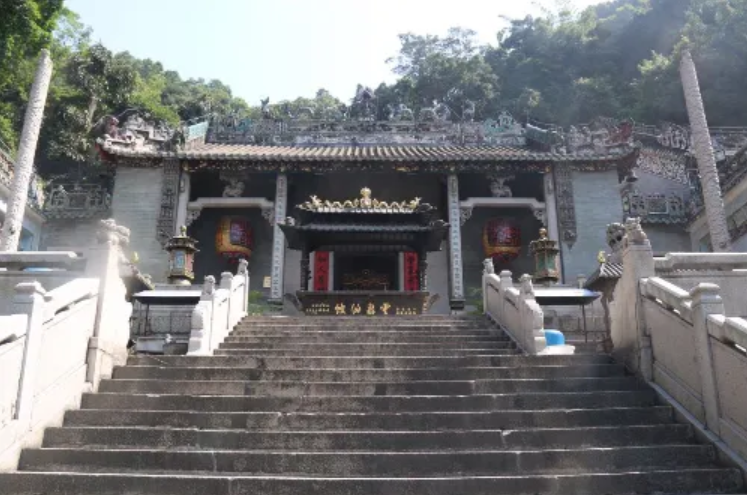
Located at the northwestern foot of Xiqiao Mountain, Baiyun Cave is one of the core scenic areas and is known as the "Pearl of Xiqiao Mountain." Inside the cave are Ming and Qing dynasty buildings such as Yunquan Immortal Hall, Sanhu Academy, and Kuiguang Tower. Yunquan Immortal Hall is a Taoist structure built during the Qianlong reign of the Qing Dynasty, with a quaint architectural style. Sanhu Academy was where the famous Qing scholar Kang Youwei studied and gave lectures; here, Kang absorbed new ideas that laid the foundation for his later reform and modernization efforts. Kuiguang Tower was built to commemorate the imperial examination system and holds significant historical and cultural value. Baiyun Cave is picturesque, with murmuring streams and ancient towering trees, making it an excellent spot for visitors to appreciate natural beauty and historical culture.
Shiyan Rock
Shiyan Rock is an important geological feature of Xiqiao Mountain and an ancient quarry site. After quarrying, huge caverns were formed, and over time, many swifts (shiyan in Chinese) have inhabited the caves, giving the site its name. The caverns are spacious, and the ceilings and walls are adorned with unique rock patterns and stalactites, offering high ornamental value. The clear pools within the caves complement the cavern scenery perfectly. Visitors can walk along the boardwalks inside the caves to admire the unique geological landscape and appreciate the wonders of nature and the wisdom of ancient laborers.
Nanhai Guanyin Cultural Garden
Situated on Daxian Peak, one of the seventy-two peaks of Xiqiao Mountain, at an elevation of 346 meters, the Nanhai Guanyin Cultural Garden features a Guanyin statue that stands 61.9 meters tall, making it the tallest seated Guanyin statue in the world. The statue is made of pure copper and portrays a compassionate and serene Guanyin. The garden also includes Guanyin Square, a release pond, and other structures and landscapes. Visitors can pay homage to the Guanyin statue, experience the solemnity and sacredness of Buddhist culture, and enjoy panoramic views of Xiqiao Mountain from this vantage point.
Huang Feihong Lion Dance and Martial Arts Museum
Built in 1996 in the village of Luzhou at the foot of Xiqiao Mountain, the birthplace of Huang Feihong, the museum houses an exhibition hall on Huang Feihong's life and a memorial hall for Guan Dexing.
Tianhu Park
Located in the northwestern part of Xiqiao Mountain, Tianhu Park was originally an ancient volcanic crater, formerly known as "Guanglangping." The lake covers about 120 mu (approx. 8 hectares), surrounded by green peaks on three sides. On the northern side, a large dam features an art plaza. Along the lake are attractions such as Dragon Pearl Rock, Waiting-for-the-Moon Pavilion, and Mandarin Duck Pavilion. A nine-arched bridge crosses the eastern part of the lake, and a Dragon-Viewing Tower stands high on the southern shore.
Suggested Tour Routes:
One-Day Tour: Arrive at Xiqiao Mountain in the morning and first visit the Nanhai Guanyin Cultural Garden to admire the towering Guanyin statue and enjoy the magnificent views from Daxian Peak. Then take a sightseeing bus or walk to Baofeng Temple to experience the Buddhist atmosphere and view the temple's architecture and statues. Have lunch at a restaurant within or near the scenic area, sampling local delicacies such as Xiqiao cakes and stuffed carp. In the afternoon, head to Baiyun Cave to explore the Yunquan Immortal Hall, Sanhu Academy, and other Ming-Qing buildings, and enjoy the natural scenery within the cave. Finally, visit Shiyan Rock to explore the ancient quarry site and admire the unique geological formations, concluding the day's tour.
Two-Day Tour: On the first day, arrive at the scenic area in the morning and head to Baiyun Cave to slowly tour Yunquan Immortal Hall, Sanhu Academy, Kuiguang Tower, and other sites, learning about Xiqiao Mountain's history and culture. In the afternoon, visit Shiyan Rock to appreciate the unique geological features. Stay overnight at a hotel or guesthouse near the scenic area and sample local cuisine. On the second morning, visit the Nanhai Guanyin Cultural Garden, then proceed to Baofeng Temple. In the afternoon, enjoy free time within the scenic area—you may choose to hike to appreciate the natural scenery or relax in a teahouse before returning.
Travel Tips:
Check the weather forecast in advance and choose a clear day for better views of the natural scenery. On rainy days, some paths may be slippery, so exercise caution.
Wear comfortable sports shoes and light clothing, as the tour involves considerable walking; comfortable gear will make your visit more enjoyable.
When visiting temples such as Baofeng Temple, dress modestly and avoid revealing or inappropriate attire. Follow temple rules and etiquette once inside.
When trying local food, pay attention to food hygiene to avoid discomfort from unclean food. You may sample a variety of specialties but avoid overeating.
Learn about Xiqiao Mountain's history, culture, and geology in advance to better appreciate and understand the attractions during your visit.
If time permits, consider hiking to experience the tranquility and fresh air of the forest, but plan your stamina accordingly to avoid exhaustion.
Important Notes:
Protect the environment—do not litter and keep the scenic area clean.
Some paths are steep; take care while hiking, and ensure that the elderly and children are accompanied by adults.
When visiting religious sites, respect local beliefs and customs; do not make loud noises or behave inappropriately.
Follow staff instructions when riding the sightseeing bus, fasten your seatbelt, and do not walk around or play inside the vehicle.
Keep your personal belongings secure, especially in crowded areas such as entrances and restaurants, to prevent loss.
When staying overnight, take care of your room keys and comply with hotel or guesthouse regulations.
In case of emergency, contact scenic area staff immediately or call the emergency hotline.
Transportation:
Bus: Take bus routes Qiao 01, Qiao 02, Qiao 03, Qiao 05, Qiao 06, Qiao 09, Qiao 10, Qiao 12, Qiao 13, or Qiao 14 to reach the North Gate or South Gate of Xiqiao Mountain, then walk or take the scenic area shuttle bus into the site.
Self-driving: Use navigation apps by entering "Foshan Xiqiao Mountain Scenic Area" and follow the directions. From downtown Foshan, take the Fo-Kai Expressway, Guangzhou Ring Expressway, and other routes to reach the scenic area. Multiple parking lots are available, but during holidays and peak seasons, parking spaces may be limited—arrive early.
Tourist shuttle buses: Some travel agencies or tour operators offer dedicated shuttle buses to Xiqiao Mountain. You can inquire with agencies or book online for convenience; these services may include guided commentary.
Opening Hours:
The Foshan Xiqiao Mountain Scenic Area is open year-round from 7:30 AM to 5:30 PM daily. However, opening times for individual attractions within the area may vary—for example, temples like Baofeng Temple may adjust hours based on religious activities. During holidays or peak tourist seasons, the scenic area may extend opening hours as appropriate. Visitors are advised to check the official website or announcements for updates to plan their itineraries. In addition, certain areas or attractions may be temporarily closed during adverse weather conditions (e.g., heavy rain, strong winds); travelers should monitor weather forecasts before departure.
Tickets:
Admission is free, but advance reservation is required.