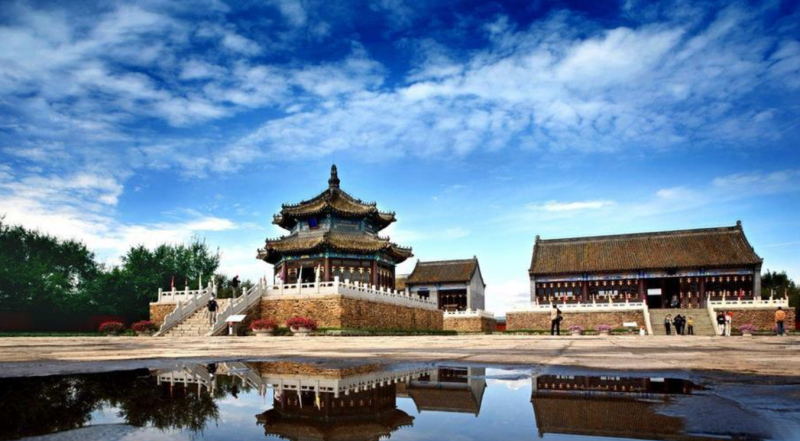
Located in Yongling Town, Xinbin Manchu Autonomous County, Fushun, Liaoning Province, Hetu Ala City gets its name from the Manchu language. Historically known as "Xingjing," the name translates to "horizontal ridge," referring to a city built upon a flat-topped hill.
The site covers an excavation area of 3,500 square meters. Nestled among surrounding mountains, the city consists of inner and outer walls. The terrain in the center of the inner city is lower, housing the "Hanwang Well," the only drinking water source within the city.
With a history spanning over 400 years, this ancient city was the birthplace of many prominent figures from the early Qing period, including Nurhaci, Hong Taiji, and Dorgon.
Hetu Ala served as the capital of the Later Jin dynasty after Nurhaci proclaimed himself Khan. It holds the distinction of being the last mountain-style capital in Chinese history and is currently the best-preserved Jurchen mountain city. It is of great significance for the study of early Qing history and art.
In May 2006, Hetu Ala City was listed by the State Council as one of the sixth batch of Major Historical and Cultural Sites Protected at the National Level. On December 7, 2018, it was selected for the "Charm China City" Cultural Tourism Charm List, hosted by CCTV Finance Channel and Yingke Tourism.