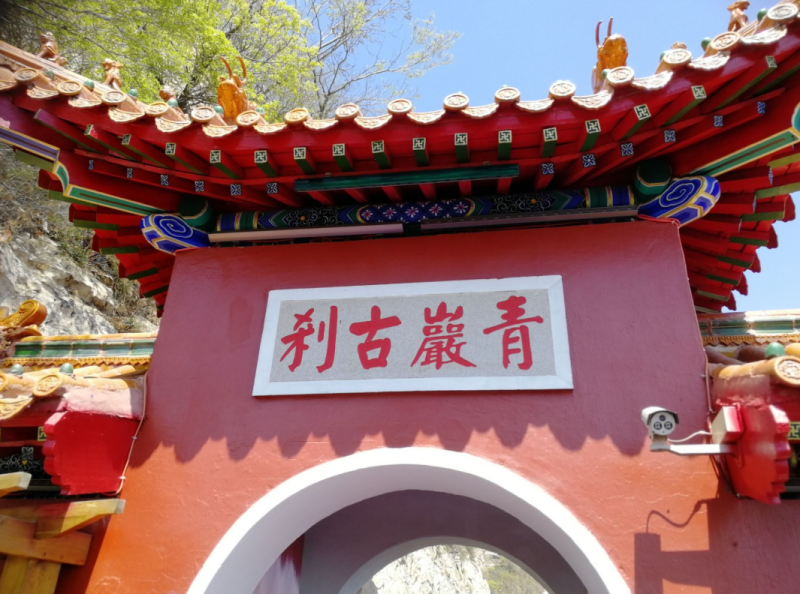
Located in Changxingdian Town, Beizhen City, Liaoning Province, the Qingyan Temple Scenic Area sits at the southern end of the Yiwulü Mountain. Covering an area of 13 square kilometers, it was listed as a National Key Scenic Area in 2002 and rated as a National AAAA Tourist Attraction in 2014, also holding the title of a National Geopark.
Centered around Qingyan Temple, which was originally built during the Northern Wei Dynasty and flourished in the mid-Tang Dynasty, the site was approved as a religious activity venue in 1986. It currently houses over ten Zen courtyards, including the Upper, Middle, and Lower Courtyards, the Manjushri Hall, and the Goddess Hall. The temple is most famous for the "Wai Bo Lao Mu" (Crooked-Neck Guanyin) statue enshrined in the Upper Courtyard, a legend recorded in Anecdotes of Northeastern Historical Sites.
The scenic area is renowned for its unique rocks, peculiar pines, precipitous peaks, secluded caves, and elegant gardens. It preserves the "Eight Views and Twelve Wonders" of natural scenery, offering distinct seasonal landscapes: pear blossoms in spring, waterfalls in summer, red leaves in autumn, and snow rime in winter. Key attractions include Luohan Mountain, the One-Line Sky, and the Ding Waterfall. Additional features include the 500 Arhat Slope, the 300 Arhat Slope, the Guanyin Hand, and relief murals of the Twenty-Four Filial Exemplars. The Great Buddha Hall enshrines statues of Shakyamuni and the Guanyin of the South Sea, hosting religious events such as the Maitreya Buddha's Birthday throughout the year.
Visitor Information:
Opening Hours: Open year-round from 08:00 to 16:00 (Entry stops at 15:50).
Tickets: Admission ticket required.
Services: Shuttle buses are available within the scenic area.
Concessions: Preferential policies apply to children, the elderly, students, and military personnel.