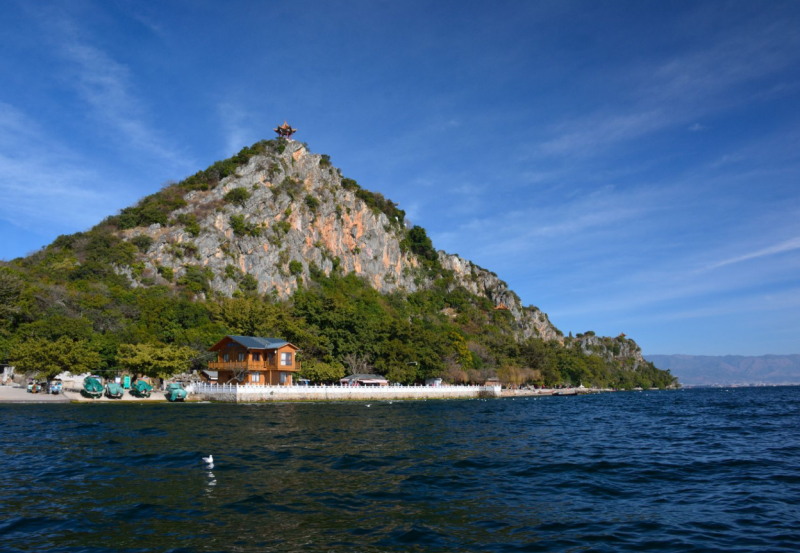
Located in Jinzhou, Liaoning Province, China, the Bijia Mountain Scenic Area sits right next to Jinzhou Port, facing the Bohai Sea, with Huludao visible across the water. Established in 1982, the scenic area covers a total of 8 square kilometers—4.72 sq km of land and 3.28 sq km of sea area—boasting a coastline of 17.2 kilometers. It welcomes over 2 million visitors annually.
A renowned scenic spot in western Liaoning since ancient times, Bijia Mountain was recorded in Ming Dynasty historical texts as the top of the "Eight Views of Jinzhou," described as "a brush tip piercing the sea." Ancient architectural complexes built from the Qing Dynasty to the early Republic of China, such as the Sanqing Pavilion and white marble statues, blend Taoist culture with marine legends. The scenic area is divided into five functional zones: island touring, sea sightseeing, shore entertainment, beach bathing, and vacation resort. Among them, the "Sky Bridge" is legendary among locals as being built by celestial maidens. It appears and disappears with the tides, creating a spectacular "land-connected island" phenomenon, hailed as "a unique wonder under heaven."
In 1995, Bijia Mountain was named one of the top ten "New, Unique, and Special Scenic Areas" in Liaoning Province. In 1988, its ancient architectural complex was designated as a Provincial Cultural Relic Protection Unit. In 2005, the scenic area was awarded the title of National AAAA-level Tourist Attraction.