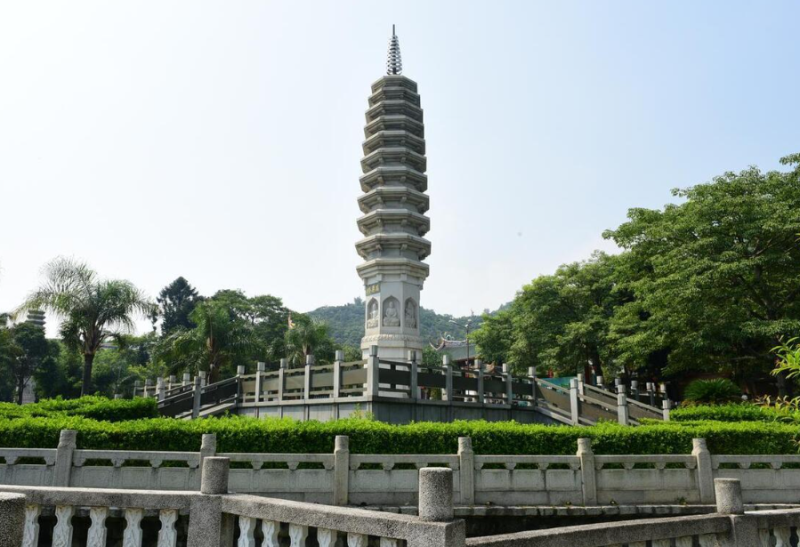
Nanputuo Temple is located at the foot of Wulao Peak in the southeast of Xiamen, Fujian Province, adjacent to Xiamen University and facing the clear blue harbor. The temple covers an area of 258,000 square meters, with a building area of 21,270 square meters. It was first built in the late Tang Dynasty and was called Sizhou Temple. During the Zhiping period of the Song Dynasty, it was renamed Puzhao Temple. In the early Ming Dynasty, the temple fell into disrepair and was not rebuilt until the Kangxi period of the Qing Dynasty. Because it enshrines Guanyin Bodhisattva, similar to the Guanyin pilgrimage site on Mount Putuo in Zhejiang, and is located south of Mount Putuo, it was named "Nanputuo Temple" (South Putuo Temple). It is one of the Buddhist holy sites in southern Fujian. The most precious items in the temple include the blood-written Lotus Sutra from the Wanli period of the Ming Dynasty and the white porcelain Guanyin by He Chaozong.
The main buildings along the central axis of Nanputuo Temple include the Hall of Heavenly Kings, the Mahavira Hall, the Hall of Great Compassion, and the Sutra Library. On both sides are the Bell and Drum Towers, the Meditation Hall, the Reception Hall, and the Storehouse. There is also the Minnan Buddhist College and the Buddhist Cultivation Institute. In front of the temple is a life-release pond, and behind the temple a "Memorial Pagoda of Master Taixu" was built in recent years. The entire temple complex is magnificent and well-arranged.
Nanputuo Temple is a national key Buddhist temple in Han Chinese areas, a cultural relic protection unit at the sixth batch of the provincial level in Fujian Province, and one of the eight major scenic spots in Xiamen.