The Tianyi Pavilion · Moon Lake Scenic Area is located in Haishu District, Ningbo City, Zhejiang Province, and is a national 5A-level tourist attraction. The scenic area consists of two core parts, the Tianyi Pavilion Museum and Moon Lake, with a total area of about 1 square kilometer. It extends north to Zhongshan West Road, west to Beidou River, east to Zhenming Road, and south to Sanzhi Street, covering the historically famous Ten Continents of Moon Lake. Its feature lies in the integration of profound historical and cultural heritage with the garden landscape of a Jiangnan water town. It has more than 50 cultural relic protection units and sites at various levels, including 3 national key cultural relic protection units. The buildings in the scenic area are mostly in Ming and Qing style, antique and elegant, complementing the natural water scenery of Moon Lake. It is an important window for displaying Ningbo's history and culture, book-collecting culture, and East Zhejiang scholarship.
Historical Culture
The opening of Moon Lake can be traced back to the Zhenguan period of the Tang Dynasty (627–649). In the seventh year of Taihe of the Tang Dynasty (833), Wang Yuanwei, the magistrate of Mao County, built Tuoshan Weir to divert water to Mingzhou City, forming the Sun and Moon Lakes and solving local problems of drought, flood, and drinking water. In the seventh year of Qingli of the Northern Song Dynasty (1047), when Wang Anshi served as the magistrate of Yin County, he invited the "Five Masters of Qingli" to Moon Lake to promote education, laying the foundation for the germination of East Zhejiang scholarship. During the Yuanyou period (1086–1094), prefects Liu Shu and Liu Cheng successively repaired Moon Lake, forming the scenic "Ten Continents." In the seventh year of Zhenghe (1117), prefect Lou Yi built the Goryeo Envoy Hostel here, making Moon Lake an important node on the "Maritime Silk Road."
During the Southern Song Dynasty, under the management of the Shi family, the cultural atmosphere of Moon Lake became even richer. Poetry societies, academies, and libraries emerged one after another. The "Four Masters of Chunxi" lectured here, forming the "Siming School," and East Zhejiang scholarship entered its peak stage. From the 40th to 45th years of Jiajing of the Ming Dynasty (1561–1566), Fan Qin, Vice Minister of the Ministry of War, completed Tianyi Pavilion as a private library. It has a history of more than 450 years and is the oldest surviving private library in China. During the Ming and Qing dynasties, Moon Lake became an important birthplace of the East Zhejiang School. Scholars such as Huang Zongxi lectured here. His idea that "industry and commerce are both fundamental" promoted the rise of the Ningbo merchants, and the concept of "practical statecraft" earned Ningbo the reputation of the "Hometown of Academicians."
Main Attractions
Tianyi Pavilion Museum
The Tianyi Pavilion Museum is the oldest surviving private library in China and one of the three earliest private libraries in the world. It was built from 1561 to 1566 during the Jiajing period of the Ming Dynasty and was the library of Fan Qin, Vice Minister of the Ministry of War of the Ming Dynasty. It now houses nearly 300,000 volumes of ancient books of various kinds, among which Ming dynasty local gazetteers and imperial examination records are the most precious. The scenic area includes attractions such as Dongming Thatched Hall, Fan Family Former Residence, North Book Storage, and Linquan Elegant Gathering Hall. Dongming Thatched Hall was Fan Qin's book collection place before Tianyi Pavilion was completed; the Fan Family Former Residence was originally the east hall of the Fan residence, and the existing building was rebuilt in the ninth year of Daoguang of the Qing Dynasty (1829); the North Book Storage combines book storage and exhibition functions, and all ancient books of Tianyi Pavilion are stored here; the Linquan Elegant Gathering Hall is the scenic area's cultural and creative shop, which also sells various history books.

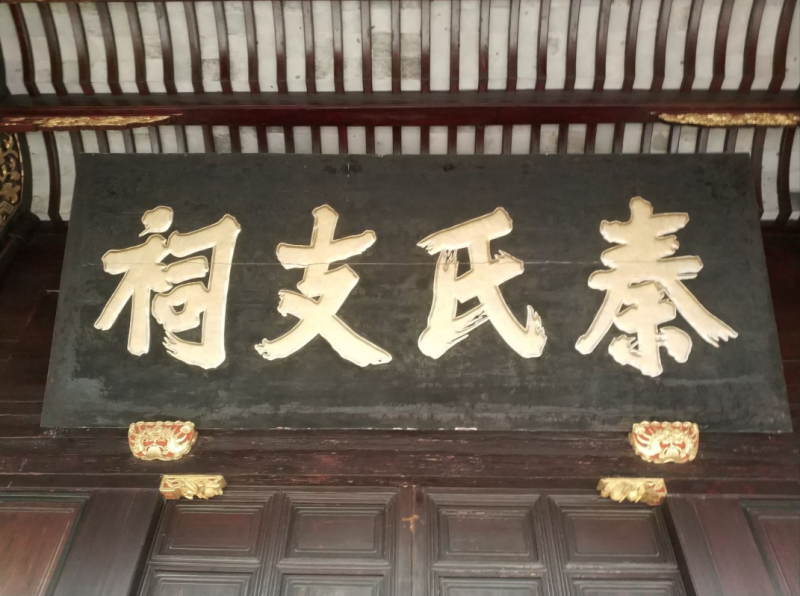
Qin Family Ancestral Hall
The Qin Family Ancestral Hall was built from 1923 to 1925. It was built by the Qin family to worship their ancestors and cost more than 200,000 silver dollars. The ancestral hall covers 2.6 mu, with a building area of more than 2,000 square meters. It integrates various folk crafts such as wood carving, brick carving, stone carving, gold pasting, and mounting, and can be called a masterpiece of Ningbo residential architecture. Its architectural style is exquisite and magnificent, and the carvings in the details are lifelike, showing the superb architectural skills and folk craft level of the time.
East Garden
East Garden is located on the southeast side of Tianyi Pavilion and covers about 6,000 square meters. Starting in 1959, the scenic area leveled the land, planted bamboo and trees, and moved stone pavilions, iron oxen, stone tigers, and other items here, initially forming the prototype of a garden. In 1974, 69 steles collected were embedded in the walls; in 1982, expansion was carried out, with ponds dug, rockeries piled, and corridors built around the garden. Two late Qing buildings were also relocated, and it was completed and opened to the public in 1986. East Garden was designed and supervised by the famous garden master Mr. Chen Congzhou and is one of his representative garden works. Its layout is ingenious and reflects the elegant charm of Jiangnan gardens.
Ten Continents of Moon Lake
The Ten Continents of Moon Lake include several islands such as Furong Continent and Chrysanthemum Continent, each with its own unique history and landscape. Furong Continent is located at the northern end of the west bank of Moon Lake. During the Song Dynasty, there were buildings such as the Changping Granary, Pingdi Granary, and Chancellor Shi's Residence. Today, many Ming and Qing buildings such as Tianyi Pavilion, Shuibei Pavilion, and Baojing Hall remain. Chrysanthemum Continent is located at the northern end of the east bank of Moon Lake. In the Northern Song Dynasty, it was the Goryeo Embassy, and in the Southern Song Dynasty, it was the site of Chancellor Shi Hao's Yuewang Mansion. Today, buildings such as Fan Residence, Yintai Di, and Shuize Stele remain. These continents and the water scenery of Moon Lake set off each other, forming the scenic "Ten Continents," and are the core area of Moon Lake's historical culture and natural landscape.
Food
Moss Vegetable Rice Cake
Moss vegetable rice cake is a specialty food of Ningbo and can be tasted in old shops on Zhenming Road around the Tianyi Pavilion · Moon Lake Scenic Area. It uses rice cake and moss vegetable as the main ingredients. After stir-frying, the rice cake is soft, glutinous, and sweet, paired with the salty freshness of seaweed, creating a rich taste. During production, the rice cake sizzles in an iron pot, and the fragrance of moss vegetable fully blends with the rice aroma of the rice cake. It is a highly representative traditional snack of the local area.
Youzanzi
Youzanzi is the Ningbo dialect term for fried dough twists. "Aunt Wang Youzanzi" near the scenic area is quite popular. This kind of youzanzi is freshly fried and sold, crispy outside and glutinous inside, and sweet but not greasy after dipping in sugar frosting. Its production process is particular. The dough is repeatedly kneaded, and after frying, the shape is uniform and the texture is chewy. It is a common snack choice for tourists when visiting.
Bean Crisp Candy
Bean crisp candy is a traditional pastry of Ningbo and is sold near Drum Tower around the scenic area. It uses soybeans as the main raw material and is made through processes such as grinding into powder and boiling sugar. It has a dense and delicate texture, sweet with bean fragrance. Bean crisp candy is loose in texture and melts in the mouth. It is a tea snack loved by local people and also a fine gift for relatives and friends. It has a long history of production.
Crab Roe Soup Dumplings
Crab roe soup dumplings are commonly found in Nantang Old Street near the scenic area and are a quite distinctive food. They use crab roe and pork as filling, with thin skin and generous filling, and the soup is delicious. When eating, one should follow the steps of "first open a window, second drink the soup, third eat it all." They are usually eaten with wontons, pan-fried buns, and other foods, which can neutralize the greasiness of the soup dumplings. Each soup dumpling is moderate in size. With one bite, the soup overflows, and the umami flavor is full.
Pomfret Braised with Rice Cake
Pomfret braised with rice cake is a classic dish of Ningbo and can be tasted in restaurants such as Ninghai Restaurant around the scenic area. This dish uses fresh pomfret and rice cake. The pomfret has few bones and tender meat, and is full of flavor after braising. The rice cake absorbs the freshness of the fish and has a soft, glutinous, and chewy texture. The freshness of the pomfret and the sweetness of the rice cake blend with each other. It is a common dish on local dining tables and is deeply loved by tourists and locals.
Tickets:
The ticket for Tianyi Pavilion Museum is 30 yuan per person, and Moon Lake Scenic Area is open to tourists for free.
You can search for the official WeChat public account "Tianyi Pavilion" to get the latest updates or buy tickets online.
Opening Hours:
The opening hours of Tianyi Pavilion Museum vary by season. From May 1 to October 31, it is 8:00–17:30 (ticket sales stop at 17:00); from November 1 to April 30 of the following year, it is 8:30–17:00 (ticket sales stop at 16:30). In addition, it is closed on Monday mornings (except statutory holidays, and opens at 1:30 p.m.). Moon Lake Scenic Area is open all day, and tourists can arrange their visits according to their own time.
Tour Route:
A recommended one-day tour route: in the morning, first visit Tianyi Pavilion Museum (about 2 hours) to gain an in-depth understanding of book-collecting culture and history; then go to the scenic area visitor center to obtain tour materials; next go to the 24-hour city study to experience the reading atmosphere, and then go to the smart service kiosk (Fan Residence point) to learn about scenic area service information; at noon, taste Ningbo specialty food nearby (about 1 hour for dining); in the afternoon, go to Yongshang Fenglinwan and Moon Lake Library to feel the cultural atmosphere, and finally tour the Ten Continents of Moon Lake (about 3 hours) to enjoy the natural landscape and historical buildings. The entire route is about 5 kilometers, allowing a comprehensive experience of the scenic area's historical culture and natural scenery.
Transportation:
Bus: You can take Ningbo bus routes 2, 9, 10, 371, 504, etc. to the Tianyi Pavilion · Moon Lake Scenic Area station. After getting off, walk about 300–500 meters to reach the scenic area entrance. The bus departure interval is about 10–15 minutes, and the fare is 2 yuan.
Subway: Take Ningbo Metro Line 2 to Chenghuangmiao Station or Drum Tower Station. From Chenghuangmiao Station, walk about 800 meters; from Drum Tower Station, walk about 1 kilometer to reach the scenic area. Subway operating hours are 6:00–22:00, and the fare is 2–4 yuan.
Self-driving: From downtown Ningbo, you can reach the scenic area via main roads such as Zhongshan West Road and Zhenming Road. There are parking lots around the scenic area, such as Tianyi Pavilion Parking Lot, with an area of about 1,000 square meters and capacity for about 200 motor vehicles. The parking fee is 5 yuan per hour.
Must-Visit Attractions:
Tianyi Pavilion Museum: China's oldest surviving private library, built from 1561 to 1566, now housing nearly 300,000 volumes of ancient books, with Ming dynasty local gazetteers and imperial examination records being the most precious. Here you can gain an in-depth understanding of the development of China's book-collecting culture.
Ten Continents of Moon Lake: Composed of multiple islands, with a total area of about 0.4 square kilometers, including distinctive islands such as Furong Continent and Chrysanthemum Continent. It preserves a large number of Ming and Qing buildings and historical relics and is the core area for experiencing Moon Lake's natural landscape and "Maritime Silk Road" culture.
Qin Family Ancestral Hall: Built from 1923 to 1925, covering 2.6 mu, with a building area of more than 2,000 square meters. It integrates various folk crafts such as wood carving, brick carving, and stone carving. The architecture is exquisite and is the pinnacle of Ningbo residential architectural art.
Travel Suggestions:
It is recommended to spend 1 day visiting. In the morning, focus on visiting Tianyi Pavilion Museum, and in the afternoon, tour Moon Lake Scenic Area, so you can fully experience the scenic area's historical culture and natural landscape.
The scenic area provides guide services. You can check the guide times in advance on the official website or public account. Following a guide can help you gain a deeper understanding of the historical background and cultural connotations of each attraction.
Tourists who like reading can bring their ID cards to enter the 24-hour city study to experience intelligent reading services and feel the cultural atmosphere of the scenic area.
Spring and autumn have suitable climates and are the best periods for visiting. You can avoid the high temperatures of summer and the severe cold of winter and more comfortably enjoy the scenery of the scenic area.
Notes:
In Tianyi Pavilion Museum, you need to keep quiet and prohibit loud noises, so as not to affect other tourists' visits and the preservation environment of ancient books.
During the visit, please do not touch cultural relics, ancient books, or building components to avoid damage, and comply with the scenic area's cultural relic protection regulations.
Some areas in Moon Lake Scenic Area prohibit fishing, swimming, and littering. Tourists need to comply with relevant regulations and protect the scenic area's ecological environment.
Some roads in the scenic area are stone slab roads, which are slippery on rainy days. It is recommended to wear non-slip shoes and pay attention to safety when visiting.
When visiting in summer, take sun protection measures and bring items such as parasols and sunscreen. There is a lot of shade around Moon Lake, but you still need to pay attention to heatstroke prevention during the midday period.