Wild Elephant Valley is located in Mengyang Town, Jinghong City, Xishuangbanna Dai Autonomous Prefecture, Yunnan Province, 22 kilometers from Jinghong City. It is a national 4A-level tourist attraction, covering an area of 5.17 square kilometers, with a water area of 8,000 square meters. It is the only scenic area in China where wild Asian elephants can be safely observed, and it is also a scientific research base in Xishuangbanna for Asian elephant monitoring and research, wild butterfly breeding and reproduction, and wildlife rescue and research. It is one of the first batch of national-level eco-tourism demonstration zones and a comprehensive eco-tourism scenic area integrating eco-tourism, science popularization and research teaching, and leisure vacation.
History and Culture
Wild Elephant Valley was originally called "Sancha River," named because it is located in a valley where three rivers—Guanping River, Baihuashan Nanyangsansu River, and Mengyang River—converge. In January 1997, He Zhiqiang, then Governor of Yunnan Province, suggested renaming it. The following month, the scenic area was renamed "Banna Wild Elephant Valley," and He Zhiqiang personally wrote the name. In 2000, Tian Jiyun, then Vice Chairman of the Standing Committee of the National People's Congress, inscribed "Xishuangbanna Tropical Rainforest Wild Elephant Valley Scenic Area," which became the current name of the scenic area.
In 2005, it was rated as a national AAAA-level tourist attraction. In 2013, it was rated as one of the first batch of national eco-tourism demonstration zones. In 2018, it was rated as one of the top ten eco-tourism scenic areas in China.
Main Attractions
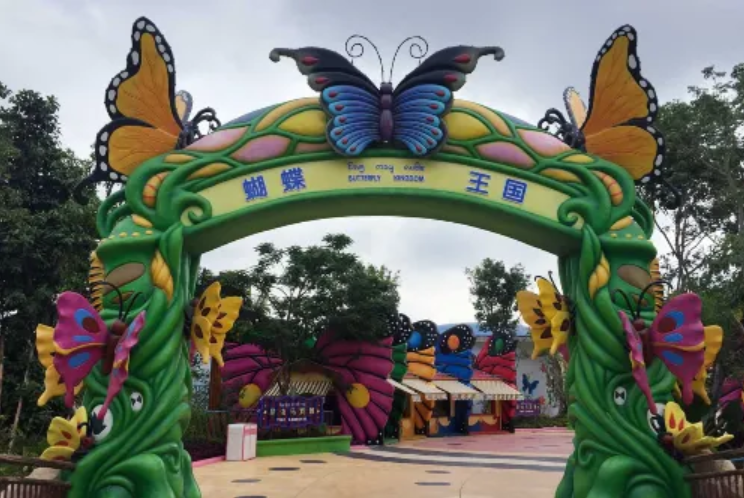
Butterfly Garden
Located in the southwest direction of the scenic area, it is the first artificial butterfly garden in China, established through cooperation between the Xishuangbanna Nature Reserve Administration and the World Wildlife Fund (WWF). The garden houses more than 48 species of tropical and subtropical butterflies, breeds 120,000 butterflies of various types each year, and releases some of them within the scenic area.
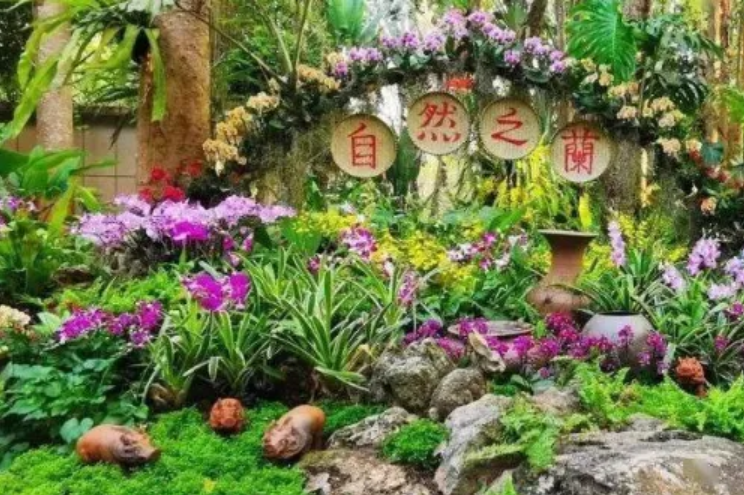
Orchid Garden
Also known as the Orchid Garden, it is located northeast of the Butterfly Garden and mainly cultivates orchids, most of which are first-class protected plants in China. The garden is equipped with a science popularization and interpretation hall, where visitors can learn about the characteristics of rare orchid families and genera and the unique landscape of tropical rainforest plants.
Tropical Rainforest Sightseeing Cableway
The starting point is located northwest of the Orchid Garden, with a total length of 2,063 meters and 206 sightseeing gondolas. It takes about 35 minutes by cableway to reach the Elephant Observation Platform. Visitors can overlook the entire rainforest and observe wild elephants as well as various wild primates and tropical wild birds.
Elevated Elephant Observation Walkway
The starting point is located northeast of the Orchid Garden, with a total length of 2,280 meters and a width of 3 meters. It was built in two phases. It uses American southern pine preservative-treated wood, with gaps of 6 to 8 millimeters between planks to reduce the impact on trees in the forest and leave appropriate living space for wild animals such as Asian elephants. Visitors can closely observe the composition of tropical rainforest plants.
Asian Elephant Museum
Located at the end of the elevated elephant observation walkway, it was completed and opened in March 2008, with an exhibition hall area of 900 square meters. It is divided into nine sections, displaying the origin and evolution, physiological structure, and other aspects of Asian elephants. The museum houses precious collections including two Asian elephant skeletons, and staff are arranged every day to provide educational presentations.
Asian Elephant Breeding and Rescue Center
Located south of the Asian Elephant Museum, construction began in 2007 and was completed in 2008. It is one of the key construction projects implemented in Yunnan Province under China's Wild Fauna and Flora Protection and Nature Reserve Construction Project, integrating rescue, scientific research, and breeding.
Tree Hotels
More than 30 tree hotels have been built in places where wild elephants frequently appear, more than 20 meters above the ground. Their shape is the same as that of Dai stilt-style bamboo houses, connected by an elephant observation corridor. They allow visitors to watch Asian elephant activities up close and are also used by reserve management personnel to monitor and study the habitat behavior of Asian elephants.
Suggested Tour Routes:
The following are several tour routes for reference:
Route 1: Snake and Lizard Garden, Butterfly Garden, Orchid Garden -- Rainforest Elephant Herding/Close Interaction/Elephant Health Check -- Tropical Rainforest Sightseeing Cableway -- Phase II Elevated Elephant Observation Walkway -- Asian Elephant Museum -- Phase I Elevated Elephant Observation Walkway -- End of Tour (about 3 hours).
Route 2: Snake and Lizard Garden, Butterfly Garden, Orchid Garden -- Rainforest Elephant Herding/Close Interaction/Elephant Health Check -- Tropical Rainforest Sightseeing Cableway -- Phase II Elevated Elephant Observation Walkway -- Asian Elephant Museum -- Phase I Elevated Elephant Observation Walkway -- Elephant Meal -- End of Tour (about 4 hours).
Route 3: Snake and Lizard Garden, Butterfly Garden, Orchid Garden -- Phase II Elevated Elephant Observation Walkway -- Rainforest Elephant Meal -- Rainforest Overnight Stay -- Rainforest Yoga -- Breakfast -- Phase II Elevated Elephant Observation Walkway -- Asian Elephant Museum -- End of Tour (about 15:00 to 10:00 the next day).
Travel Tips:
Learn about the scenic area's opening hours and performance times in advance, and arrange your itinerary reasonably to avoid missing wonderful content.
Choose comfortable sports shoes for easy walking within the scenic area.
If you want to experience projects such as rainforest elephant herding, book in advance to avoid the maximum number of participants being reached.
Pay attention to weather changes and take sun protection or rain protection measures.
Precautions:
Observe the scenic area's regulations and do not feed wild elephants or other wild animals at will.
Do not play or roughhouse on the walkways or cableway, and pay attention to safety.
Keep personal belongings safe, especially in crowded places.
Respect local customs and culture.
Transportation:
You can take a tourist shuttle bus from Jinghong City to Wild Elephant Valley. For departure times and schedules, consult the local passenger transport station.
You can also choose to charter a car or take a taxi, which is convenient and fast.
If driving yourself, you can reach the scenic area with the guidance of navigation software. There is a parking lot at the scenic area.
Opening Hours:
The scenic area is open from 8:00 to 18:00, with ticket sales stopping at 16:30 and entry stopping at 16:30. The latest cableway ride times: one-way from the lower station at 16:00, round trip at 15:30; from the upper station at 16:00. Subject to the scenic area's announcements.
Tickets:
Tickets are 58 yuan per person.