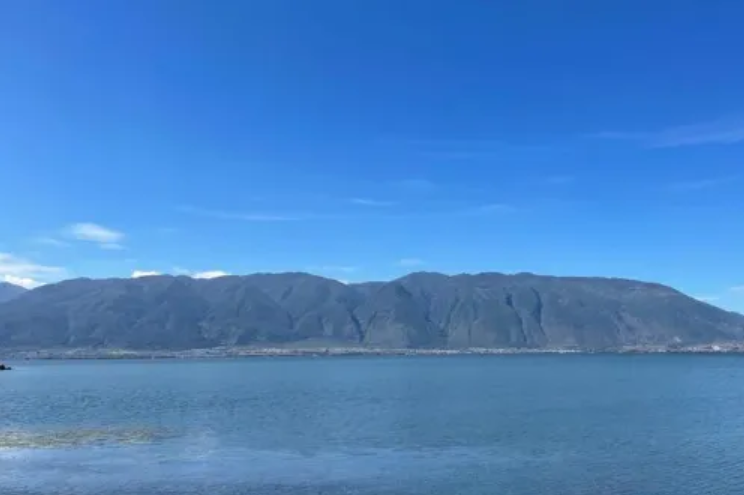
Dali Cangshan Global Geopark is located in Dali City, Yangbi County, and Eryuan County of Dali Bai Autonomous Prefecture, Yunnan Province, with its main area in Dali City. It is a Global Geopark and a National 4A-level scenic area. Its total area is 577.10 square kilometers, and its highest elevation is 4,122 meters. The park consists of three zones: Cangshan, the Erhai Plateau Lake, and the alluvial plain at the piedmont between Cangshan and Erhai. Its geological relics are unique, including Quaternary glacial landforms, metamorphic rock series, and the plateau fault lake Erhai. It is the naming site of the "Dali Glaciation" and "Dali Marble." In addition, the park has beautiful scenery, fresh air, and rich animal and plant resources.
History and Culture
Dali Cangshan Global Geopark has a long history and profound cultural heritage. It is one of the birthplaces of the Nanzhao Kingdom and the Dali Kingdom, carrying the long history and splendid culture of the Bai and other ethnic minorities. Some ancient buildings in the park, such as the Cangshan Divine Shrine, date back more than a thousand years and have witnessed the changes of time. In addition, numerous poems and literary works by scholars and writers have been left here, adding a strong cultural atmosphere to the scenic area. At the same time, as the naming site of the "Dali Glaciation" and "Dali Marble," it holds an important historical position in the field of geological research and has irreplaceable value for studying Earth's history and geological evolution.
Main Attractions
The Nineteen Peaks of Cangshan
From north to south, they are Yunong, Canglang, Wutai, Lianhua, Baiyun, Heyun, Sanyang, Lanfeng, Xueren, Yingle, Guanyin, Zhonghe, Longquan, Yuju, Malong, Shengying, Foding, Ma'er, and Xieyang. Their elevations are generally above 3,500 meters, and seven peaks are more than 4,000 meters above sea level. The highest is Malong Peak at 4,122 meters.
The Eighteen Streams of Cangshan
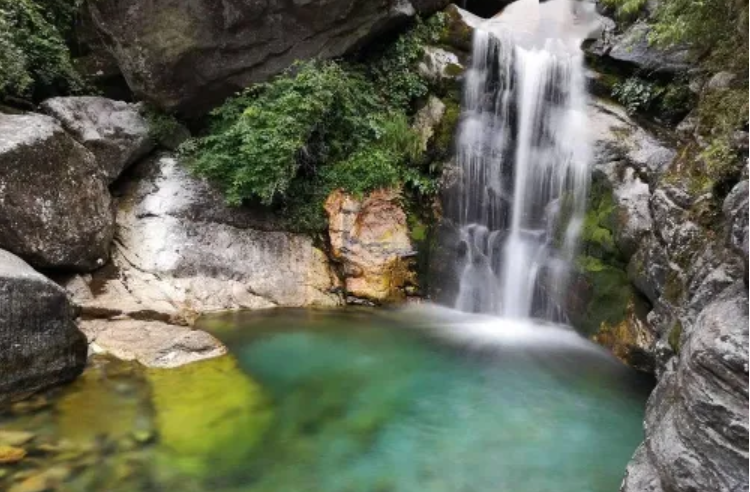
Between every two of the nineteen peaks flows a stream, forming the unique landscape of "nineteen peaks and eighteen streams." The streams are clear and flow throughout the four seasons, forming numerous waterfalls, deep pools, and cascades in the mountains.
Qingbi Stream
Its main attraction is the "Three Cascading Pools," where the water is clear and bright as a mirror.
Seven Dragon Maidens Pool
It is a magical cascading spring and waterfall landscape in Cangshan. From bottom to top, there are seven natural clear spring pools, and on the west side of each pool, waterfalls cascade downward.
Xima Pool
Located at the junction of Yuju Peak and Longquan Peak, at an elevation of 3,920 meters, it is a high-mountain glacial moraine lake from the Quaternary Dali Minor Ice Age. The pool is about 170 meters in diameter, with a circumference of 250 meters, a water depth of 0.5 to 1.5 meters, and a water storage capacity of 3,000 cubic meters.
Cangshan Divine Shrine
Located on the south side of the foot of Zhonghe Peak, it faces south and overlooks the Middle Stream. The entire building consists of one main hall and two side rooms. The main hall has five bays, with a single-eave hip-and-gable roof, 14 meters long, 8 meters high, and 10.3 meters deep.
Cangshan TV Station
Located at the top of Xiaocen Peak at an elevation of 4,092 meters, it is the highest-altitude alpine television relay station in China and was built in 1976.
Shimen Pass Scenic Area
Located in Yangbi County on the western slope of Diancang Mountain in Dali, it is an important part of the Cangshan-Erhai scenic area, with a planned area of 28.2 square kilometers. Famous landscapes include Fog-Locked Shimen, Fuguo Evening Bell, and Chengming Empty Valley, among many other scenic spots.
Tour Route:
Guanyin Pond → Take the Cangshan Cableway or Sentong Cableway to tour Yudai Cloud Travel Road → Tianlong Babu Film and Television City → Stele of the Yuan Shizu Pacifying Yunnan → Dali Ancient City → Three-Course Tea or Dongjing Ancient Music Performance
Tour Suggestions:
It is recommended to spend half a day to one day, and you can choose suitable attractions according to your own time and physical strength.
In summer, you can enjoy Cangshan's Lianhua, Baiyun, and other peaks as well as rich vegetation; in winter, you can see Cangshan snow, so you can choose your visiting time according to the season.
When taking the cableway, you can choose the Sentong Cableway, Cangshan Grand Cableway, or Zhonghe Cableway. Different cableways offer different scenery.
During the tour, you can hike along the Yudai Cloud Travel Road to see more natural landscapes and geological relics.
Precautions:
Cangshan has a high altitude and low temperatures, so it is recommended to bring warm clothing.
Pay attention to safety when hiking, follow the scenic area signs, and do not enter undeveloped areas without authorization.
Protect the environment, do not litter, and keep the scenic area clean.
When taking the cableway, obey the relevant cableway regulations and pay attention to safety.
Transportation:
From the west side of Dali Ancient City, walking about 20 minutes will get you to the lower station of the Grand Cableway.
Take Bus No. 4 or the Three Pagodas Special Line and get off at Dali Town No. 2 Middle School Station, then walk to the Sentong Cableway Station.
Opening Hours:
Usually daily from 9:00 to 16:00. Subject to the scenic area announcement.
Tickets:
Adult combination ticket 115 yuan, including the Cangshan National Geopark ticket round-trip Sentong Cableway ticket. Subject to the actual price of the scenic area.