Xishuangbanna Dai Garden is located in Menghan Town, Jinghong City, Xishuangbanna Dai Autonomous Prefecture, Yunnan Province. It is a national 4A-level scenic area. Its distinctive feature lies in integrating natural landscapes with cultural landscapes, featuring beautiful subtropical courtyard scenery, rich Dai daily life customs, typical Dai bamboo house architecture, traditional handicraft production, and the mysterious Theravada Buddhist culture. The overall planned area of the scenic spot is 336 hectares. The main scenic area consists of five of the best-preserved natural Dai villages: Manjiang, Manchunman, Manzha, Manga, and Manting, with a total of 326 households and 1,536 residents.
History and Culture
Dai Garden has a profound historical and cultural heritage. The Manchunman Buddhist Temple and Manting Buddhist Temple here have a history of more than 1,400 years, accumulating rich and profound Theravada Buddhist culture. The temples preserve famous murals, including "The Rebirth of Rupamati" and "The Story of Shakyamuni." In the early 1960s, the famous essayist Feng Mu encountered a butterfly gathering on the forest path from Manting to Manzha and wrote the famous piece "The Butterfly Gathering by the Lancang River." Dai Garden is a living museum of ethnic history, a boutique folk-ecology tourism scenic area that comprehensively displays Dai history, culture, religion, sports, architecture, daily life customs, clothing, food, production, and livelihood.
Main Attractions
Welcome Square
It is the gateway to Dai Garden, welcoming tourists with unique Dai etiquette and allowing visitors to feel the hospitality of the Dai people.
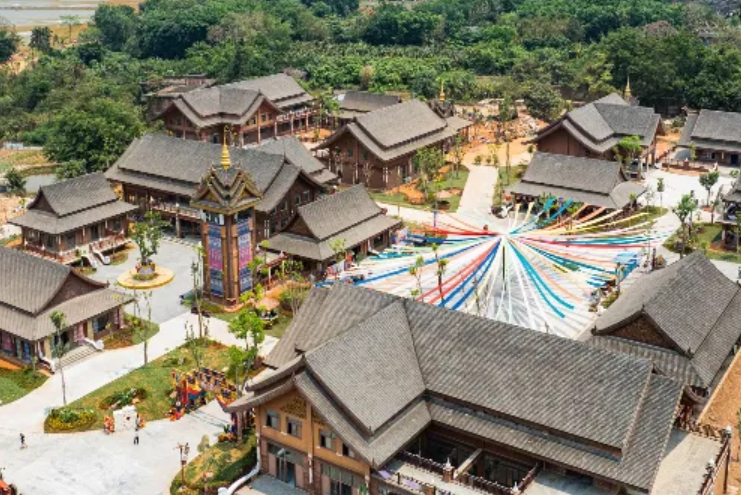
Mansongman Ancient Buddhist Temple
With a history of more than 1,400 years, it is one of the oldest Buddhist temples in Xishuangbanna. It displays Buddhist cultural activities such as offering to Buddha, chanting sutras, and worshiping Buddha.
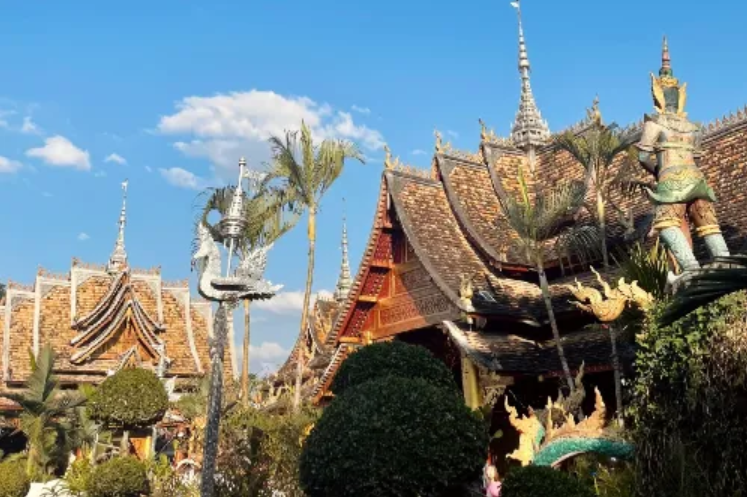
Dai Villages
Visitors can tour Dai residences and courtyard scenery, experience Dai daily life customs, and feel the joy of the Dai people's way of life.
Riverside Activity Area
It is a large-scale festival activity area for villagers, used for folk activities such as launching homemade rockets, lighting sky lanterns, and cockfighting.
Fair and Shopping Area
It sells Dai barbecue, brocade, folk handicrafts, Dai bags, woodcarving artworks, and more. There is also tea ceremony appreciation for famous Xishuangbanna tea and Dai-style specialty restaurants.
Water-Splashing Square
It is the main activity area of the scenic spot. Every day, a large open-air theater with a professional water-splashing team of over 100 people is held, and tourists can participate in the fun of experiencing the Water-Splashing Festival every day.
Open-Air Theater
It truly and accurately reflects the essence of traditional Dai culture through song and dance, recreates the historical origin of the Dai king choosing a bride, and reflects Dai daily life customs. There are more than 100 performers, with a grand scale and spectacular scene.
Peacock Garden
There are many peacocks. There are wonderful peacock dance performances at specific times every day. If visitors are lucky, they can see peacocks spreading their tails.
Tour Routes:
Route 1: West Gate → Manjiang Buddhist Temple → New Water-Splashing Square → Manjiang Village → Manchunman Buddhist Temple → Intangible Cultural Heritage Exhibition Area → Manchunman Village → Peacock Garden → Song and Dance Theater → Manzha Buddhist Temple → Manzha Village → Border Pier (speedboat ride) → Manting Village → Manting Buddhist Temple (White Pagoda) → Pagoda Wrapping Tree → Manga Village → Summer Lotus Camp → North Gate (or return to the Water-Splashing Square and West Gate). The whole journey requires about 6–7 kilometers of walking.
Route 2: West Gate (by vehicle) → Border Pier (by vehicle) → Manting Buddhist Temple (by vehicle) → Peacock Garden (walking) → Song and Dance Theater → Manzha Buddhist Temple → Manzha Village → Peacock Garden (by vehicle) → Water-Splashing Square (walking) → Manchunman Buddhist Temple → Manjiang Village → Manjiang Buddhist Temple → West Gate.
Travel Suggestions:
It is recommended to wear light and comfortable clothing and shoes for easy walking within the scenic area.
Bring sunscreen, sunglasses, hats, and other sun protection items, as the sunlight in the scenic area is relatively strong.
When participating in water-splashing activities, you may prepare a set of spare clothes in advance to avoid inconvenience after getting wet.
If you are interested in Buddhist culture, you can stay longer at temples such as Manchunman Buddhist Temple to feel the solemnity and mystery of Buddhist culture.
Precautions:
Respect local religious beliefs and customs. For example, keep quiet when entering Buddhist temples and do not touch Buddha statues at will.
When participating in water-splashing activities, pay attention to safety and avoid accidental injuries caused by crowding and other reasons.
Protect the scenic area environment, do not litter, and do not damage public facilities or natural landscapes.
When purchasing goods or services within the scenic area, pay attention to price and quality to avoid unnecessary disputes.
Transportation:
You can take the vehicle to Dai Garden at Gaozhuang North, with a fare of 10 yuan.
Take a passenger bus at Xishuangbanna Passenger Transport Station and get off at Menghan (Ganlanba). There is still about 1.3 kilometers from the entrance of Dai Garden.
The cost of a ride-hailing car from Jinghong City to Dai Garden is about 45 yuan.
Opening Hours:
Daily 08:00–18:00.
Tickets:
Admission is 45 yuan per person. The scenic area sightseeing bus is charged separately at 40 yuan per person (limited to 4 rides). The Border Pier speedboat is 299 yuan per person. Please refer to the actual prices of the scenic area.