Dali Ancient Town is located in Dali City, Dali Bai Autonomous Prefecture, Yunnan Province. It faces Erhai Lake to the east and rests against Cangshan Mountain to the west, covering an area of 3 square kilometers. It is a national 4A-level scenic area. The ancient town retains the chessboard-style grid structure of the Ming and Qing dynasties, known as having "nine streets and eighteen lanes," with the north and south gates facing each other and the east and west gates offset from one another. The ancient town is about 1,000 meters wide from east to west and about 2,000 meters long from north to south. The city wall has four gates on four sides, namely the East Gate Erhai Gate (also known as Tonghai Gate), the South Gate Shuanghe Gate (also known as Cheng'en Gate), the West Gate Cangshan Gate, and the North Gate Santa Gate (also known as Anyuan Gate). There is a moat outside the city.
Historical Culture
The history of Dali Ancient Town can be traced back to the Warring States period in the 4th century BC, when this area was the territory of the King of Dian. In the 14th year of the Dali era of the Tang dynasty (779), Nanzhao King Yimouxun moved the capital from Taihe City to this place and built the Nanzhao royal capital modeled after the layout of Chang'an. In 937 AD, Duan Siping destroyed the Dayining Kingdom and established the Dali Kingdom centered on Dali. In the 15th year of the Hongwu era of the Ming dynasty (1382), after the Ming army captured Dali, the existing Dali Ancient Town was built on the foundation of Yangjumie City, and the city was expanded eastward. In 1982, Dali Ancient Town was announced as one of China's first 24 historical and cultural cities.
Dali Ancient Town is one of the core birthplaces of Bai culture, and residents still maintain many traditional life customs and cultural activities. For example, the "March Fair" on the 15th day of the third lunar month every year is a large-scale folk festival integrating trade, culture, and religion. It has a history of more than a thousand years and is known as "Asia's largest ethnic festival." In addition, Bai intangible cultural heritage such as tie-dyeing techniques, the Three-Course Tea ceremony, and Raosanling are also passed down here to this day.
Main Attractions
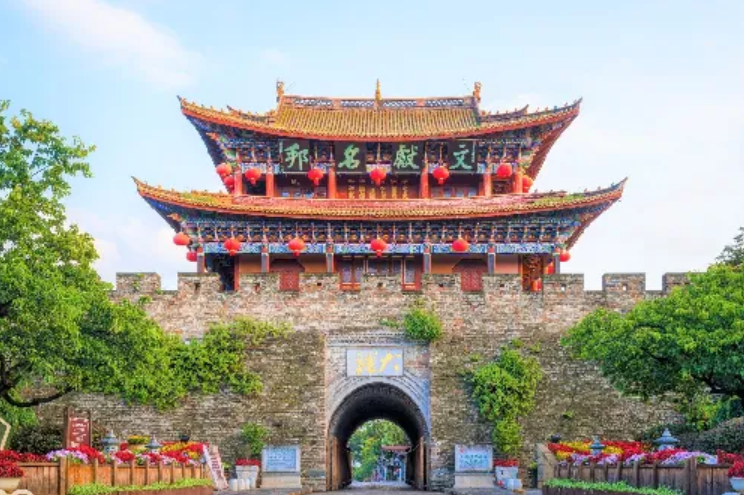
South Gate (Cheng'en Gate)
The main gate of Dali Ancient Town, first built in the 15th year of the Hongwu era of the Ming dynasty (1382). The existing gate was rebuilt in 1982. The gate is 12 meters high and 9.8 meters wide. The gate tower adopts a hip-and-gable architectural style, with upturned eaves and a magnificent momentum. The two characters "Dali" on the gate were inscribed by Guo Moruo and are a landmark check-in spot of the ancient town.
Foreigner Street (Huguo Road)
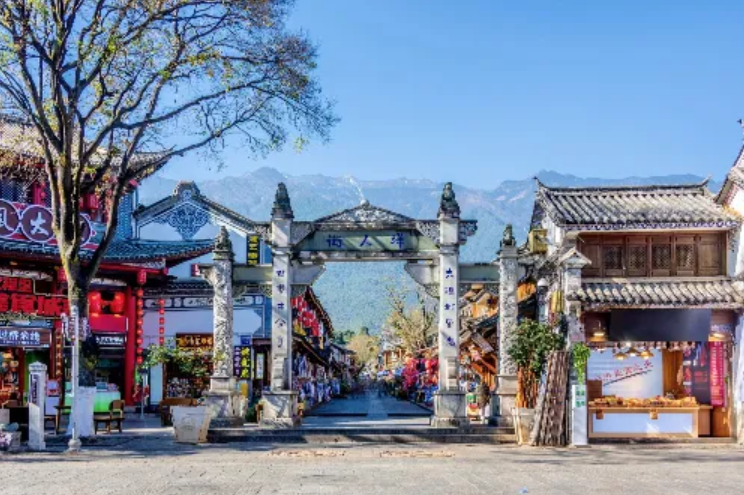
A 1,200-meter-long characteristic street, named because foreign tourists gathered here in earlier years. The street retains the architectural style of traditional Bai dwellings, "three rooms and one screen wall," paved with bluestone slabs, with cafes, handicraft shops, and Western restaurants on both sides. This is a popular place to experience the blend of Chinese and Western cultures and was once rated by China National Geographic as one of "China's ten most charming streets."
Wuhua Tower
The highest point of the ancient town, first built in the Tang dynasty, it was the place where Nanzhao kings entertained distinguished guests. The existing building was rebuilt in 1998, 21.5 meters high, with five stories. Visitors can climb up to overlook the panoramic view of the ancient town and the scenery of Cangshan Mountain and Erhai Lake. The tower displays historical inscriptions and calligraphy and painting works of Dali through the ages and is an important window for understanding Dali's history and culture.
Dali City Museum
Located inside the South Gate of the ancient town, its predecessor was the former site of the Yunnan Provincial Military Commander's Office, covering an area of 15 mu. The museum houses nearly 5,000 cultural relics, including cremation urns from the Nanzhao Kingdom period, Acuoye Guanyin statues from the Dali Kingdom period, and Bai costumes from the Ming and Qing dynasties. Among them, the fragments of the "Nanzhao Dehua Inscription" are important physical materials for studying the history of Nanzhao.
Suggested Routes:
Classic one-day tour route:
South Gate (photo check-in) → Dali City Museum (learn about history) → Fuxing Road (browse handicraft shops) → Wuhua Tower (climb up for the view) → Foreigner Street (lunch coffee break) → Yu'er Garden (garden rest) → North Gate (watch the sunset)
Cultural experience route:
West Gate Cangshan Gate → March Fair Site (market on the 5th, 14th, and 23rd of each lunar month) → Dali Intangible Cultural Heritage Museum (free, 9:00-16:30) → Zhoucheng (25 kilometers from the ancient town, experience Bai tie-dyeing, round-trip by chartered car about 150 yuan)
Night view route:
Renmin Road (browse night market stalls) → Dabin's Cabin (folk music performance, starts at 20:00) → Honglongjing (lighted water scenery) → South Gate City Wall (open at night until 21:00, overlook the lights of the ancient town)
Travel Tips:
Best season: spring and autumn (March-May, September-November), with suitable temperatures. Avoid the rainy season (June-August) and windy winter weather.
Wear comfortable sports shoes, as the bluestone roads in the ancient town are slippery; bring a light jacket, as the temperature difference between day and night is large (about 10°C).
Visit museums and city gates in the morning to avoid tour group peaks; experience the slow life on Foreigner Street or Renmin Road in the afternoon, and visit the night market in the evening.
When buying handicrafts, it is recommended to compare prices at several shops and bargain appropriately; recommended purchases include Bai tie-dyeing (average price 50-200 yuan) and marble products (about 30-100 yuan).
If time permits, arrange half a day to go to Xizhou Town (18 kilometers from the ancient town, 30 minutes by taxi), visit the Yan Family Compound, and taste authentic Xizhou baba.
Notes:
Some streets in the ancient town are pedestrian streets with vehicle restrictions, so self-driving visitors should pay attention to navigation prompts.
Respect Bai customs; when entering temples or residences, take off shoes and avoid discussing sensitive religious topics.
During festivals such as the March Fair, crowds are dense, so keep personal belongings safe and plan routes in advance.
There are few pharmacies in the ancient town, so it is recommended to bring common medicines; the altitude is about 2,000 meters, so avoid strenuous exercise to prevent altitude sickness.
Some guesthouses are located in small alleys, so confirm the specific location when booking. It is recommended to choose accommodation near the main streets (such as around Fuxing Road and Foreigner Street).
Transportation:
Airplane: Taking a taxi from Dali Airport to the ancient town takes about 40 minutes and costs 80-100 yuan; or take the airport shuttle bus to Dali Railway Station, then transfer to Bus No. 8 to the South Gate of the ancient town (fare 3 yuan, about 1 hour in total).
Train/High-speed rail: From Dali Station, take Bus No. 8 or the Santa special line to the South Gate of the ancient town. The fare is 2-3 yuan, and the ride takes 30 minutes; taking a taxi costs about 20 yuan and takes 15 minutes.
Bus: In the city, take multiple lines such as Bus No. 4, Bus No. 8, and the Santa special line directly to the gates of the ancient town. The fare is 1-3 yuan.
Self-driving: Navigate to "Dali Ancient Town South Gate Parking Lot." Parking for small cars costs 10-20 yuan/day. There are multiple parking lots around the ancient town.
Cycling: There are rental points at the East Gate of the ancient town. Electric bikes cost 50-80 yuan/day, and bicycles cost 20-30 yuan/day. They are suitable for cycling around Erhai Lake or roaming the ancient town.
Opening Hours:
The ancient town is open all day;
Opening hours of main attractions:
? Dali City Museum: 9:00-17:00 (closed on Mondays)
? Wuhua Tower: 8:30-21:00
? Shops are mostly open from 9:30 to 22:30
Tickets:
Dali Ancient Town is open for free.