The Xishuangbanna Tropical Botanical Garden of the Chinese Academy of Sciences (abbreviated as "Xiyuan") is located in Menglun Town, Xishuangbanna Dai Autonomous Prefecture, Yunnan Province, on a gourd-shaped peninsula surrounded by the Luosuo River, a tributary of the Lancang River. It is a national 5A-level tourist attraction and the largest comprehensive botanical garden in China. The garden covers an area of about 1,125 hectares (about 16,875 mu) and preserves more than 13,000 species of tropical plants, encompassing more than 50 specialized plant gardens, among which the Palm Garden, Banyan Garden, and Water Lily Pond are core display areas. The garden is at an elevation of 570 meters, with an average annual temperature of 21.4°C. It contains multiple ecosystems such as tropical rainforest, monsoon forest, and tropical savanna, and is an important base for the conservation and research of tropical plant resources in China.
History and Culture
The botanical garden was founded in 1959 under the leadership of the famous botanist Professor Cai Xitao. It initially focused on research on economic plants such as rubber trees, and later gradually developed into a comprehensive garden integrating scientific research, science popularization, and tourism. In the early days of the garden's establishment, the research team overcame the harsh conditions of the tropical rainforest area and introduced and preserved a large number of rare plants, such as the national first-class protected plants Parashorea chinensis and Vatica xishuangbannaensis. Starting in 1980, the garden began to open to the public and became one of China's first science popularization education bases.
The garden retains the former site of a scientific research workstation from the 1950s, displaying specimen collection tools, laboratory equipment, and other items used by early researchers, serving as tangible evidence of the history of tropical plant research in China. In addition, the botanical garden cooperates with local Dai villages to establish a "Plants and Ethnic Culture" exhibition area, systematically introducing the traditional knowledge of the Dai people in using plants for medicine, architecture, and food, such as making bayeux sutras from Corypha umbraculifera and making Buddhist banners from kapok trees.
Main Attractions
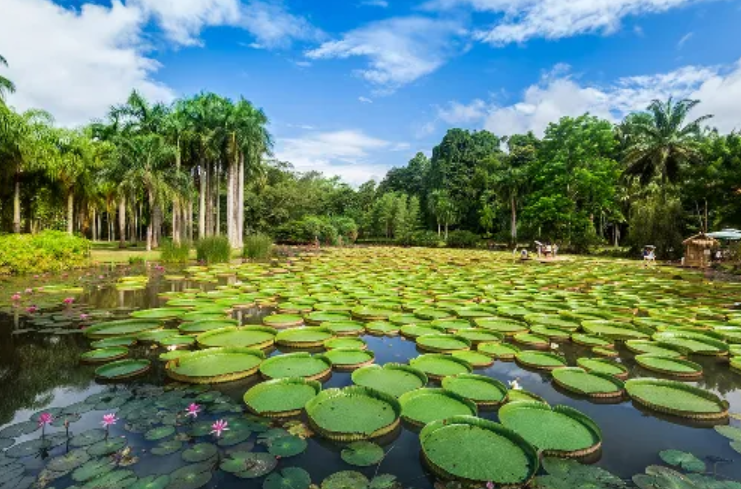
Water Lily Pond
The Water Lily Pond is one of the most representative attractions in the garden, covering about 2 hectares and cultivating varieties such as Victoria 'Cruziana' and Victoria amazonica. The leaves of the water lily can reach more than 3 meters in diameter and support a maximum weight of about 70 kilograms. Every year from August to October, it enters its full flowering period. The flowers gradually change from white to pink, and a single flower only blooms for 3 days. A waterside boardwalk is set up beside the pond, allowing visitors to closely observe the leaf structure and the insect pollination process.
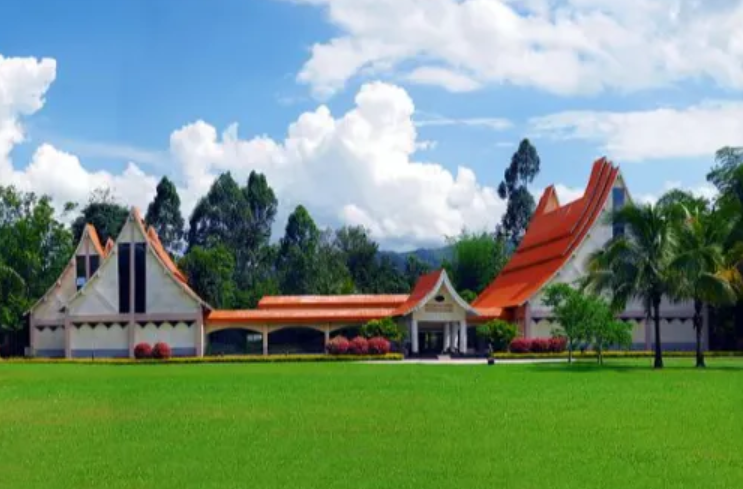
Tropical Rainforest Ethnic Culture Museum
The museum has a building area of 3,000 square meters and is divided into the Plant Science Hall and the Ethnic Culture Hall. The Plant Science Hall displays the evolutionary history of tropical plants, specimens of endangered species, and more. Among them, the fossil specimen of a Corypha palm more than 100 years old is particularly precious. The Ethnic Culture Hall exhibits production and daily-life tools related to plants from 13 indigenous ethnic groups such as the Dai and Hani, including bamboo water pestles and bark cloth-making tools, with more than 800 exhibits in total.
Java Cassia
Java Cassia, also known as Java Senna or Pink Shower Tree, has a broad, umbrella-shaped crown with dense, emerald-green leaves. During the full flowering period, the tree is covered with pink flowers that hang gracefully along the long branches, making it very beautiful and romantic.
Livistonas Avenue
The Livistonas on both sides of the avenue are slender and tall, with large fan-shaped leaves. It is the only road in the Xishuangbanna Tropical Botanical Garden with neatly arranged street trees.
Garden of Rare and Exotic Flowers
The garden covers 5 hectares and collects and displays more than 300 kinds of exotic plants, such as the dancing grass that can "dance," pitcher plants that can catch insects, and Amorphophallus paeoniifolius, which emits a rotting-flesh smell when blooming. Among them, the "mysterious fruit" plant can make sour foods taste sweet to the eater within 1 hour, making it a popular science interaction project. The garden also has a scent experience area where visitors can smell the natural fragrances of plants such as lemongrass and citronella.
Strangler Fig
Strangulation is a common ecological landscape in tropical rainforests. In the ravine rainforest there is a century-old strangler fig. Its host has already been strangled, leaving only a hollow opening to the sky. Several adults can stand inside the tree hollow, offering a more unique close-up experience.
Tree Waterfall
The vines intertwine and grow, resembling a waterfall.
Hundred Flowers Garden
In the Hundred Flowers Garden, patches of Peacock Flower and Mussaenda, red and dazzling, yellow and brilliant, though without autumn-colored leaves, still present a scene of layered forests fully dyed.
Suggested Tour Route:
Recommended route: West Gate entrance → electric shuttle to Water Lily Pond (15 minutes) → tour Water Lily Pond and surrounding aquatic plant garden (2 hours) → walk to Tropical Rainforest Ethnic Culture Museum (10 minutes, passing Banyan Garden on the way) → visit the museum (1.5 hours) → electric shuttle to the starting point of the elevated birdwatching boardwalk (20 minutes) → hike the boardwalk (2 hours, ending at Eagle Viewing Platform) → electric shuttle back to the main tour area → Garden of Rare and Exotic Flowers (1 hour) → lunch at East Gate Food Street → free tour in the afternoon of specialized gardens such as Palm Garden and Orchid Garden (2 hours) → West Gate exit. The whole trip takes about 8 hours, with a walking distance of about 5 kilometers.
Tour Suggestions:
Mosquito density in the garden is relatively high. It is necessary to carry mosquito repellent containing DEET (it is recommended to reapply every 2 hours) and wear long sleeves and long pants to avoid bites.
Some sections of the elevated birdwatching boardwalk are narrow. It is recommended to wear non-slip sports shoes. Those with a fear of heights may choose the ground walkway.
During the rainy season (May-October), it is necessary to carry a waterproof冲锋衣. There are 20 rain shelters in the garden. In case of heavy rain, you can take shelter in the nearest science popularization hall.
Participants in the night tour program need to prepare a flashlight (available for rent in the garden, 10 yuan each). The main focus is observing nocturnal animals such as tree frogs and katydids. It is recommended to make a reservation on the official website 3 days in advance.
When tasting Dai-style barbecue, you can ask to adjust the spiciness. The spiciness index of small chili peppers reaches 50,000 SHU. First-time tasters are advised to choose a mildly spicy flavor.
Notes:
Picking plants and feeding wild animals are prohibited in the garden. There was a case in which a tourist picked aerial roots of a strangler fig and caused damage to the plant. Violations will result in a fine of 200-500 yuan.
"no entering the water" signs are posted around the Water Lily Pond. The water depth reaches 2 meters, and alligator snapping turtles inhabit the pond. There have been multiple incidents of tourists falling into the water after climbing over the guardrails.
The elevated birdwatching boardwalk is not open at night. Entry is prohibited after 18:00. There was once a case of a tourist staying on the boardwalk and getting lost, requiring staff guidance to descend the mountain.
Respect local ethnic minority customs. The Dai water wells and sacred trees in the garden are sacred places. Littering or climbing is prohibited.
The last electric shuttle departs at 17:30. It is recommended to arrange time reasonably to avoid missing the ride and having to walk out of the garden (about 1.5 hours).
Transportation:
Self-driving: Starting from Jinghong city, drive south along National Highway G213 for 38 kilometers, then turn onto County Road X310 to reach Menglun Town. The whole journey takes about 50 minutes. The garden has 3 large parking lots, and the parking fee for small cars is 20 yuan/day.
Public transportation: Jinghong City Passenger Transport Station has direct buses to the garden from 07:00 to 18:00 every day, departing every 30 minutes, with a fare of 15 yuan and a journey time of 40 minutes; the last return bus is at 18:30.
Scenic area direct shuttle: Direct shuttles to the scenic area are available in popular areas such as Gaozhuang Xishuangjing and Sunac Resort, departing daily from 08:00 to 09:00, with a round-trip fare of 30 yuan, including simple guide service.
Opening Hours:
Open all year round, daily 08:00-18:00 (last entry at 17:30). Attractions such as Water Lily Pond and Garden of Rare and Exotic Flowers extend opening to 18:30 during the rainy season (May-October). The night tour program (19:00-21:00) requires advance reservation and is only open on Saturdays, Sundays, and statutory holidays.
Tickets:
Adult ticket 80 yuan/person, sightseeing bus 50 yuan/person.