Pu'er Sunhe National Forest Park is located in the southeastern part of Simao District, Pu'er City, Yunnan Province, 37 kilometers from the main urban area of Simao. It is a national 4A-level scenic area. The park consists of three sections: the West Area, the North Area, and the East Area, with a total area of 6,666.7 hm2 (66.667 square kilometers). The scenic area has distinctive features. Located in the transitional zone from the northern tropics to the southern subtropics, its forest coverage rate is as high as over 97%, preserving the largest and most intact southern subtropical monsoon evergreen broad-leaved forest in China. It is extremely rich in animal and plant resources and is known as a "kingdom of animals and plants" and a "treasure house of biological germplasm." It is home to 812 species of wild animals, including national first-class protected animals such as the Javan banteng and the slow loris, as well as 2,104 species of higher plants above the fern level. It is the home of many rare animals and plants. The buildings in the park are integrated with the natural environment. For example, a 103-mu forest health care center and a 181.73-mu Heilongtan health resort hotel and other health care buildings have been planned and constructed.
Historical Culture
The history of Pu'er Sunhe National Forest Park can be traced back to 1992, when the former Ministry of Forestry approved the establishment of Yunnan Caiyanghe National Forest Park. In 2011, with the approval of the State Forestry Administration, it was renamed "Yunnan Sunhe National Forest Park," with the operating area and boundary range unchanged. In August 2013, the park officially opened and began operation. On February 18, 2016, Pu'er National Park held the awarding ceremony for a 4A-level scenic area. In September 2017, it was selected as a "World Peace Park." On October 18, 2019, it was listed among the fifth batch of "China Forest Oxygen Bars."
Main Attractions
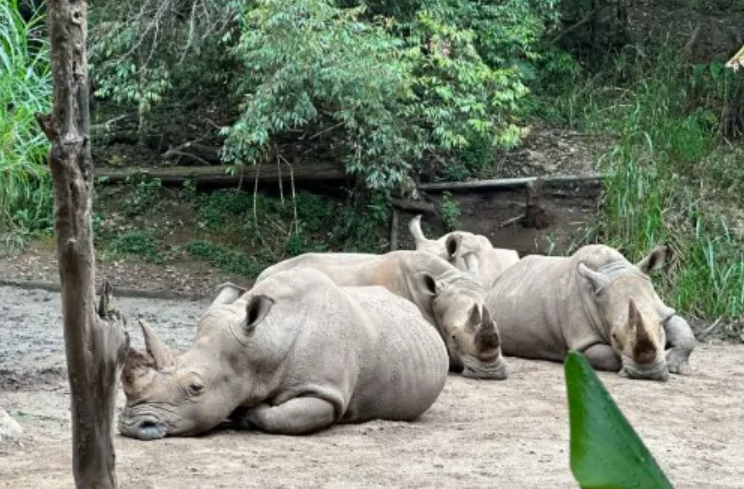
Rhino Retreat
The main feature is the South African white rhinoceros. Here, a combination of free-ranging and scientific artificial assistance is used to rebuild the rhinoceros population. White rhinos have round, sturdy bodies and smooth skin, with two horns on their noses, one large and one small, one in front and one behind. According to records, two rhinos in Caiyanghe were killed in 1933, and since then there have been no rhinos in the area. Today, visitors can see rhinos playing here.
Macaque Paradise
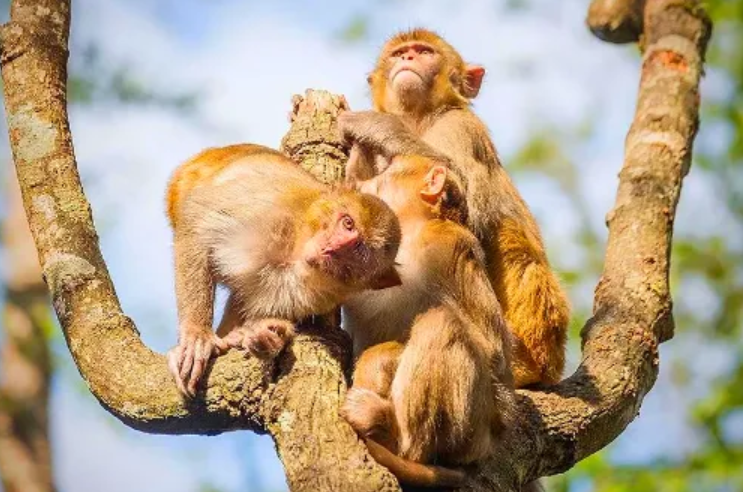
Macaques, also known as monkeys or yellow monkeys, are widely distributed in Pu'er National Park. Generally, male monkeys are 55-62 cm long and weigh 8-12 kg, while female monkeys are 40-47 cm long and weigh 4-7 kg. They feed on leaves, tender branches, wild vegetables, and also eat small birds, bird eggs, earthworms, ants, and various insects. The vast subtropical forest in the scenic area provides macaques with abundant food resources and a good living environment, making it a true paradise for macaques.
Fish Shadows in the Stream
Here the forest is dense, the air is fresh, and the spring water is clear. The water temperature remains at 10-22°C year-round, and the dissolved oxygen content is above 3.5 mg/L, making it very suitable for the growth and reproduction of the giant salamander. The giant salamander is a rare species that survived from the same era as the dinosaurs 300 million years ago. It is the largest existing amphibian and is called a "living fossil." Because its call sounds like a baby's cry, people also call it the "baby fish." It is a national second-class protected aquatic wild animal.
Bear Attack
The Asian black bear is a typical forest-dwelling animal and is omnivorous. In spring, it feeds on new tree buds; in summer, it mainly feeds on insects such as ants and bees. Asian black bears can stand and sit upright like humans, but they move cautiously and slowly, although their sense of smell and hearing are very sensitive.
Tree Fern Path
On the long wooden boardwalk grow tree ferns. Tree ferns are the only existing woody ferns and are extremely precious, truly national treasures. They are listed as first-class protected endangered plants by many countries. There are four species of tree ferns in Pu'er National Park: Alsophila spinulosa, Gymnosphaera gigantea, Gymnosphaera podophylla, and Sphaeropteris brunoniana.
Traveling Red Pandas
The red panda belongs to the family Ailuridae and is also known as the red bear-cat or red cat-bear. It is a national second-class protected animal. It is gentle in temperament and nocturnal. It has a cat face and bear body, with a reddish-brown body, brown-black limbs, long and fluffy fur, a round face, and white markings. The most beautiful feature is its long fluffy tail, with alternating brown and white rings in nine sections, which is very endearing. This is why it is also called the "nine-ringed wolf."
Suggested Tour Route:
You can follow the route: Rhino Retreat → Slow Loris → Deer Species → Binturong → Biodiversity Exhibition Hall → Macaque Paradise → Fish Shadows in the Stream → Monkey Play Peninsula → Jiaogua Pond Wetland → Raccoon → Bear Attack → Butterfly Stream Valley → Traveling Red Pandas → Bird Play Paradise → Return by Sightseeing Bus. You can also adjust it according to your interests and time. For example, for a luxury tour, you can choose the Red Panda Manor in the scenic area, which includes tickets and shuttle service, allowing you to stay in the forest and interact with red pandas up close. For a two-day tour, on the first day you can go to Rhino Flat in the morning to see rhinos, then go to Red Panda Manor to interact closely with red pandas, have lunch at the scenic area restaurant at noon, visit the Orchid Valley and Butterfly Garden in the afternoon, and stay overnight at Red Panda Manor Hotel. On the second day, get up early to participate in forest morning observation, then go to the Science Popularization Hall, and in the afternoon have free time.
Travel Tips:
Wear comfortable shoes and clothing to make walking in the forest easier.
Bring sunscreen, a sun hat, and mosquito repellent, and take good sun protection and mosquito prevention measures.
Learn in advance about the operating hours and routes of the electric carts and arrange your time reasonably.
If you want interactive experiences, you can buy relevant packages online in advance, which will be cheaper.
Respect the living habits of wild animals and do not feed or disturb them at will.
Precautions:
Observe the regulations of the scenic area and do not enter unopened areas at will.
Pay attention to environmental protection, do not litter, and keep the scenic area clean.
When interacting with animals, follow the instructions of the staff to ensure your own safety.
In case of bad weather, follow the arrangements of the scenic area and promptly take shelter in a safe place.
Transportation:
Self-driving: Navigate to the Ticket Center of Pu'er Sunhe National Park.
Shuttle bus: Tickets can be purchased on the "Pu'er Hongfeng Passenger Transport" official account. Departure times are 9:00, 10:00, 12:00, and 13:00, and return times are 13:00 and 17:00.
Taxi: About 30 kilometers from the city center, with a travel time of about 45 minutes.
Opening Hours:
Opening hours are 08:00-16:00, with last entry at 16:00.
Tickets:
The ticket price is 100 yuan per person.