The Baoshan Volcanic Rehai Tourist Area is located in Tengchong City, Baoshan City, Yunnan Province, and is a national 5A-level tourist attraction. The scenic area consists of two parts, the Volcanic Scenic Area and the Rehai Scenic Area, with a total area of approximately 221.36 square kilometers. The scenic area integrates scientific research and science popularization, sightseeing, ecotourism, and cultural tourism. Its characteristics lie in the spectacular volcanic landforms and rich geothermal landscapes. There are 97 volcanoes and more than 80 hot springs in the area, and seismic activity is frequent.
History and Culture
In the twelfth year of the Chongzhen reign of the Ming Dynasty (1639), the Ming Dynasty traveler Xu Xiake came to Tengchong and made it the last stop of his travels. He traveled in Tengchong for 40 days, investigating the geothermal resources and volcanic groups in this area, and left more than 30,000 words in "Tengyue Travel Notes," which is included in "Xu Xiake's Travels." Baoshan has a long history and culture. The ancient Ailao people created a distinctive Ailao culture on this land. After thousands of years of refinement, it has formed Baoshan's unique frontier culture.
Main Attractions
Dakong Mountain
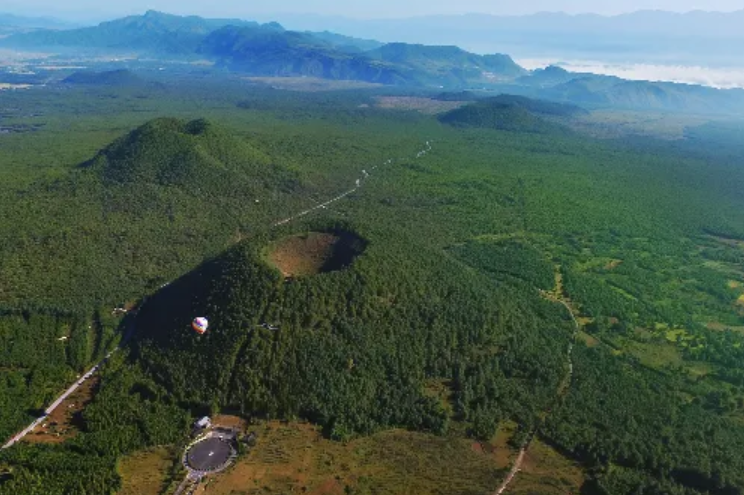
At an altitude of about 2,050 meters, it is a truncated conical volcanic cone. The base diameter of the volcanic cone is about 700 meters, the relative height is 100 meters, the crater diameter is about 200 meters, and the depth is 50 meters. The mountaintop is relatively flat with a broad field of vision, and there is a path of 598 steps leading to the summit.
Xiaokong Mountain
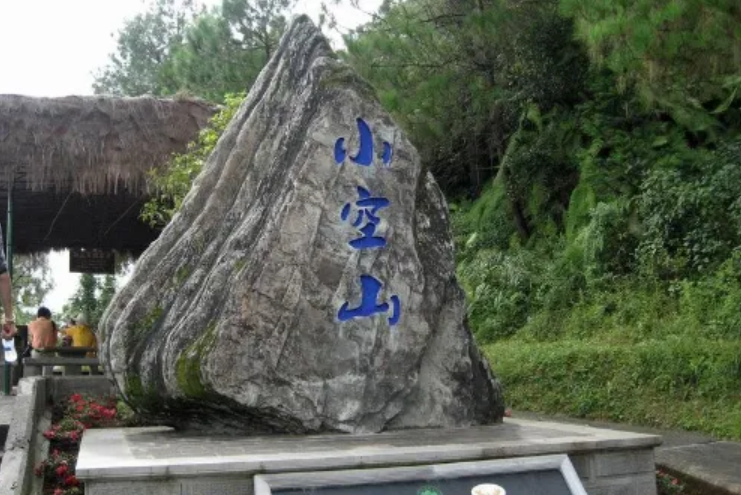
At an altitude of 1,957 meters, it is a truncated conical volcanic cone. The base diameter of the volcanic cone is about 350 meters, the relative height is 30 meters, the crater diameter is about 250 meters, and the depth is 60 meters. The most recent eruption of this volcano occurred about 100 meters to its east, forming a parasitic volcano with a cone base diameter of 200 meters and a height of about 50 meters.
Shenzhu Valley
Located on the bank of the Longchuan River about 12 kilometers east of Dakong Mountain, it is distributed in more than ten places including the Longchuan River, Daying River, and Binglang River basins, with a total area of 2 square kilometers, formed 40,000 years ago. The columns are up to 100 meters high, and the column bodies vary in size. The largest diameter is about 3 meters, and the smallest is only 4 centimeters. Most are hexagonal prisms. It is the largest, best-preserved, and most recently formed columnar jointing discovered in China so far.
Heiyu River
Located about 3,000 meters south of Shenzhu Valley, it is a low-temperature hot spring where an underground dark river is blocked by lava erupted from a volcano and then emerges under pressure. It is named because tens of thousands of black fish flow out of the outlet every year from summer to autumn. The river has a huge flow rate of 1,400 cubic meters per second. The outlet is divided into two streams, which merge and flow into the Longchuan River.
Rehai Dagunguo
It is one of the most representative attractions in the Rehai Scenic Area. It is a hot spring pool that boils all year round, with a water temperature as high as 96°C. It is the iconic landscape of the Rehai Scenic Area.
Huaitai Well, Sister Springs, and Pearl Spring
These hot springs are named for their unique shapes and functions, each with its own characteristics and worth seeing.
Huaitai Well consists of two similar wells. The left one is the Dragon Well, and the right one is the Phoenix Well. It is famous for the folk legend that "drinking the spring water can help conception," and the stone railings are carved with the 12 Chinese zodiac patterns.
Sister Springs, also known as Glasses Spring, is named Glasses Spring because its shape resembles a pair of glasses.
Pearl Spring has hundreds of fumaroles, and strings of bubbles rise from them, crystal clear and colorful, forming a marvelous pearl spectacle.
Guming Spring, Shizitou Spring, and Hamatou Spring
These hot springs are loved by tourists for their unique spouting methods and sounds.
Guming Spring is a boiling spring pit and steam vent, and has the largest hot spring water flow in Rehai. Because the spring water has changed course many times, many cavities have formed. Because this spring is an intermittent spring, the cavities resonate during the intermittent spouting of the spring water, producing a thumping sound like the beating of war drums on an ancient battlefield, so it is called Guming Spring.
Shizitou Spring is named because it resembles a roaring lion with long hair hanging down.
Hamatou Spring is named because it resembles an "open-mouthed toad." It is the only pulsating boiling fountain in the country. From a distance, it looks like a large toad. This spring is an intermittent spring and seems like a group of toads spouting water regularly, so it is also called "toads spitting water."
Zhatang River Gorge
Here you can experience the steaming natural hot springs and feel the uncanny workmanship of nature.
Tour Routes:
One-day tour: In the morning, go to the Volcanic Scenic Area and visit attractions such as Dakong Mountain and Xiaokong Mountain. You can choose to take a hot air balloon to overlook the volcanic group; in the afternoon, go to the Rehai Scenic Area to see geothermal landscapes such as Rehai Dagunguo and Huaitai Well, and you can also soak in hot springs to relax.
Two-day tour: On the first day, visit the Volcanic Scenic Area, visit the Volcanic Geology Museum to learn about the formation of volcanoes and geological changes, hike along the Heiyu River, and experience the mystery of the underground dark river; stay overnight near the scenic area. On the second day, go to the Rehai Scenic Area, slowly appreciate various geothermal landscapes, enjoy a hot spring SPA at Yugu Hot Spring or Meinu Pool, and feel nature's gifts.
Travel Suggestions:
Make timed reservations in advance on platforms such as the official WeChat public account to avoid queuing during peak hours.
When visiting the Rehai Scenic Area, do not casually touch the hot spring water to avoid burns.
If you want to experience the hot springs, you can bring your own swimsuit, swim cap, and other items.
In the Volcanic Scenic Area, you can choose to take a hot air balloon to better appreciate the full view of the volcanic group, but you need to pay attention to weather conditions. If there is bad weather such as strong wind, it may not be possible to ride.
Precautions:
Some roads in the scenic area may be rugged, so pay attention to your footing when visiting and wear comfortable shoes.
Observe the regulations of the scenic area and do not smoke in areas where smoking is prohibited.
Take good care of the elderly and children to avoid getting lost or accidents.
Protect the environment, do not litter, and keep the scenic area clean.
Transportation:
Self-driving: It takes about 30 minutes to drive from Tengchong City to the Volcanic Scenic Area, and about 15 minutes to the Rehai Scenic Area.
Dedicated bus line: At the Tengchong Tourist Passenger Transport Station, take the Volcano dedicated bus line to reach the Volcanic Scenic Area directly. The bus fare is 4 yuan.
Bus: At the Tengchong Tourist Passenger Transport Station and along the extension of Rehai Road, take Bus No. 2 to reach Rehai directly. The bus fare is 3 yuan.
Opening Hours:
Volcanic Scenic Area opening hours: 08:00 - 18:00. Rehai Scenic Area opening hours: 08:00 - 19:00.
Tickets:
Tengchong Rehai Scenic Area ticket: adult ticket 50 yuan.
Tengchong Volcanic Scenic Area ticket: adult ticket 35 yuan.