Tianshan Sacred Tree Garden is located in Wensu County, Aksu Prefecture, Xinjiang, in the piedmont area on the southern side of Tomur Peak in the Tianshan Mountains. It is a national 4A-level tourist attraction, an autonomous region-level forest park, and an autonomous region-level cultural relic protection unit. It covers an area of about 680 mu, with an altitude of 1,700 meters. The scenic area is surrounded by the Gobi Desert, where vegetation is sparse, but inside the garden there are dense ancient trees and murmuring streams. There are more than a hundred ancient trees that have survived for over a thousand years, with strange shapes and great ornamental value, forming a unique landscape that integrates ecology, culture, and geology.
Historical Culture
In Uyghur, Tianshan Sacred Tree Garden is called "Kurmish Atam Mazar," meaning the cemetery of a holy preacher. It is a holy site for Islamic gatherings and pilgrimages in history. According to legend, in the 11th century AD, an Islamic imam named Sultan Kursh Sayyid from Saudi Arabia led more than 2,000 followers through India to preach in the Western Regions of China. They were resisted by the local people and conflicts broke out. When they retreated to this place, most of the followers were killed in battle, and Su also died and was buried here, forming the mazar. In addition, the long-neglected mosque in the garden, the century-old sermon hall that has weathered many storms, and other cultural and historical relics all drape a mysterious cloak over the site. The long-flowing Liusha River and the story of Tang Monk's journey to the West to obtain Buddhist scriptures in "Journey to the West" also add a strong sense of mystery to the Sacred Tree Garden.
Main Attractions
Mandarin Duck Ancient Tree
It is formed by two trees, a Xinjiang poplar and an apricot tree about 1,100 years old, growing together. The ancient apricot tree embraces the middle part of the Xinjiang poplar trunk, resembling a couple forever inseparable.
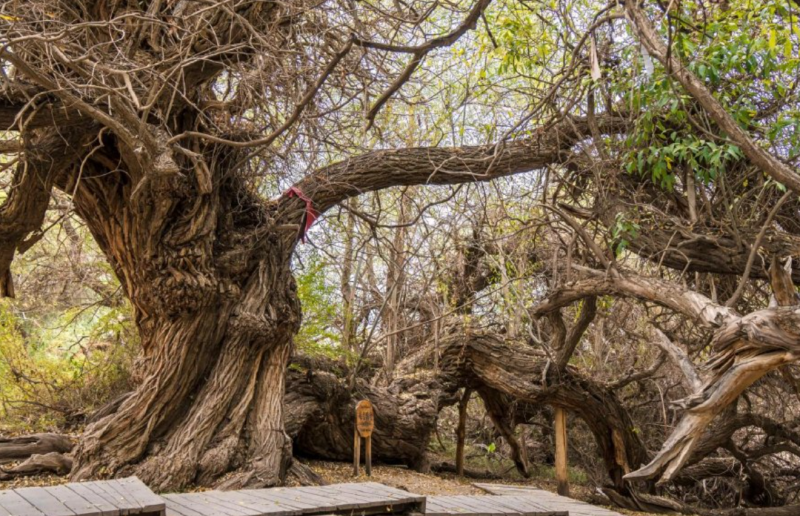
Flowing Fragrance of Holy Water
There are several streams formed by springs in the garden. The water flows murmuringly, nourishing the ancient trees and vegetation in the garden and bringing vitality and energy to the park.
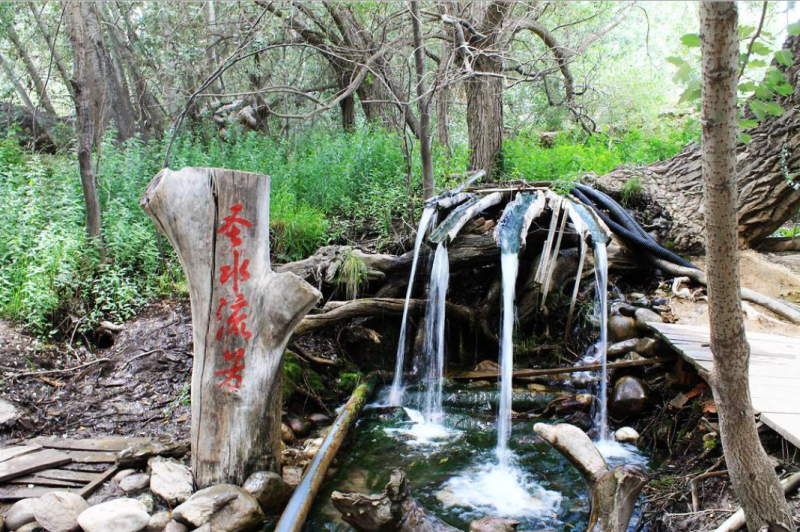
Millennium Holy Spring
Located at a high point in the northern part of the scenic area and surrounded by ancient trees, shrubs, and weeds, it is the spring with the largest flow in the garden. Its flow is stable and its water is sweet.
Crouching Dragon Willow
The willow has a unique shape, resembling a crouching dragon coiled on the ground, with winding and extending branches, showing tenacious vitality.
Horse Head Tree
The shape of the tree closely resembles a horse's head, vivid and lifelike, as if telling an ancient story.
Heaven-Reaching Gate
A gate-like landscape formed by peculiarly shaped trees, giving people a feeling of entering a mysterious world.
Seeking Roots and Tracing Ancestors
Here, some ancient trees have exposed root systems with strange shapes, making people reflect on the origin and inheritance of life.
Resurrected Willow
Some willow trees appear to have died, but new branches sprout from the roots and grow into towering trees, as if returning to life, so they are called Resurrected Willows.
Deer Antler Strange Tree
The branches are shaped like deer antlers, with many forks and peculiar forms, attracting tourists' attention.
Rootless Tree
From the outside, it is difficult to find where its roots are, as if it grows there out of thin air, which is astonishing.
Whirlwind Willow
Due to the fixed wind direction over many years, the willow presents a unique spiral shape, like a whirlwind, which is breathtaking.
Millennium Sacred Tree
Located on a slope in the central part of the scenic area, five huge ancient Xinjiang poplar trees have been lying fallen for many years, exposing smooth pure wooden trunks. The middle part of the main trunk has five peculiar interlaced and connected branches, a special phenomenon extremely rare in the growth of Xinjiang poplars.
Nine Dragons Stirring the Sea
The branches and trunks of multiple ancient trees are intertwined, like nine giant dragons churning in the sea, majestic and powerful.
Frog and Crocodile Looking Back
The shape of the trees resembles a frog or crocodile looking back, vivid and interesting.
Giant Elephant Roaring at the Sky
The shape resembles a giant elephant trumpeting upward, demonstrating nature's magical creativity.
Century-Old Sermon Hall
A sermon hall with a long history, once a place for Islamic preaching and gatherings, carrying rich religious and cultural connotations.
Food
Grilled Mutton Skewers
Made with fresh local mutton, with a balance of fat and lean, skewered on iron sticks. When grilled over charcoal, they sizzle with oil. After sprinkling cumin, chili powder, and other seasonings, they are fragrant. One bite reveals a crispy exterior and tender interior. About 5 yuan per skewer.
Pilaf
Soft, sweet, and fragrant rice paired with tender chunks of mutton, carrots, onions, and other ingredients, stir-fried with sheep fat. It is nutritious and aromatic. The pilaf at the Sacred Tree Garden Restaurant in the scenic area is relatively authentic, 30 yuan per serving.
Nang Pit Meat
Marinated mutton is hung into a nang pit and roasted using residual heat. The outer skin is golden and crispy, while the inside is tender and juicy. The nang pit meat at farmhouse restaurants around the scenic area is a signature dish, about 80 yuan per kilogram.
Nang
A traditional Xinjiang staple food, baked in a nang pit. The outer skin is crispy and the inside is soft. It comes in various flavors and is an excellent accompaniment to other foods.
Big Plate Chicken
Made with fresh local chicken and potatoes and other ingredients. The chicken is tender, the potatoes are soft, and it is paired with rich sauce. The taste is spicy and delicious.
Mixed Noodles
The noodles are chewy and textured, paired with various toppings stir-fried with vegetables and meat, such as sautéed meat or tomato and egg. It is nutritious and satisfying.
Kvass
A local specialty drink with a sweet-and-sour taste and rich wheat aroma. It is a good choice to accompany meals.
Tickets:
The ticket price is 40 yuan per person. As of 2025-06-09, no official WeChat public account has been found.
Opening Hours:
Opening hours are 10:00 - 20:00.
Tour Route:
From 10:00 to 11:30 in the morning, you can visit the area of millennium ancient tree wonders, focusing on landmark ancient trees such as the Whirlwind Willow and Deer Antler Strange Tree. Stroll among them, feel the uncanny workmanship of nature, take photos and check in to capture wonderful moments, and learn the legendary stories behind these ancient trees. You can hire a guide for explanation; 50 yuan allows a team of 1 to 15 people to gain an in-depth understanding of the mysteries of the sacred trees. From 11:30 to 13:00, enjoy lunch in the rest area within the scenic area and taste Xinjiang specialty foods such as nang, pilaf, and mutton skewers to replenish energy while enjoying the surrounding greenery. From 13:00 to 15:00 in the afternoon, you can go to attractions such as Flowing Fragrance of Holy Water and Millennium Holy Spring, feel the clarity and wonder of the spring water, and enjoy the beautiful scenery of streams flowing through the park. From 15:00 to 17:00, visit peculiar trees such as the Resurrected Willow and Rootless Tree, and marvel at the tenacity and wonder of life. From 17:00 to 20:00, stroll through the park, enjoy the overall scenery of the park, and feel the tranquility and beauty of the Sacred Tree Garden under the sunset.
Transportation:
Self-driving: From Aksu city area, the distance to the scenic area is about 70 kilometers. You can follow navigation software.
Bus: You can first take a bus to Wensu County, then transfer to a bus heading to Sawapuqi Ranch, get off at Sawapuqi Ranch 10 kilometers from the Sacred Tree Garden, and then cross 10 kilometers of Gobi desert to reach the Sacred Tree Garden.
Taxi: In Aksu city area or Wensu County, you can choose to take a taxi to the scenic area. It is convenient and quick, but the cost is relatively high.
Must-Visit Attractions:
Mandarin Duck Ancient Tree: About 1,100 years old, formed by a Xinjiang poplar and an apricot tree growing together, resembling lovers, highly ornamental.
Millennium Holy Spring: The spring with the largest flow in the scenic area, with sweet water, surrounded by ancient trees, shrubs, and weeds, full of mystery.
Whirlwind Willow: A spiral shape formed by a fixed wind direction, one of the unique landscapes in the garden.
Century-Old Sermon Hall: With a long history, it is an important embodiment of Islamic culture and carries rich religious and cultural connotations.
Travel Suggestions:
It is recommended to wear comfortable sports shoes for walking in the park.
Take sun protection measures and carry a sun hat, sunscreen, etc., because the sunlight in the scenic area is relatively strong.
If you are interested in history, culture, and the stories of ancient trees, you can hire a guide in the scenic area for explanation, which will help you better understand the connotations of the scenic area.
Arrange your time reasonably and leave enough time to appreciate each attraction to avoid a hurried visit.
Precautions:
Observe the rules and order of the scenic area, and do not damage facilities or vegetation at will.
When visiting ancient tombs and religious sites, maintain respect and quietness, and do not behave inappropriately.
Pay attention to environmental protection, do not litter, and keep the scenic area clean.
When visiting in summer, pay attention to mosquito and insect bites. You can carry mosquito repellent and other anti-mosquito supplies.