Wudang Mountain Scenic Area is located in Danjiangkou City, Shiyan City, Hubei Province. It is a famous Taoist holy site in China, a World Cultural Heritage site, and a National 5A-level tourist attraction. The scenic area covers a total area of 312 square kilometers, with the main peak, Tianzhu Peak, at an altitude of 1,612 meters. It is known as "the Number One Immortal Mountain Under Heaven." Wudang Mountain is renowned worldwide for its magnificent ancient building complex, long-standing Taoist culture, exquisite Wudang martial arts, and beautiful natural scenery.
History and Culture
The Taoist history of Wudang Mountain can be traced back to the Eastern Han Dynasty, more than 2,000 years ago. During the Yongle period of the Ming Dynasty (1412), Emperor Chengzu Zhu Di ordered the construction of the Wudang Mountain Taoist building complex. It took 12 years to complete 33 building complexes, including 9 palaces, 8 temples, 36 nunneries and halls, and 72 rock temples, forming a magnificent landscape of "a nunnery every five li and a palace every ten li, with red walls and green tiles shining in exquisite harmony."
Wudang Mountain is the birthplace of Wudang martial arts. Zhang Sanfeng created Wudang internal martial arts here, characterized by overcoming hardness with softness and using stillness to control motion. Wudang martial arts and Shaolin martial arts are known as the two major schools of Chinese martial arts, and in 2006 they were included in the national intangible cultural heritage list.
In 1994, the ancient building complex of Wudang Mountain was inscribed on the UNESCO World Cultural Heritage List and was praised as "a museum of ancient Chinese architectural achievements."
Main Attractions
Golden Hall
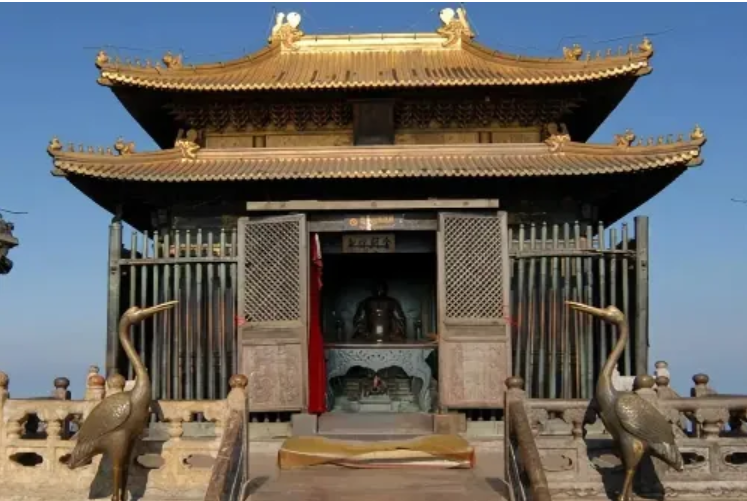
Located at the top of Tianzhu Peak, it was built in the 14th year of the Yongle period of the Ming Dynasty (1416) and is the most famous building in Wudang Mountain. The entire hall is made of gilded bronze and weighs 90 tons. It shines golden in the sunlight, hence the name "Golden Hall." Inside the hall is a bronze statue of the True Martial Emperor, weighing 10 tons, with exquisite craftsmanship.
Zixiao Palace
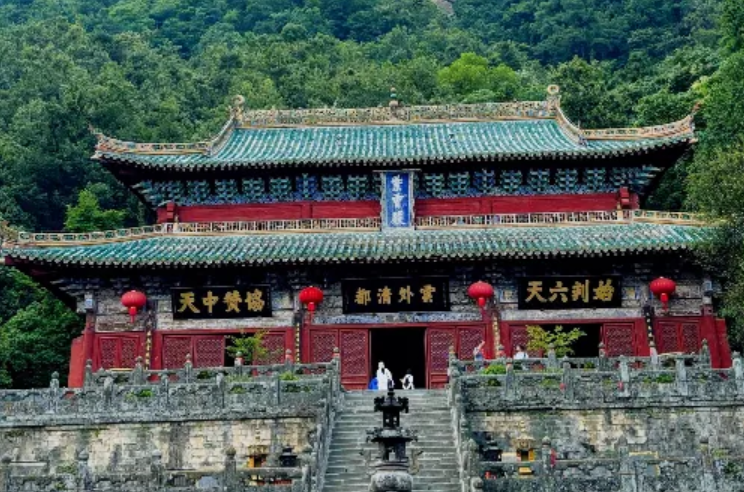
One of the best-preserved palaces in Wudang Mountain, it was first built during the Xuanhe period of the Northern Song Dynasty and expanded in the Ming Dynasty. The palace currently has 182 surviving buildings. It is grand in scale and rigorous in layout and is the center of Taoist activities in Wudang Mountain.
Nanyan Palace
A Taoist building complex built on a cliff, famous as a "hanging temple." Its main buildings include Tianyi Zhenqing Palace and Liangyi Hall. Outside the palace, the Dragon Head Incense Burner is a famous wonder of Wudang Mountain.
Taizipo
Also known as Fuzhen Temple, it is one of the best-preserved Taoist temples in the Wudang Mountain building complex. Its Nine-Turn Yellow River Wall, One Pillar Twelve Beams, and other architectural techniques are considered miracles of ancient architecture.
Xiaoyao Valley
The essence of Wudang Mountain's natural scenery, with deep gorges, murmuring streams, and towering ancient trees. The valley has a Wudang martial arts performance venue where tourists can watch Wudang kung fu performances.
Qiongtai Middle Temple
One of the eight great temples of Wudang Mountain, it was first built in the Yuan Dynasty and is the starting point of the mountain climbing cableway. The existing Sanqing Hall of the Yuan Dynasty in the temple is an important physical example for studying Yuan Dynasty architectural art.
Tour Routes:
Recommended two-day tour route:
Day 1: Visitor Center → Taizipo → Xiaoyao Valley → Zixiao Palace → Nanyan Palace (stay overnight at Nanyan)
Day 2: Nanyan Palace → Golden Summit → Qiongtai Middle Temple → Return
Tourists with limited time can choose a one-day tour and take the cableway up and down to the Golden Summit.
Travel Suggestions:
Spring and autumn are the best seasons for visiting, with pleasant weather.
It is recommended to wear comfortable, slip-resistant hiking shoes, as some sections are relatively steep.
The scenic area is large, so it is recommended to arrange 2 days for an in-depth visit.
You can watch Wudang martial arts performances and experience Taoist culture.
Respect Taoist etiquette and maintain a quiet and solemn atmosphere.
Notes:
Mountain weather changes frequently; please pay attention to the weather forecast in advance.
Some sections are relatively steep; please pay attention to safety.
Please do not make loud noises in Taoist places.
Protect cultural relics and historic sites; please do not touch or carve on them.
Keep your personal belongings safe, especially in crowded places.
Transportation:
Self-driving: From the urban area of Shiyan, take the Fuyin Expressway to the Wudang Mountain exit, about 40 kilometers.
High-speed rail: Take the high-speed rail to Wudangshan West Station, then transfer to the scenic area bus, about 20 minutes to arrive.
Airplane: The nearest airport is Shiyan Wudangshan Airport, about 30 kilometers from the scenic area.
Opening Hours:
The scenic area is open all year round. Daily opening hours are 7:30-17:30 (peak season, March 1-November 30) and 8:00-17:00 (off-season, December 1-the end of February of the following year). Ticket sales at attractions within the scenic area stop 1 hour before closing.
Tickets:
Ticket: 259 yuan per person (including scenic area sightseeing bus and insurance). Golden Summit cableway round trip: 150 yuan per person.