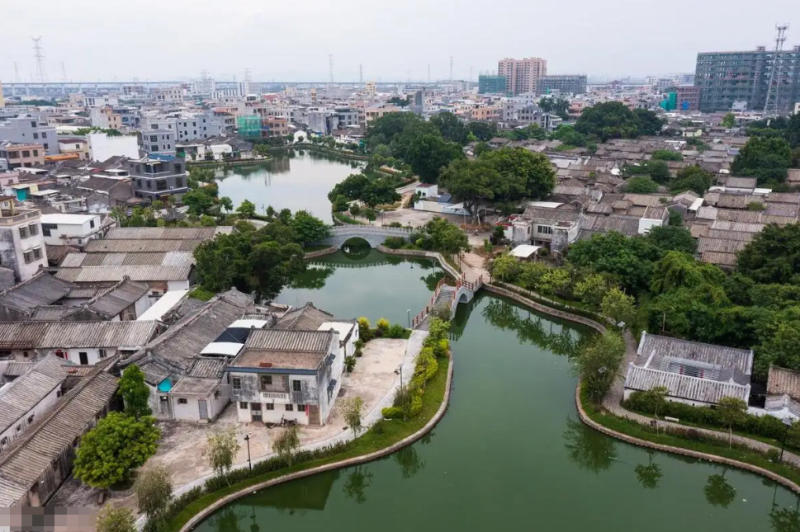
Located beside Hutai Road in Longhu Town, Chao'an District, Chaozhou City, Guangdong Province, Longhu Ancient Village sits on the banks of the middle and lower reaches of the Han River. Covering an area of approximately 1.5 square kilometers, it was originally established in the Song Dynasty, fortified in the Ming Dynasty, and reached its peak prosperity during the Qing Dynasty. It stands as a witness to the historical evolution of the Chaoshan region from an agricultural era to a commercial one.
Inside the village, the layout features "Three Streets and Six Alleys," densely packed with ancient residences and grand ancestral halls. The architectural complex is distributed in a belt-like pattern. There are over 100 structures, including clan ancestral halls, residences of famous officials, and mansions of wealthy merchants. Notable landmarks include the "Fangbo Mansion," "Jinshi Mansion," "Tanhua Residence," "Xiuyi Mansion," the Xu Clan Ancestral Hall, Longhu Academy, and the Tianhou Palace.
These ancient buildings showcase the essence of Chaozhou folk craftsmanship, featuring intricate wood carvings, stone carvings, shell carvings, inlaid porcelain, painted decorations, and shell-lime sculptures. The facades of the residences are heavily decorated; lintels, plaques, couplets, and side walls are often adorned with genre paintings depicting local customs. Stone carvings are extensively used for door frames, pillars, beams, plinths, railings, and steps, frequently featuring motifs like stone drums, auspicious beasts, and lions.
Rightly hailed as a "Museum of Mansion Culture," Longhu Ancient Village reflects the distinct architectural styles of the Song, Yuan, Ming, and Qing dynasties. In November 2012, it was selected as one of the "Top Ten Most Beautiful Ancient Villages in Guangdong."