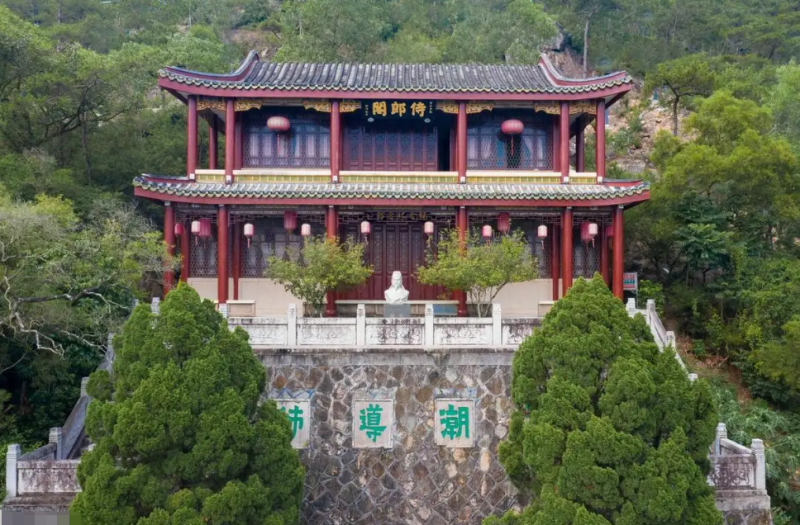
The Han Wengong Shrine is located at the western foot of Bijia Mountain in Xiangqiao District, Chaozhou, Guangdong Province. Originally built in 999 AD during the Xianping era of the Northern Song Dynasty, it is the earliest existing shrine in China dedicated to Han Yu, the renowned literary master of the Tang Dynasty. Initially constructed on the eastern wing of the Confucian Temple at the foot of Jinshan Mountain, the shrine was relocated to its current site in 1189 AD during the Chunxi era of the Southern Song Dynasty. The main structure consists of two halls, front and rear. The existing architecture follows the Guangfu-style shrine layout restored in 1984, and in 2006, it was listed as a Major Historical and Cultural Site Protected at the National Level by the State Council.
In 1090 AD, Wang Di, the prefect of Chaozhou, moved the shrine seven li south of the city, where Su Shi composed the "Inscription for the Han Wengong Temple in Chaozhou." Later, during the Chunxi era of the Southern Song Dynasty, Prefect Ding Yunyuan relocated the shrine to its present location because Han Yu had once planted oak trees on Bijia Mountain. The shrine currently houses 40 stone steles from the Ming and Qing dynasties. The main hall is 18.7 meters wide, featuring pale green polished brick walls similar in craftsmanship to those of the Chen Clan Ancestral Hall in Guangzhou, with tight joints between brick and wood. The main entrance hangs a plaque with the clerical script inscription "Han Wengong Zhi Ci." At the end of the path leading to the shrine, there is a steep flight of 51 stone steps, with plaques inscribed by famous masters hanging throughout the beams.
Since its restoration in 1984, the scenic area has gradually added attractions such as the "Tian Nan Bei Sheng" Calligraphy Stele Corridor, Yunyuan Pavilion, and Shilang Pavilion, expanding the total area to 134.64 mu. Inside the shrine, there is an exhibition hall dedicated to Han Yu's diligent administration and integrity, displaying his achievements in governing Chaozhou through folk arts such as Chaozhou embroidery and paper-cutting.