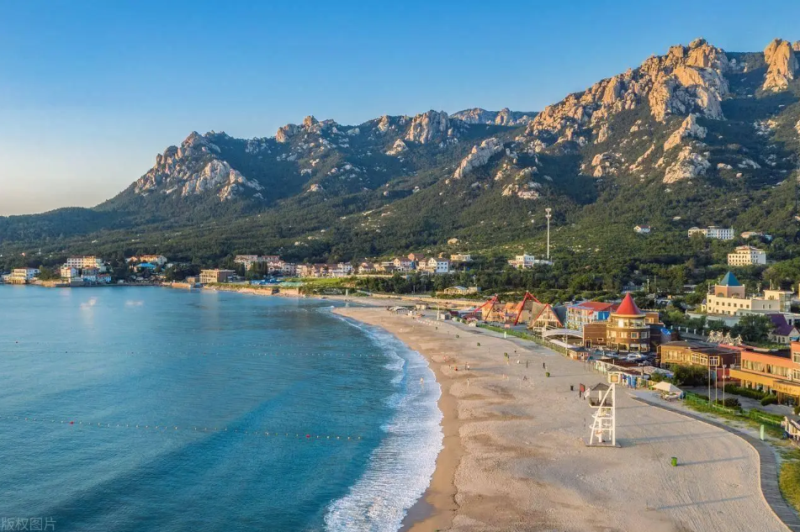
Laoshan Scenic Area, located in Laoshan District, Qingdao City, Shandong Province, is a renowned tourist destination. Also historically known as Laoshan, Laoshan, or Buqi Mountain, it borders the Yellow Sea to the east, neighbors downtown Qingdao to the south, Jimo District to the north, and Chengyang District to the west. Covering an area of approximately 446 square kilometers, the area features landscapes shaped over a long history, with cultural heritage dating back to the Spring and Autumn and Warring States periods. It is particularly celebrated for its profound Taoist culture.
As one of China’s famous Taoist mountains, Laoshan is home to numerous Taoist temples, monasteries, and stone inscriptions, including the Taiqing Palace and Shangqing Palace. The area perfectly blends pristine natural scenery with rich cultural landmarks, offering visitors a diverse experience. It is divided into five touring areas and one core scenic zone.
In 1987, ticket stations were established at Liuqing River, Taiping Palace, and Beijiushui to collect maintenance fees. On May 8, 1989, the Qingdao Municipal Government established the Leading Group for the Laoshan Scenic Area and reorganized the management committee. By 2013, infrastructure such as water, electricity, transportation, and communications had been significantly upgraded to enhance the tourist experience. In June 2022, the cableway in the Yangkou Touring Area resumed trial operation after maintenance, with a single-trip ticket priced at 35 yuan. In July 2026, reports of "razor wire" similar to that at Mount Tai sparked online debate; however, the Jiushui Management Office clarified that the wire is installed only in high-altitude, non-public areas inaccessible to regular tourists.
Laoshan Scenic Area is listed as one of the first batches of National Key Scenic Areas and is rated as a National AAAAA-level Tourist Attraction.