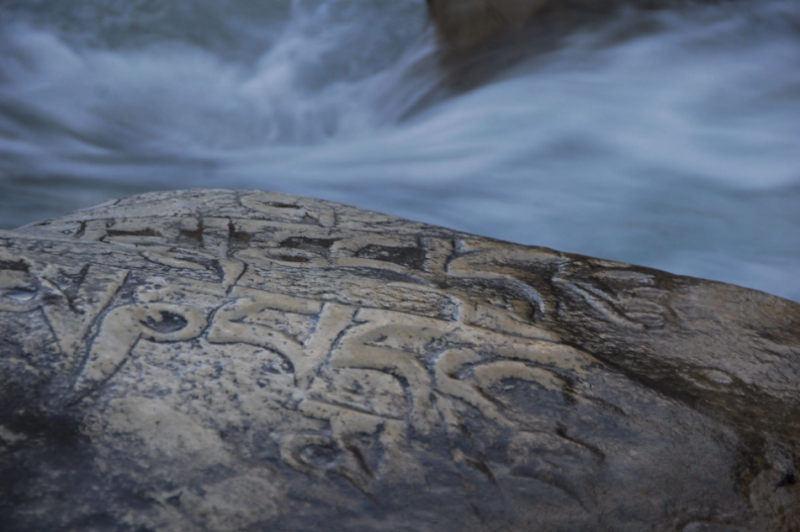
The Leba Gully Rock Art is located on the west bank of the Tongtian River in Yushu Tibetan Autonomous Prefecture, Qinghai Province. Situated about 32 kilometers east of Jiegu Town and adjacent to the Princess Wencheng Temple, the name "Leba" means "Beautiful Valley" in Tibetan. It is a cultural site blending religious stone carvings with natural scenery and is listed as a Major Historical and Cultural Site Protected at the National Level.
The site preserves over ten rock art locations and a vast number of Mani stone carvings. The imagery mainly features Buddhas, Bodhisattvas, pilgrims, and auspicious beasts. Notable works include the Tibetan King and Princess Worshipping the Buddha and the Eight Legions of Heaven, which showcase the fusion of Han and Tibetan Buddhist art. The history of these carvings dates back to the Tang Dynasty, approximately 1,300 years ago.
The rock art is divided into three main areas: Area No. 1 features a Late Tang Han Buddhist style, with Buddhas wearing round-collared, cross-shoulder robes and Bodhisattvas seated in the lotus position. Area No. 2 depicts pilgrims in attire characteristic of Tang Dynasty "Hu" (Central Asian) clothing, serving as historical evidence of cultural exchange between the Tang Empire and Tibet. Area No. 3 employs traditional Tibetan techniques, portraying Bodhisattvas adorned with jeweled crowns and necklaces, along with images of flying Apsaras (Feitian). Surrounding the rock art are stone inscriptions of sutras such as the Amitayus Sutra and the Six-Syllable Mantra. These inscriptions span from the late Tang Dynasty to modern times, forming a complete lineage of Tibetan religious stone carving traditions.