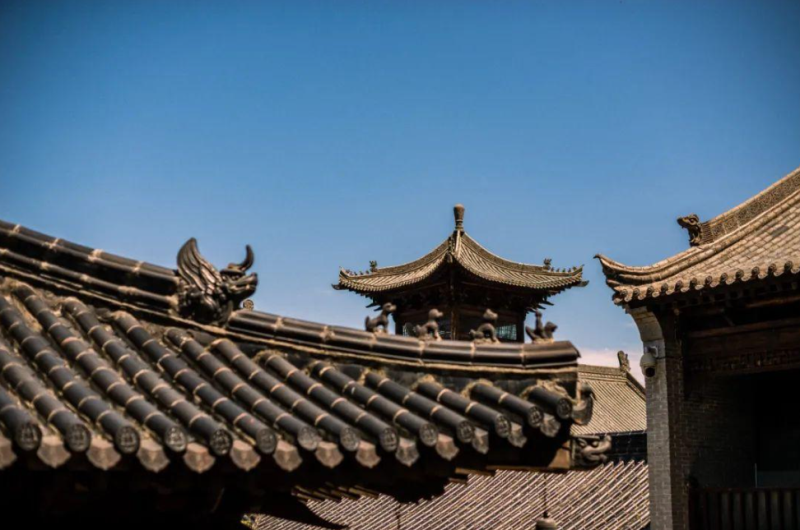
Located on Beishan Mountain in Xining, Qinghai Province, at an altitude of over 2,400 meters, Beichan Temple is also known as Tuloushan Temple or Beishan Temple. First built in 506 AD during the reign of Emperor Ming of the Northern Wei Dynasty, it is now a cultural relic protection unit of Qinghai Province.
The temple is built against the Danxia landform, where the red sandstone cliffs have formed a complex of "Nine Caves and Eighteen Holes." The halls are connected to these caves by plank roads and corridors, giving the temple a "hanging" appearance. It is acclaimed as the "Second Largest Hanging Temple in China."
Originally a Buddhist site, it was granted the name Yongxing Temple during the Ming Dynasty and later transformed into a Taoist sanctuary in the late Qing Dynasty. Its main structures include the Lingguan Hall, the Hall of the Queen Mother, and the Ningshou Pagoda. A Tang Dynasty open-air Vajra statue can still be found halfway up the mountain. The caves preserve murals from the late Tang to the Song and Yuan dynasties, showcasing a blend of Han and Tibetan Buddhist art. "Misty Rain on Beishan Mountain" is celebrated as one of the "Eight Views of Xining."
Approved by the government in 1983 and named Tuloushan Temple, it currently serves as an active Taoist site and is a National 3A-level tourist attraction. In recent years, the project "Rescue Digital Preservation and Exhibition Utilization of Beichan Temple" has been implemented, involving high-precision data collection and 3D scanning.