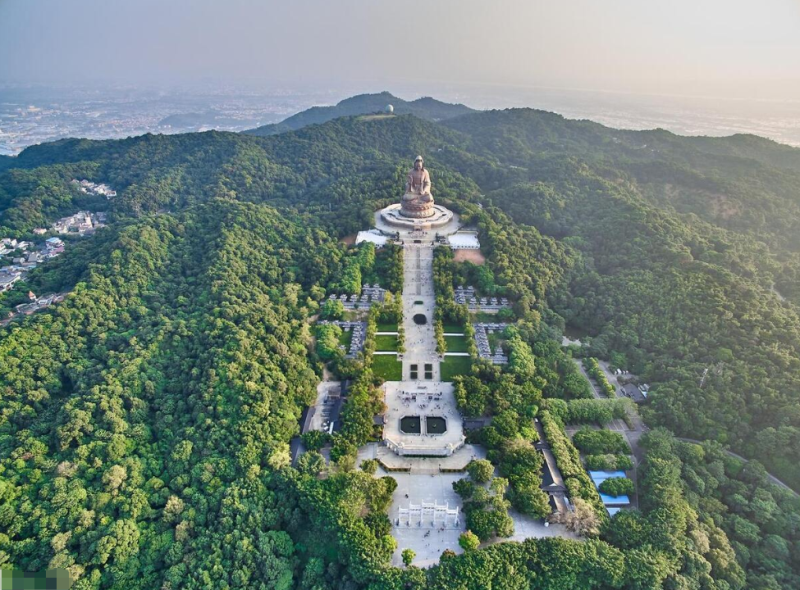
Located in the southwest of Nanhai District, Foshan City, Guangdong Province, the Xiqiao Mountain Scenic Area sits right in the heart of the Pearl River Delta. The main body of the mountain is actually an ancient extinct volcano, spanning a diameter of 4 kilometers and covering an area of 13.03 square kilometers.
The area features a subtropical monsoon climate and is characterized by low hills, surrounded by landforms such as plains, terraces, and alluvial fans. Xiqiao Mountain was formed by multiple volcanic eruptions during the mid-to-late Cretaceous period, roughly 45 to 51 million years ago. Since the Ming Dynasty, many renowned scholars have established academies here, earning it the reputation of the "Famous Mountain of Neo-Confucianism." In 1988, it was approved by the State Council as a National Scenic Area, marking the beginning of government management of its natural resources.
The scenic area boasts 72 unique peaks, 36 caves, 232 crystal-clear springs, 28 waterfalls, and the East and West Tianhu Lakes. It comprises nine major scenic spots, including Baiyun Cave, Jiulong Rock, Shiyan Rock, Biyu Cave, Tianhu, Cuiyan, Yunhai Liantai, the Huang Daxian Sacred Garden, and the Wong Fei-hung Lion Art Martial Arts Hall.
Over the years, the site has received numerous accolades: it was named a "Provincial Tourist Resort" by the Guangdong Provincial People's Government in December 1994, awarded the title of National AAAAA Tourist Attraction in January 2013, selected as a "2016 China Sports Tourism Boutique Scenic Area," designated as a "Mainland Study Tour Base for Hong Kong and Macao Youth" in July 2018, and recognized as a "Guangdong Provincial Primary and Secondary School Study Practice Education Base" in July 2020.