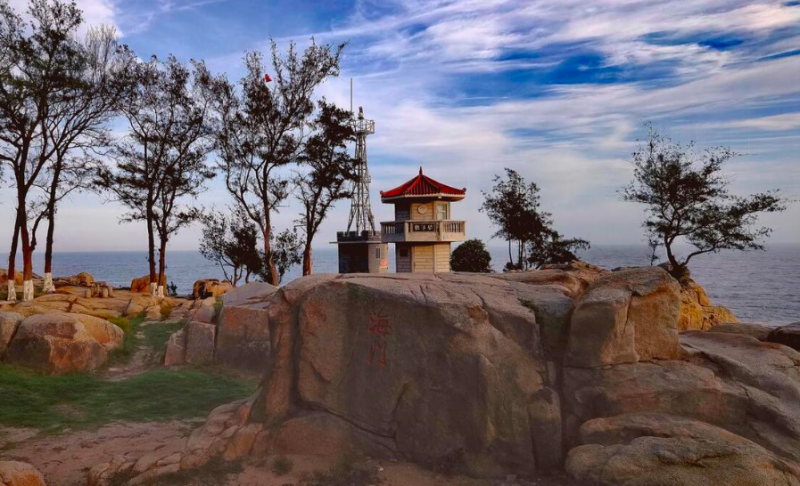
The Chongwu Ancient City Scenic Area in Hui'an is located at the eastern end of the Chongwu Peninsula in Hui'an County, Quanzhou City, Fujian Province (24°52'–54' N, 118°53'–59' E). It sits on the prominent outcrop of Fujian's southeastern coast, between Quanzhou Bay and Meizhou Bay, at the southern tip of the Chongwu Peninsula 24 kilometers southeast of Hui'an County, facing the Taiwan Strait. Chongwu Ancient City was first built in the 20th year of the Hongwu reign of the Ming Dynasty (1387) by Zhou Dexing, Marquis of Jiangxia, to defend against Japanese pirates. It is the only stone city among the more than 60 coastal guard cities of the early Ming Dynasty that has been preserved intact, and its city walls and internal defense system constitute a complete Ming Dynasty coastal military strategic defense system.
The scenic area is known as a "natural film studio" and the "Northern Beidaihe of the South." It has a subtropical marine monsoon climate, with an average annual temperature of 20°C and pronounced characteristics of strong sea breezes and intense sunlight. Along its coastline are distributed 12 golden sandy beaches. Within the ancient city, more than 30 ancient temple and shrine architectural complexes survive, including the City God Temple built in the Song Dynasty and the Guandi Temple built in the Ming Dynasty, recording the history of resistance against Japanese pirates and diverse religious beliefs.
The scenic area integrates coastal scenery, historical relics, folk customs, and sculptural art, and includes core attractions such as the Chongwu Ancient City walls and the "Chinese Stone Carving Art Expo Park." The Stone Carving Expo Park covers an area of 90,000 square meters, features 25 themed exhibition zones, and houses more than 500 stone carving artworks, including the country's largest rock carving, "Earth Art." The city walls were listed as a Major Historical and Cultural Site Protected at the National Level in 1988, rated as a National AAAA-level Scenic Area in 2003, and designated as a Fujian Provincial National Defense Education Base in 2007. In May 2021, the first phase of renovation and upgrading was completed and the park reopened; in 2023, the ancient city protection and revitalization project was implemented, traditional buildings were restored, and new business forms such as cultural and creative products and homestays were introduced, along with the hosting of the Cultural and Tourism Economic Development Conference and a series of Huian women's culture festival events.