The Hotan Museum is located at No. 8 Kunlun Road, Hotan City, Hotan Prefecture, Xinjiang Uygur Autonomous Region (approximately 290 meters northeast of Hotan City Gujiangbage Anji Middle School). It is a comprehensive museum with a total construction area of more than 13,493 square meters and a total of 3 floors. The museum began preparations for related cultural relic exhibition rooms in 1979, was formally established in 1995, was designated a National 4A-level Tourist Attraction in November 2020, and was recognized as a National Second-Level Museum in August 2024. The museum has a rich collection of cultural relics. As of 2022, the number of collections had reached 20,553 pieces/sets, including many precious cultural relics.
Historical Culture
In ancient times, the Hotan region was the land of the states of Pishan, Yutian, Qule, Jingjue, and Shulu. It was the largest oasis on the southern edge of the Taklamakan Desert and one of the birthplaces of ancient Xinjiang civilization. It was also an important town on the ancient "Jade Road" and the "Silk Road."
Around 3,000 years ago, the state of Yutian was established. During the Western Han Dynasty, the Weichi family ruled as kings over Yutian. In 60 BC, it came under the jurisdiction of the Protectorate of the Western Regions and was formally incorporated into Chinese territory. In the mid-7th century, the Tang Dynasty established the Pisha Dudufu in Yutian. During the Yuan Dynasty, it was a fief granted to a Mongolian prince. In the 24th year of the Qianlong reign of the Qing Dynasty, a Hezhen Minister was established. After Xinjiang became a province in 1884, Hezhen Zhili Prefecture was established. After the founding of New China, Hotan Prefecture was established.
Around the 1st century BC, Buddhism was introduced to Yutian. Because the king, of the Weichi family, devoutly believed in and promoted it, Yutian became a Buddhist holy land. A large number of Mahayana scriptures were spread from here to the Central Plains, making it the cradle of Mahayana Buddhism in the Central Plains. During the Sui and Tang dynasties, the "Great and Small Weichi" brought Yutian Buddhist painting techniques to the Central Plains. The "Yutian Painting School" had a unique style and influenced the development of Buddhist art in China.
From the late 19th century to the 1930s of the 20th century, many foreign "explorers" and "archaeologists" came to loot cultural relics, causing ancient sites within Hotan to be damaged and large numbers of cultural relics to be scattered overseas. Through field investigations, there are currently about 156 cultural relic sites of various types in the Hotan region, and more than 10,000 cultural relics of various kinds have been unearthed. The Hotan Museum preserves some cultural relics unearthed from these sites, providing precious physical materials for the study of the history of Western Regions civilization in China.
Main Attractions
Hotan Historical Culture Exhibition Hall
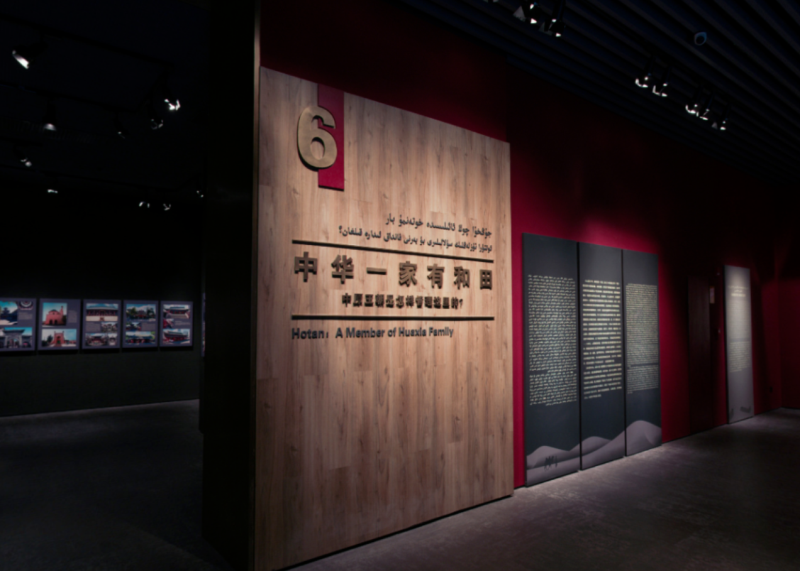
Located on floors 1-2 of the museum, it is divided into 7 parts, including "Majestic Kunlun Reflects China," "The Land of Gold and Jade Thrives in Agriculture and Mulberry," and "Ancient Roads Connect East and West." Using a chronological narrative format, through artifact displays and interpretations, immersive experience spaces, holographic images, miniature landscapes, and other means, it presents the history of Hotan since the Paleolithic Age. Here, visitors can see various cultural relics reflecting the long history and splendid culture of the Hotan region, and learn about Hotan's politics, economy, culture, life, customs, and other aspects in different historical periods.
Niya Site Special Exhibition Hall
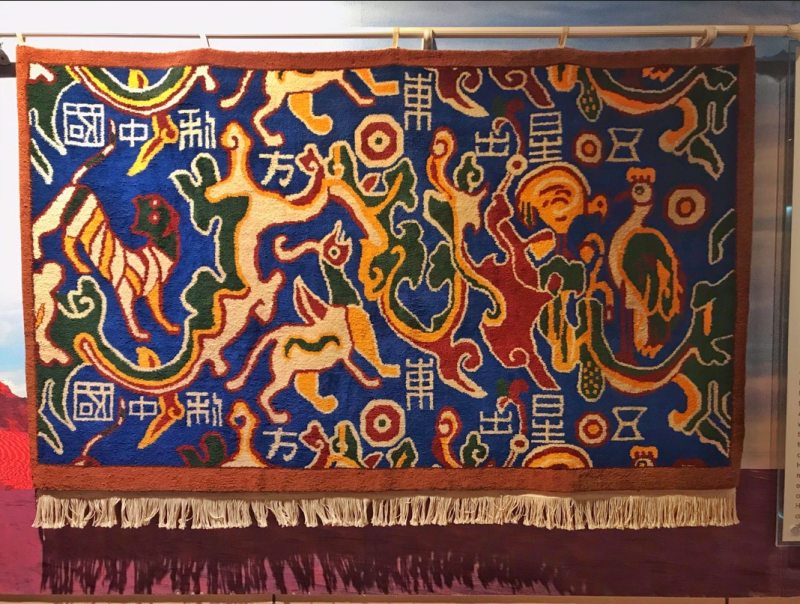
Located on the right side of the third floor, it mainly displays cultural relics unearthed from the Niya tomb site, the ruins of the ancient state of Jingjue. There is a Kharosthi divorce judgment document, which records the dissolution of a marriage in Kharosthi script and is important material for studying the social system and culture of that time; a "dougong," a traditional Central Plains architectural component, reflecting the influence of Central Plains culture on the Hotan region; female ornaments, showing the aesthetics and craftsmanship of the time; a "First Year of Yuanhe" brocade bag, with a clear reign date, which is of great significance for dating research; and a glass rhyton, with a unique shape, reflecting cultural exchanges between China and foreign countries at that time.
Temporary Exhibition Hall
Located on the left side of the third floor, it regularly holds various temporary exhibitions, which may include displays of newly unearthed cultural relics, exchange exhibitions of cultural relics from other regions, or special cultural exhibitions related to Hotan, bringing visitors different cultural experiences.
Cultural and Creative Experience Hall
Here visitors can participate in cultural and creative product-making experience activities and integrate Hotan's cultural elements into items they make themselves, such as making handmade ornaments with distinctive Hotan patterns and painting artworks themed around Hotan cultural relics. They can also purchase various cultural and creative products with Hotan characteristics, such as keychains, bookmarks, and postcards designed based on the museum's collection.
Food
Samsa (Baked Buns)
Made with flour as the wrapper and lamb and other ingredients as filling, with appropriate seasonings added, wrapped into bun shapes, and then baked in a tandoor, the skin is crisp and the meat is tender. It can be tasted at some traditional Uygur restaurants or snack stalls around the museum, usually priced at 2-5 yuan each.
Lamb Skewers
Fresh lamb is selected, cut into small pieces, skewered on iron skewers, and grilled over charcoal, with chili powder, cumin, and other seasonings sprinkled on during grilling, giving off a rich aroma. Generally, each skewer is priced from 3-10 yuan, depending on the quality of the lamb and the location of the shop.
Nang
There are many varieties, including sesame nang and scallion nang. Made using traditional techniques, the flour is fermented, shaped into flatbreads, sprinkled with various ingredients, and baked in a tandoor until cooked. It is easy to carry and preserve. Ordinary nang is priced at 3-10 yuan each.
Pilaf
Made by simmering rice, lamb, carrots, onions, and other ingredients. The lamb is tender, and the sweetness of the carrots and onions blends into the rice, making it nutritious. At nearby restaurants, a serving of pilaf costs about 15-30 yuan.
Yogurt Shaved Ice
A mixture of yogurt and shaved ice, which can be flavored with honey, jam, and other additions according to personal taste. It is sweet and sour and refreshing. At street shops or restaurants, a serving costs 8-15 yuan.
Tickets:
Admission is free. No reservation is required. Just bring your ID card to enter.
Opening Hours:
In the off-season (generally November to March of the following year), opening hours are 10:00-13:30 and 16:00-19:30; in the peak season (generally April to October), opening hours are 10:00-13:30 and 15:30-19:00. The museum stops entry 30 minutes in advance, and is closed every Monday (postponed in case of holidays) and from New Year's Eve to the second day of the Lunar New Year.
Tour Route:
After entering the museum, you can first go to the Hotan Historical Culture Exhibition Hall on the 1st floor, starting from the Paleolithic Age, to learn about Hotan's development and changes in various historical periods in sequence and appreciate various cultural relics. Then go to the 2nd floor to continue visiting the subsequent parts of the Hotan Historical Culture Exhibition Hall. After that, go to the 3rd floor and first visit the Niya Site Special Exhibition Hall to gain an in-depth understanding of the stories behind the cultural relics unearthed from the Niya tomb site, the ruins of the ancient state of Jingjue. Then go to the Temporary Exhibition Hall to view the temporary exhibition currently on display. Finally, go to the Cultural and Creative Experience Hall to participate in cultural and creative-making experiences or purchase cultural and creative products.
Transportation:
Bus: Check Hotan city bus routes and take a bus that can reach the vicinity of Kunlun Road, then walk to the museum after getting off.
Taxi: Take a taxi within Hotan city and directly tell the driver to go to the Hotan Museum. The taxi starting fare is 5 yuan, covering 2.5 kilometers, and 1.5 yuan per kilometer thereafter, with no fuel surcharge.
Self-driving: Use a navigation app to set the destination as Hotan Museum (No. 8 Kunlun Road, Hotan City, Hotan Prefecture, Xinjiang Uygur Autonomous Region). There are parking lots around the museum for parking.
Must-Visit Attractions:
Hotan Historical Culture Exhibition Hall: Comprehensively presents Hotan's history from the Paleolithic Age to the present, with rich and diverse cultural relics. It is the core area for understanding Hotan's history and culture.
Niya Site Special Exhibition Hall: Gathers precious cultural relics unearthed from the Niya tomb site, allowing visitors to intuitively feel the cultural characteristics of the ancient state of Jingjue. Cultural relics of extremely high historical value, such as the Kharosthi divorce judgment document and the glass rhyton, are exhibited here.
Cultural and Creative Experience Hall: Visitors can participate in cultural and creative-making and take Hotan culture home. This unique experience can deepen understanding and memory of Hotan culture.
Travel Suggestions:
Suggested visiting time is 2-3 hours, which allows sufficient time to visit each exhibition hall, listen to explanations, and gain an in-depth understanding of Hotan's history and culture.
It is advisable to learn about relevant historical materials and exhibit information of the museum in advance, so as to better understand the stories behind the cultural relics during the visit.
During the visit, you can rent explanation equipment or follow a guided tour group to gain a more comprehensive understanding of cultural relic knowledge.
Reserve some time in the Cultural and Creative Experience Hall to participate in making and purchasing cultural and creative products.
Notes:
Observe the museum's visiting regulations. Do not touch cultural relics, and flash photography is prohibited.
Keep quiet in the museum and do not speak loudly, so as not to affect other visitors.
Protect the museum environment. Do not spit or litter.
Visitors with children should keep an eye on them and prevent them from running and playing in the museum.
Pay attention to opening and closing times to avoid missing the visit.