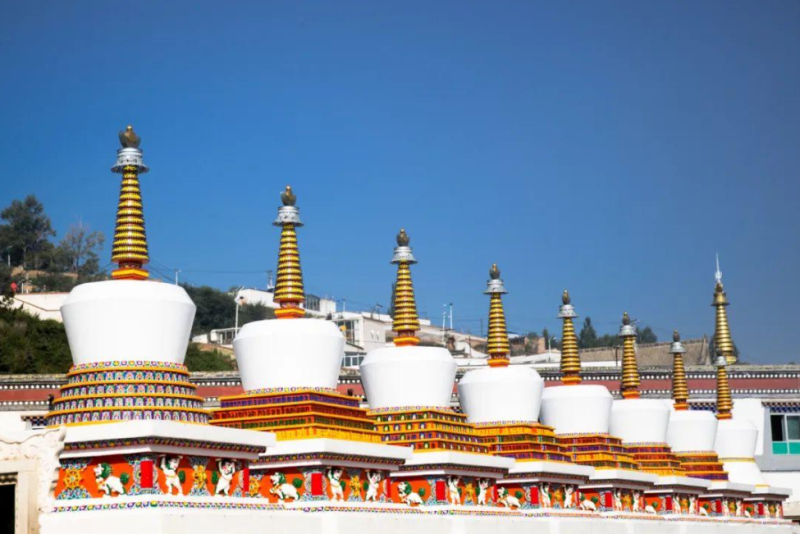
Kumbum Monastery, known in Tibetan as "Gonbum Jampa Ling" (meaning "The Maitreya Temple with 100,000 Images"), is nestled in the Lotus Mountain valley of Huangzhong District, Xining City, Qinghai Province. Located about 26 kilometers from downtown Xining, its history dates back to 1379. It began when the mother of Master Tsongkhapa built the "Lotus Stupa" at his birthplace, following his wish. Because the stupa was built before the temple, it earned the Chinese name "Ta'er Si" (Ta'er Temple). As the birthplace of Tsongkhapa, the founder of the Gelug school, it stands as one of the six great monasteries of Tibetan Buddhism and remains a revered pilgrimage site in Northwest China.
The monastery's architecture flows with the mountain terrain, centering on the Great Golden Roof Hall. It is a masterpiece blending Tibetan flat-roofed blockhouses with Chinese double-eave hip-and-gable roofs. With glittering golden roofs, distinctive walls, and exquisite glazed brick carvings, it represents the perfect harmony of Han and Tibetan architectural arts. Key structures include the Great Golden Roof Hall, the Great Sutra Hall, the Nine-Room Hall, the Small Golden Roof Hall, the Eight Stupas, and four major colleges dedicated to Philosophy, Tantra, Medicine, and Astronomy.
The monastery is famous for its "Three Unique Arts": butter sculptures, murals, and embroidered appliqués (Duixiu). These masterpieces of sculpture, painting, and embroidery showcase the pinnacle of Tibetan Buddhist art. Recognized as a Major Historical and Cultural Site Protected at the National Level in 1961, Kumbum Monastery was also included in the World Heritage tentative list for the "Silk Roads" in 2007.