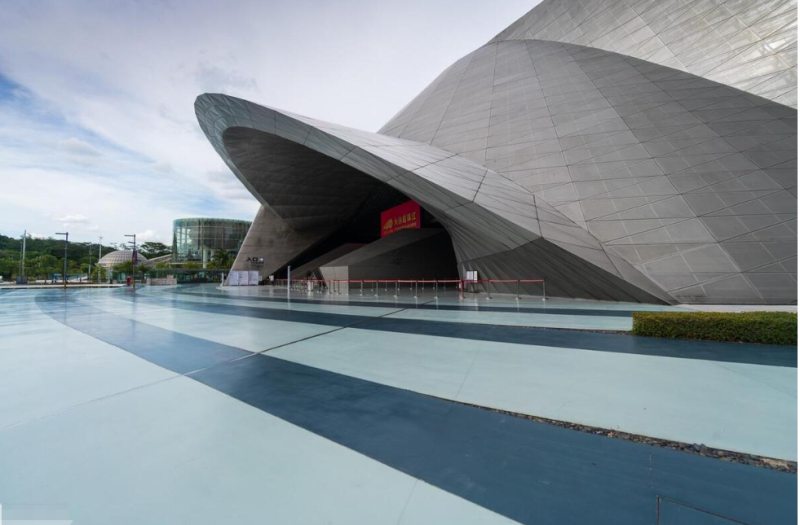
Shenzhen Museum is located in Zone A of the Civic Center on Fuzhong Road, Futian District, Shenzhen, Guangdong Province. Backed by Lianhuashan Park to the north and facing Shennan Avenue to the south, it operates under the administration of the Shenzhen Municipal Bureau of Culture, Radio, Television, Tourism and Sports. The museum comprises four sites: the History and Folklore Museum, the Ancient Art Museum, the Former Site of the East River Column Guerrilla Command, and the Shenzhen Reform and Opening-up Exhibition Hall. Covering a land area of 37,000 square meters with a total floor area of over 60,000 square meters, it is a large-scale local comprehensive museum integrating collection, preservation, research, exhibition, and education.
The preparations for the Shenzhen Museum began in August 1981. On October 17 of the same year, the Shenzhen Municipal People's Government approved the establishment of the Shenzhen Special Economic Zone Museum, which was later renamed the Shenzhen Museum. It officially opened in November 1988. In early 2008, it was renamed Shenzhen Museum. By the end of 2019, the museum held a collection of 23,447 items/sets, including 5,435 precious cultural relics. It hosted 37 exhibitions, conducted 136 educational activities, and received 3.826 million visitors.
In May 1995, Shenzhen Museum was named a municipal-level Patriotic Education Base by the Shenzhen Municipal Committee and Municipal Government. On December 15, 2012, it was rated as a National First-Grade Museum. In June 2024, the museum's digital collection database was officially launched. On March 17, 2025, it was included in the first batch of the list of state-owned public welfare collection units.
Shenzhen Museum serves as a vital venue for public visits and study, as well as for reception and foreign affairs activities organized by the Shenzhen Municipal Government. It stands as an important window showcasing Shenzhen and China's reform and opening-up. As a key research institution in Shenzhen, the museum possesses strong research capabilities in fields such as cultural relics, local history, the history of reform and opening-up, folk culture, archaeology, and museology. It has hosted multiple high-profile seminars, participated and spoken at international high-level museum forums, generating significant influence within the industry, and has published over 170 monographs, collections, and catalogs.