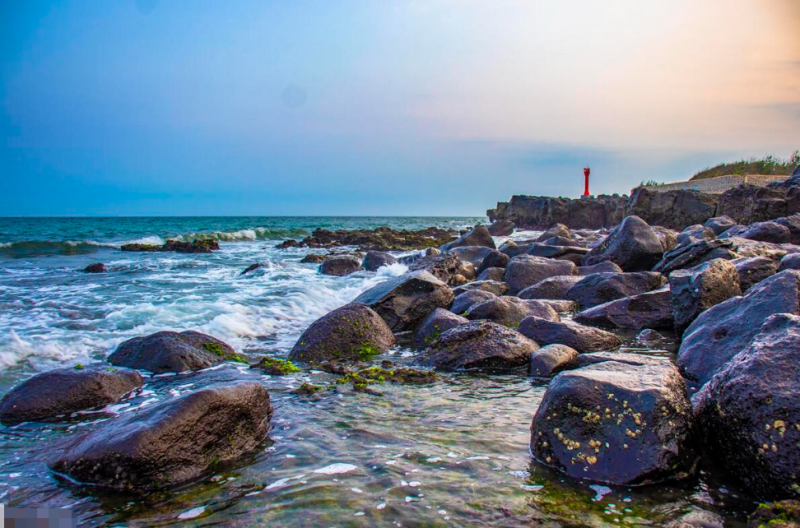
Naozhou Island, formerly known as "Mang," is China's largest volcanic island. Located about 40 kilometers southeast of Zhanjiang City in Guangdong Province, it borders Donghai Island to the north, Leizhou Bay to the west, and faces the South China Sea to the southeast. The island has a dome-like shape and is surrounded by the sea on all sides. With a coastline stretching 47 kilometers and a total area of approximately 56 square kilometers, it is one of the "Eight Scenic Spots of Zhanjiang" and is often referred to as the "island beyond the island."
Formed by underwater volcanic eruptions approximately 200,000 to 500,000 years ago, Naozhou Island enjoys a pleasant climate year-round. In March 1277, during the Jingyan era, Lu Xiufu, the Prime Minister of the Southern Song Dynasty, along with civil and military officials, fled to the island with the 11-year-old Emperor Duanzong and his brother, Prince Zhao Bing, to escape pursuit by Yuan Dynasty forces. In the late 19th century, the Zhanjiang area, including Naozhou Island, was occupied by Western colonizers and became part of the French leased territory. In 1945, following the victory of the War of Resistance Against Japanese Aggression, Guangzhouwan was returned to China, and Naozhou Island regained its former prosperity as a "city on the sea." In 2000, underwater archaeologists recovered a batch of Yuan Dynasty porcelain from the southern waters of the island, proving its significant role in foreign trade during the Song and Yuan dynasties. Since 2014, tourism on Naozhou Island has flourished. As of 2020, the island had a population of over 50,000. By 2022, the permanent population was recorded at over 40,000, with most residents engaged in marine fishing, aquaculture, and agriculture.
Situated in the South China Sea, Naozhou Island is a key national fishing port with abundant marine resources. It is famous for its seafood, including spiny lobsters, abalone, prawns, and pomfret. Agricultural products include bananas, small peanuts, mung beans, sweet potatoes, and dragon fruit. The island is also home to numerous historical sites and scenic spots, such as the ruins of the Song Imperial City, Xianglong Academy, the Octagonal Well, the Song Imperial Stele, the Song Imperial Pavilion, and the Tomb of Dou Zhenbiao. It features Na Yan Sea Stone Beach, a renowned tourist resort in southern China, as well as the Naozhou Lighthouse—one of the three most famous lighthouses in the world, alongside those in London and at the Cape of Good Hope.