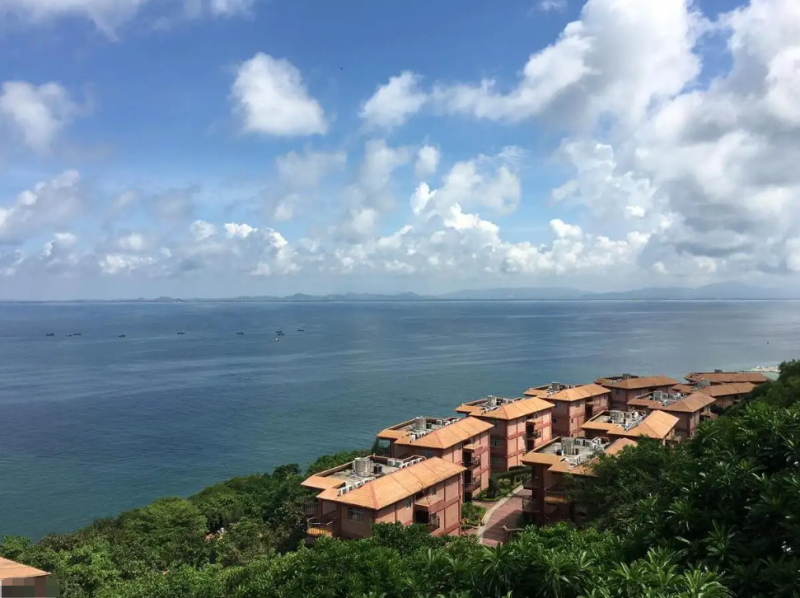
Fangji Island, originally known as Wanzhou Island (or Qianmeng Island), is located 14.5 kilometers off the coast of Bohe Town, Dianbai District, Maoming City, Guangdong Province. As a National AAAA-level tourist attraction, it is a comprehensive destination integrating sightseeing, leisure, entertainment, dining, shopping, and resort relaxation. The island covers an area of 1.9 square kilometers, with its highest point reaching 135 meters above sea level, making it the largest island in Dianbai District. Its name originates from a local tradition where fishermen would release chickens onto the island to pray for safety before heading out to sea. Key attractions include the "Southern Sky Flying Rock," "Chicken Sea Surging Waves," "Immortal Stone Listening to the Waves," "Exploring Ancient Wanzhou," and the Li-Chen Ancestral Temple.
The island retains nearly 80% of its pristine ecological environment, boasting beautiful natural scenery with lush mountains, clear waters, dense forests, and unique rock formations. It features both the majesty of mountains and the grandeur of the sea. With a vegetation coverage of 80%, the island is home to 43 species of plants, including shrubs and herbs. The surrounding waters are rich in marine life, such as lobsters, groupers, pomfrets, parrotfish, cuttlefish, and lancelets. The climate is a mild tropical and subtropical monsoon type, with an annual average temperature between 22.3°C and 23°C, making summer the best season to visit.
Developed by Taiwanese businessman Chen Mingzhe, Fangji Island officially opened to tourists in 2008. Between 2008 and 2012, it received numerous accolades, including "Top 10 Coastal Tourism Scenic Spots in Guangdong," "Most Popular Island Tour in Guangdong," "Most Popular Scenic Spot on the Guangdong Tourism Review List," "National AAAA Tourist Attraction," and "China's Best Leisure and Vacation Destination." The island offers various marine activities such as diving, banana boat rides, flying fish rides, and sailing tours. Please note that Maoming Fangji Island announced a temporary closure from August 23, 2024, to April 30, 2025.